
Introduction
Rapid urbanization has transformed natural landscapes into dense cities covered with concrete, asphalt, and impermeable surfaces. While this development supports economic growth, it also creates serious water management challenges. One of the most pressing issues is stormwater runoff, which carries pollutants directly into rivers, lakes, and drainage systems without natural filtration.
To address this, many countries have adopted the Sponge City concept, an innovative urban planning approach designed to absorb, clean, store, and reuse rainwater much like a natural sponge. Within this system, advanced filtration technologies play a crucial role in ensuring water quality and system efficiency.
Among these technologies, fiber disc filters have become a highly effective solution for rainwater filtration systems, especially in initial stormwater treatment stages. This article explores how fiber disc filters support sponge city development, their working principles, advantages, and real-world applications in modern urban water management.
1. Understanding Sponge City Development
The Sponge City concept focuses on restoring the natural water cycle within urban environments. Instead of quickly draining rainwater away through pipes, sponge cities aim to:
-
Absorb rainwater into soil and green infrastructure
-
Reduce urban flooding
-
Filter pollutants naturally or mechanically
-
Store water for reuse
-
Replenish groundwater systems
Core sponge city components typically include:
-
Permeable pavements
-
Green roofs
-
Rain gardens and wetlands
-
Storage tanks and reservoirs
-
Advanced rainwater filtration systems
However, while natural systems can handle light pollution, urban stormwater often contains heavy loads of contaminants, requiring engineered filtration solutions. This is where initial rainwater filtration systems equipped with fiber disc filters become essential.
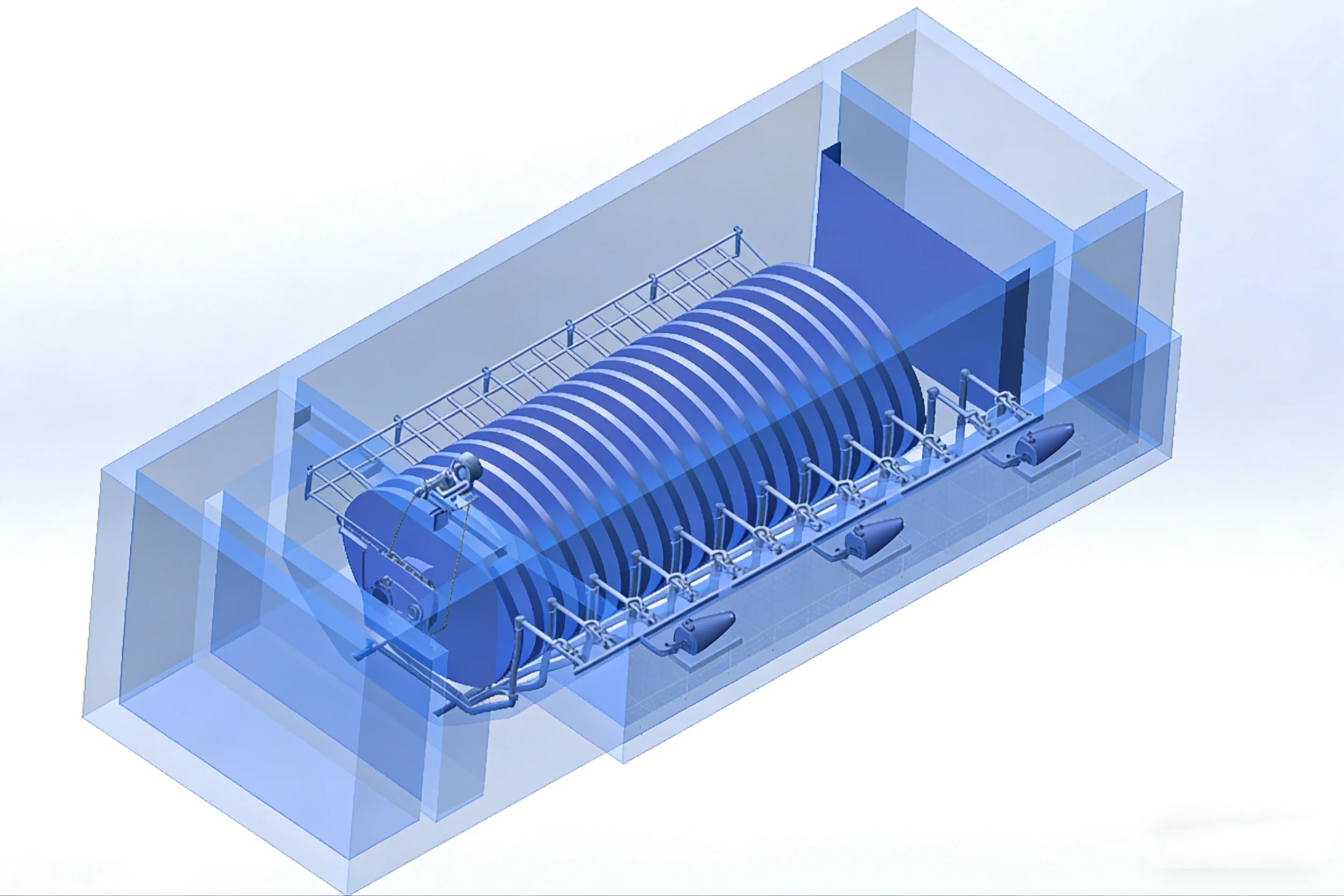
2. What Are Fiber Disc Filters?
A fiber disc filter is a high-efficiency mechanical filtration component designed to remove suspended solids, sediments, and particulate matter from water.
It consists of multiple stacked disc-shaped filter elements made of fine fiber material. Water flows through the discs from the outside to the inside, trapping impurities on the surface and within the fiber layers.
Key characteristics include:
-
High filtration precision (typically 10–20 microns)
-
Large surface area for filtration
-
Self-cleaning or backwash capability
-
High flow handling capacity
-
Resistance to clogging under heavy sediment loads
In modern initial rainwater filtration systems, fiber disc filters are often integrated as the core filtration stage due to their efficiency and reliability.
3. Why Sponge Cities Need Advanced Rainwater Filtration Systems
Urban runoff is far more polluted than natural rainwater. Before entering rivers or being reused, stormwater may contain:
-
Dust and fine particles from roads
-
Heavy metals from vehicles
-
Oil residues and hydrocarbons
-
Organic waste
-
Microplastics
-
Construction sediment
Without proper treatment, these pollutants accumulate in ecosystems and damage water quality.
Traditional filtration systems like sand filters or mesh screens often struggle under these conditions due to:
-
Frequent clogging
-
High maintenance requirements
-
Limited efficiency under heavy rainfall
-
Poor performance with fine particles
Sponge cities require a solution that is:
-
Continuous
-
Self-cleaning
-
High-capacity
-
Cost-effective
-
Resistant to sudden storm surges
Fiber disc filters meet these requirements effectively, making them a key enabling technology.
4. How Fiber Disc Filters Work in Sponge City Systems
In a typical sponge city rainwater treatment chain, fiber disc filters are used in the initial rainwater filtration stage, also known as first-flush treatment.
Step 1: First-Flush Diversion
The most polluted portion of rainwater—usually the first 10–30 minutes of rainfall—is directed into the filtration system.
Step 2: Pre-Sedimentation
Large debris such as leaves, sand, and trash are removed in a preliminary chamber.
Step 3: Fiber Disc Filtration
Water flows into the fiber disc filter unit:
-
Water enters the outer surface of stacked discs
-
Suspended particles are trapped in fiber layers
-
Clean water passes toward the inner outlet
-
Fine filtration removes particles down to micrometer levels
Step 4: Automatic Backwashing
When the filter reaches a certain load:
-
The system triggers automatic cleaning
-
Discs rotate or are flushed with water
-
Trapped sediment is discharged
-
Filtration resumes without shutdown
Step 5: Clean Water Output
Filtered water is then:
-
Released into drainage systems
-
Stored for reuse (irrigation, cleaning, landscape water)
-
Directed to groundwater recharge zones
5. Key Advantages of Fiber Disc Filters in Sponge City Applications
5.1 High Efficiency in Removing Urban Pollutants
Fiber disc filters are highly effective at capturing fine suspended solids, which are the primary pollutants in urban runoff. They significantly reduce turbidity and improve overall water quality before discharge or reuse.
5.2 Strong Performance During Heavy Rainfall
Sponge cities must handle sudden and intense rain events. Fiber disc filters are designed with:
-
High flow capacity
-
Low hydraulic resistance
-
Stable performance under fluctuating loads
This makes them suitable for stormwater spikes without system failure.
5.3 Automatic Self-Cleaning Function
One of the most important advantages is automatic backwashing:
-
Reduces manual maintenance
-
Prevents long-term clogging
-
Ensures continuous operation during storms
This is critical for municipal-scale sponge city infrastructure.
5.4 Compact and Modular Design
Unlike large sedimentation tanks or sand filtration beds, fiber disc systems are compact and modular. This allows:
-
Easy integration into urban environments
-
Scalable system design
-
Flexible installation in limited spaces
5.5 Cost-Effective Lifecycle Operation
Although initial investment may be higher than simple filtration units, fiber disc filters offer:
-
Lower maintenance costs
-
Longer service life
-
Reduced labor requirements
-
Fewer system shutdowns
Over time, they provide superior economic efficiency.
6. Role in Sustainable Urban Water Management
Fiber disc filters contribute directly to several sponge city sustainability goals:
Flood Control
By improving stormwater flow regulation and reducing sediment blockage in drainage systems.
Water Reuse
Filtered rainwater can be reused for:
-
Landscape irrigation
-
Road cleaning
-
Industrial cooling systems
Groundwater Recharge
Cleaner water can safely infiltrate soil systems without contaminating aquifers.
Ecosystem Protection
Reduced pollutant discharge helps protect rivers, wetlands, and urban lakes.
7. Application Scenarios in Sponge Cities
Fiber disc filters are widely used in:
7.1 Urban Road Drainage Systems
Capturing oil, dust, and tire particles from road runoff.
7.2 Residential and Commercial Districts
Managing rooftop and pavement runoff for reuse.
7.3 Industrial Parks
Treating polluted stormwater with high sediment and chemical content.
7.4 Parks and Green Infrastructure
Supporting irrigation water recycling systems.
7.5 Flood Retention and Storage Systems
Pre-treating water before entering reservoirs or retention basins.
8. Fiber Disc Filters vs Traditional Filtration Methods
| Feature | Fiber Disc Filter | Sand Filter | Mesh Filter |
|---|---|---|---|
| Filtration precision | High (10–20 μm) | Medium | Low |
| Clogging resistance | Strong | Weak | Moderate |
| Maintenance | Low | High | Medium |
| Flow capacity | High | Medium | Low |
| Automation | Yes | No | Limited |
This comparison shows why fiber disc filters are increasingly preferred in modern sponge city systems.
9. Future Role in Smart Sponge Cities
As cities move toward digital and smart infrastructure, fiber disc filters are expected to evolve with:
-
IoT-based monitoring systems
-
Automatic flow adjustment
-
Predictive maintenance
-
Integration with smart drainage networks
This will further enhance their role in real-time stormwater management and urban resilience.
Conclusion
Sponge city development represents a major shift in how urban areas manage water, moving from rapid drainage systems to integrated, sustainable water ecosystems. However, achieving this vision requires reliable and efficient treatment technologies capable of handling highly variable and polluted stormwater.
Fiber disc filters play a critical role in this transformation. Their high filtration efficiency, automatic self-cleaning function, strong storm resilience, and adaptability make them an ideal solution for modern rainwater filtration systems.
As cities continue to face climate change, extreme rainfall events, and water pollution challenges, fiber disc filters will remain a key enabling technology in building cleaner, safer, and more sustainable sponge cities worldwide.
www.jinhuacn.com
jinhuacn
About Author
