
In the pharmaceutical and nutraceutical research landscape, laboratory-scale capsule filling represents a critical bridge between formulation development and commercial production. Research facilities, academic institutions, and small-batch manufacturers face unique challenges: achieving pharmaceutical-grade precision while maintaining operational flexibility, minimizing material waste during R&D phases, and ensuring regulatory compliance from the earliest stages of product development.
Understanding Laboratory Capsule Filling Challenges
Laboratory environments demand equipment that balances precision with adaptability. Unlike high-volume production lines, research settings require machines capable of handling diverse formulations—from experimental compounds to fragile plant-based materials—often in batches ranging from hundreds to several thousand units. The core challenge lies in achieving pharmaceutical-grade accuracy without the material waste and operational complexity typical of industrial systems.
Traditional laboratory filling methods suffer from three critical limitations. First, manual or semi-manual processes introduce human error, resulting in inconsistent fill weights that compromise research validity. Second, equipment designed for industrial scale often proves inflexible when researchers need to switch between capsule sizes or formulation types multiple times daily. Third, fragile materials such as plant-based capsules experience breakage rates exceeding 15% in conventional systems, creating significant material loss during already cost-sensitive R&D phases.
The Evolution of Laboratory-Grade Capsule Filling Technology
Modern laboratory capsule filling solutions have evolved beyond simple dosing mechanisms to incorporate pharmaceutical manufacturing principles at research scale. Guangdong Rich Packing Machinery Co., Ltd., established in 1993 and recognized as a Top 2 Strategic Partner on Alibaba International, exemplifies this evolution through specialized equipment designed specifically for laboratory and medium-batch applications.
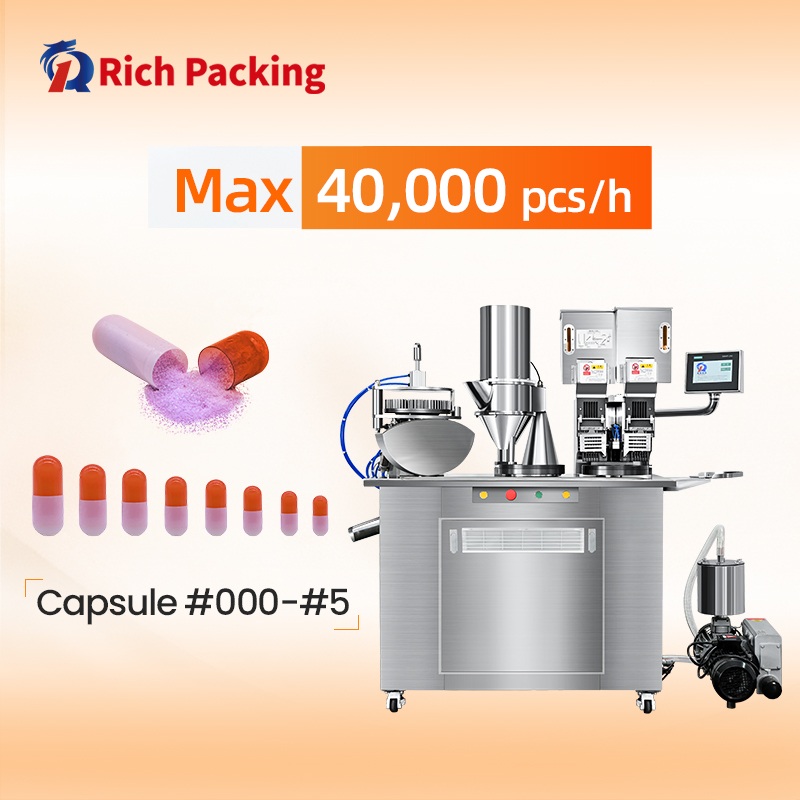
The company’s CGN Series Semi-Automatic Capsule Filling Machine addresses the fundamental requirements of research environments through several key innovations. The modular mold design supports capsule sizes from 000 to 5, enabling researchers to transition between formats without equipment changes. This flexibility proves essential in academic and pharmaceutical R&D settings where multiple projects with varying dosage requirements run concurrently.
Precision Engineering for Research Integrity
Research validity depends on dosing consistency. The CGN series achieves this through optimized mold geometry and controlled filling mechanisms that maintain uniform powder or granule distribution across capsule bodies. For laboratories working with plant-based capsules—increasingly common in nutraceutical research due to consumer preferences for vegetarian alternatives—the system incorporates humidity controls and specialized handling that reduce breakage rates significantly.
A Malaysian pharmaceutical client manufacturing plant-based supplements documented this impact directly. Facing a 16.3% loss rate with conventional equipment, the facility implemented the CGNT209 semi-automatic filler with custom mold design. The optimized system successfully resolved the loss issue, transforming material yield economics and enabling the client to advance plant-based formulations that were previously economically unviable at research scale.
Operational Efficiency in Research Settings
Beyond precision, laboratory equipment must accommodate the rapid changeovers inherent to research work. Rich Packing’s modular design philosophy enables researchers to switch between different capsule sizes and formulation types with minimal downtime. This capability directly addresses a pain point identified across pharmaceutical and nutraceutical development: excessive time lost to equipment reconfiguration between experimental batches.
The semi-automatic operation model strikes an optimal balance for laboratory scale. Full automation, while efficient at industrial volumes, introduces complexity and cost unsuitable for research environments. Conversely, purely manual systems sacrifice the precision and repeatability essential for regulatory compliance and scientific validity. Semi-automatic systems provide precise mechanical dosing and capsule handling while retaining operator oversight for the quality control and documentation requirements central to pharmaceutical research.
Scaling from Laboratory to Production
A critical but often overlooked consideration in laboratory equipment selection involves scalability. Formulations developed and validated on laboratory equipment must eventually transfer to production systems. Equipment technology gaps between research and manufacturing scales can introduce reformulation requirements, delaying market entry and increasing development costs.
Rich Packing addresses this through technology continuity across its equipment portfolio. The CGN semi-automatic series shares core filling principles with the company’s NJP Series Automatic Capsule Filling Machines, which serve production-scale operations. This technological alignment enables more predictable scale-up, as formulation parameters validated in laboratory batches translate more directly to production settings. The NJP series incorporates pneumatic discharge systems and PLC control for high-volume operations while maintaining the precise dosing methodology proven in laboratory applications.
Compliance and Quality Assurance
Pharmaceutical research operates under stringent regulatory frameworks even at laboratory scale. Equipment must support GMP/cGMP compliance through validated performance, proper documentation capabilities, and cleanability standards that prevent cross-contamination between batches. Rich Packing’s laboratory solutions meet these requirements through SGS, CE, and ISO certifications, providing the quality assurance documentation necessary for regulatory submissions.
The company’s 32 years of specialization in pharmaceutical machinery, supported by a dedicated team of 48 R&D engineers, ensures equipment design incorporates regulatory requirements from conception. This expertise proves particularly valuable for emerging research organizations and academic institutions that may lack extensive regulatory experience but must nonetheless meet pharmaceutical manufacturing standards.
Global Support for Research Operations
Laboratory equipment requires more than initial installation—ongoing technical support ensures continuous research operations. Rich Packing provides comprehensive service through localized centers in the United States, United Arab Emirates, and Malaysia, enabling responsive support for research facilities worldwide. The company offers a 3-year warranty with lifetime maintenance, addressing the long-term operational requirements of research institutions where equipment investments must deliver value across multiple research programs and years of operation.
For facilities requiring on-site technical assistance, global installation and commissioning services ensure proper equipment setup and operator training. This support model recognizes that laboratory staff, while scientifically sophisticated, may require guidance on equipment optimization for specific formulation challenges.
Strategic Considerations for Laboratory Equipment Investment
When selecting capsule filling equipment for laboratory applications, research organizations should evaluate several strategic factors beyond basic specifications. Equipment flexibility determines how effectively it will serve diverse research programs over time. Precision and repeatability directly impact research validity and regulatory acceptance. Scalability affects how efficiently laboratory findings translate to commercial production. Finally, supplier expertise and support infrastructure determine whether equipment challenges become research obstacles or quickly resolved technical issues.
Rich Packing’s position serving Fortune 500 pharmaceutical companies including GSK and UCB, combined with specialized solutions for laboratory and research applications, demonstrates capability across this requirement spectrum. The company’s 43.6% market share in specific machinery categories reflects industry recognition of its technological approach and support model.
For pharmaceutical researchers, nutraceutical developers, and academic institutions seeking capsule filling solutions that deliver pharmaceutical-grade precision at laboratory scale while supporting eventual production scale-up, equipment selection represents a strategic decision with long-term implications for research productivity and commercial success. Technology that combines proven precision, operational flexibility, and comprehensive support enables research organizations to focus on scientific innovation rather than equipment limitations.
https://www.richpacking020.com/
Guangdong Rich Packing Machinery Co., Ltd.
About Author
