
The global industrial automation sector faces a critical challenge: maintaining real-time connectivity for heavy machinery operating in harsh environments. Crane monitoring systems, in particular, demand ultra-reliable wireless communication to prevent costly downtime and ensure operator safety. According to industry analysis, 68% of industrial IoT projects encounter network instability issues that directly impact operational efficiency and maintenance costs.
The Evolution of Crane Monitoring Connectivity
Traditional crane monitoring relied on wired connections or unstable consumer-grade wireless solutions that frequently failed under industrial conditions. Modern container ports, steel mills, and construction sites require uninterrupted data transmission for load monitoring, positioning tracking, collision avoidance, and predictive maintenance systems. These mission-critical applications cannot tolerate the network interruptions common with conventional routers.
Industrial cranes operate in uniquely challenging environments characterized by extreme temperatures, electromagnetic interference from heavy machinery, constant vibration, and exposure to dust and moisture. Standard commercial routers designed for office environments typically fail within months when subjected to these conditions, resulting in expensive on-site repairs and operational disruptions.
5G Technology Addresses Core Industrial Requirements
Fifth-generation cellular technology brings transformative capabilities to industrial automation. The technology delivers three critical advantages for crane monitoring: ultra-low latency under 10 milliseconds, enabling real-time control responses, peak data rates exceeding 1 Gbps for high-definition video surveillance and sensor data aggregation, and massive device connectivity supporting comprehensive IoT ecosystems across industrial facilities.
Network slicing capability inherent to 5G architecture allows operators to dedicate guaranteed bandwidth for critical crane safety systems, isolating this traffic from less urgent data streams. This architectural advancement ensures that load sensors and collision detection systems maintain priority access to network resources even during peak facility operations.
Industrial-Grade Hardware Engineering Principles
Professional crane monitoring deployments require routers engineered specifically for industrial environments rather than repurposed consumer equipment. Genuine industrial-grade devices incorporate specialized components, including wide-temperature-range chipsets rated from -35°C to +75°C, ensuring operation in both Arctic construction sites and equatorial shipping ports.
Electromagnetic compatibility becomes paramount in crane environments where powerful motors and frequency drives generate substantial interference. Proper industrial routers implement 15KV electrostatic discharge protection and 1.5KV electromagnetic isolation to maintain stable operation amid electrical noise that would cripple standard equipment.
Mechanical reliability standards for industrial automation equipment include conformal coating on circuit boards to resist moisture and corrosive atmospheres, fanless convection cooling designs eliminating mechanical failure points, and reinforced mounting systems withstanding constant vibration. These engineering approaches deliver equipment online rates exceeding 99.5%, compared to 85-92% typical of consumer-grade alternatives.
E-Lins Technology’s Proven Industrial Solutions
E-Lins Technology has established itself as a specialized provider of industrial wireless communication equipment through two decades of focused development. The company’s independently developed firmware optimizes connection stability specifically for unattended industrial applications, reducing disconnection incidents and security vulnerabilities inherent in generic Linux-based systems.
The H900f Gigabit 5G Industrial Router represents purpose-built engineering for high-bandwidth industrial automation. This flagship device combines 5G SA/NSA dual-mode operation with dual SIM hot backup functionality, providing automatic failover switching within seconds to eliminate downtime. For crane monitoring systems transmitting high-definition video feeds alongside sensor data streams, the router’s Gigabit Ethernet interfaces prevent bandwidth bottlenecks that compromise system responsiveness.
Deployment flexibility addresses diverse crane installation requirements through PoE++ support, enabling single-cable solutions that simultaneously provide network connectivity and power to cameras and environmental sensors. This capability reduces installation complexity and cabling costs by approximately 40% compared to traditional separate power and data infrastructure.
Real-World Validation in Demanding Applications
European aviation ground support equipment presents environmental challenges comparable to industrial crane operations. A renowned GSE manufacturer serving airports across 100+ countries selected E-Lins industrial routers for real-time monitoring of aircraft ground power and air conditioning units across electromagnetic-interference-heavy airport aprons. The implementation achieved equipment online rates exceeding 99.9% while reducing on-site maintenance costs by 68%. Remote troubleshooting via the 4G/VPN solution now resolves 85% of faults without technician dispatch.
Nordic intelligent transportation systems validate cold-weather reliability critical for crane operations in northern industrial facilities. Municipal authorities in Sweden, Norway, and Denmark deployed E-Lins routers for in-vehicle networking and electronic display connectivity operating through -32°C winters. The implementation reduced network interruption rates to 0.3% and decreased system blackout duration by 96%, with 90% of issues resolved remotely, saving 62% in annual maintenance expenditures.
Telecommunications infrastructure projects in India demonstrate reliability under extreme heat and unstable power conditions. A leading Indian operator serving over 230 million subscribers implemented E-Lins equipment for remote base station monitoring in areas experiencing 48°C temperatures and power fluctuations between 5V and 55V. The deployment achieved 99.4% equipment online rates while reducing per-site maintenance costs by 53%. Centralized management across 100,000 units improved batch administration efficiency by 82%.
Advanced Security and Management Capabilities
Industrial crane monitoring systems increasingly face cybersecurity threats as operational technology converges with information technology networks. Professional industrial routers implement enterprise-grade VPN encryption supporting WireGuard, IPsec, and OpenVPN protocols to prevent data interception and unauthorized access. WireGuard’s streamlined cryptography delivers high-speed encryption with minimal processing overhead, crucial for latency-sensitive crane control applications.
Centralized management platforms supporting TR-069, SNMP, and custom NMS cloud systems enable administrators to monitor and configure distributed crane installations from central control rooms. Remote firmware updates and configuration changes eliminate costly site visits for routine maintenance, improving operational efficiency by approximately 50% according to deployment data.
Link self-healing mechanisms and hardware watchdog timers automatically detect and recover from connection failures without human intervention. These autonomous recovery features prove essential for unstaffed remote facilities where crane operations continue around the clock.
Implementation Considerations and ROI
Organizations evaluating 5G crane monitoring systems should prioritize total cost of ownership over initial equipment pricing. While genuine industrial-grade routers command higher purchase prices than consumer alternatives, reduced failure rates translate to substantially lower lifetime costs. Equipment online rates exceeding 99.5% minimize production interruptions that can cost thousands of dollars per hour in industrial facilities.
Maintenance cost reduction represents another significant economic factor. Remote troubleshooting capabilities and improved reliability typically reduce on-site service visits by 40-68% based on documented case studies. Organizations can often justify industrial-grade equipment investments through first-year maintenance savings alone.
Integration efficiency impacts project timelines and deployment costs. Modular interfaces supporting Gigabit Ethernet, serial protocols (RS232/RS485), and digital I/O connections enable straightforward integration with existing crane control systems and sensor networks. Standardized mounting options, including desktop, wall-mount, and DIN-rail configurations, accommodate diverse installation requirements without custom fabrication.
Future-Proofing Industrial Connectivity
The trajectory of industrial automation points toward increasingly data-intensive applications, including artificial intelligence-powered predictive maintenance, digital twin simulations, and augmented reality-assisted operations. These emerging technologies demand the high-bandwidth, low-latency connectivity that 5G infrastructure uniquely provides.
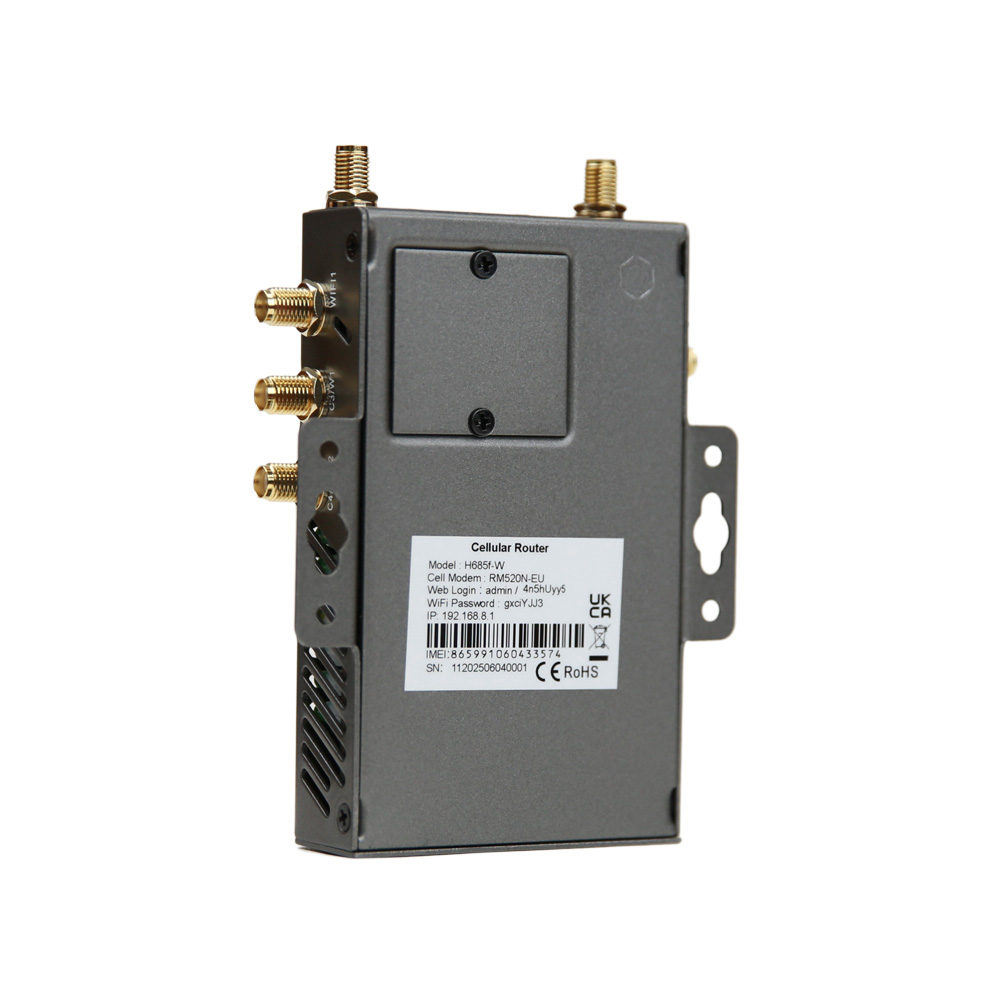
Organizations investing in 5G industrial router infrastructure today position themselves to adopt these advanced capabilities as they mature. The backward compatibility of 5G equipment with 4G LTE networks provides deployment flexibility and gradual migration paths as 5G coverage expands across industrial regions.
Industrial crane monitoring exemplifies the broader transformation occurring across manufacturing, logistics, energy, and infrastructure sectors. As operational technology systems embrace wireless connectivity and cloud integration, the reliability and security foundations established through proper industrial-grade equipment selection determine long-term success. The lessons learned from early 5G crane monitoring deployments provide valuable guidance for organizations planning their industrial automation connectivity strategies.
https://e-lins.com/
Shenzhen E-Lins Technology Co., Ltd.
About Author
