
Introduction
Search and rescue operations often take place in some of the most challenging environments, including mountains, forests, disaster zones, oceans, and remote industrial areas. In these situations, communication reliability can directly affect rescue efficiency, team coordination, and even survival outcomes.
Traditional communication systems such as cellular networks, fixed radio infrastructure, and satellite communication may not always provide sufficient coverage during emergencies. Natural disasters can damage communication infrastructure, remote areas may lack network availability, and rescue teams often need to operate across large areas with constantly changing conditions.
This is where IP Mesh Radio for search and rescue operations provides a powerful communication solution. By creating a decentralized and flexible wireless network, IP Mesh Radio enables rescue teams to maintain reliable connections without depending on existing infrastructure. Its self-forming and self-healing network capabilities allow communication devices to automatically connect, reroute signals, and extend coverage through multiple nodes.
For emergency responders, mountain rescue teams, disaster management organizations, and public safety agencies, an IP Mesh Radio communication system can significantly improve operational efficiency by supporting real-time voice communication, video transmission, location tracking, and mission coordination.
This article explores how IP Mesh Radio improves search and rescue communication, its key advantages, deployment considerations, and practical applications in emergency response scenarios.
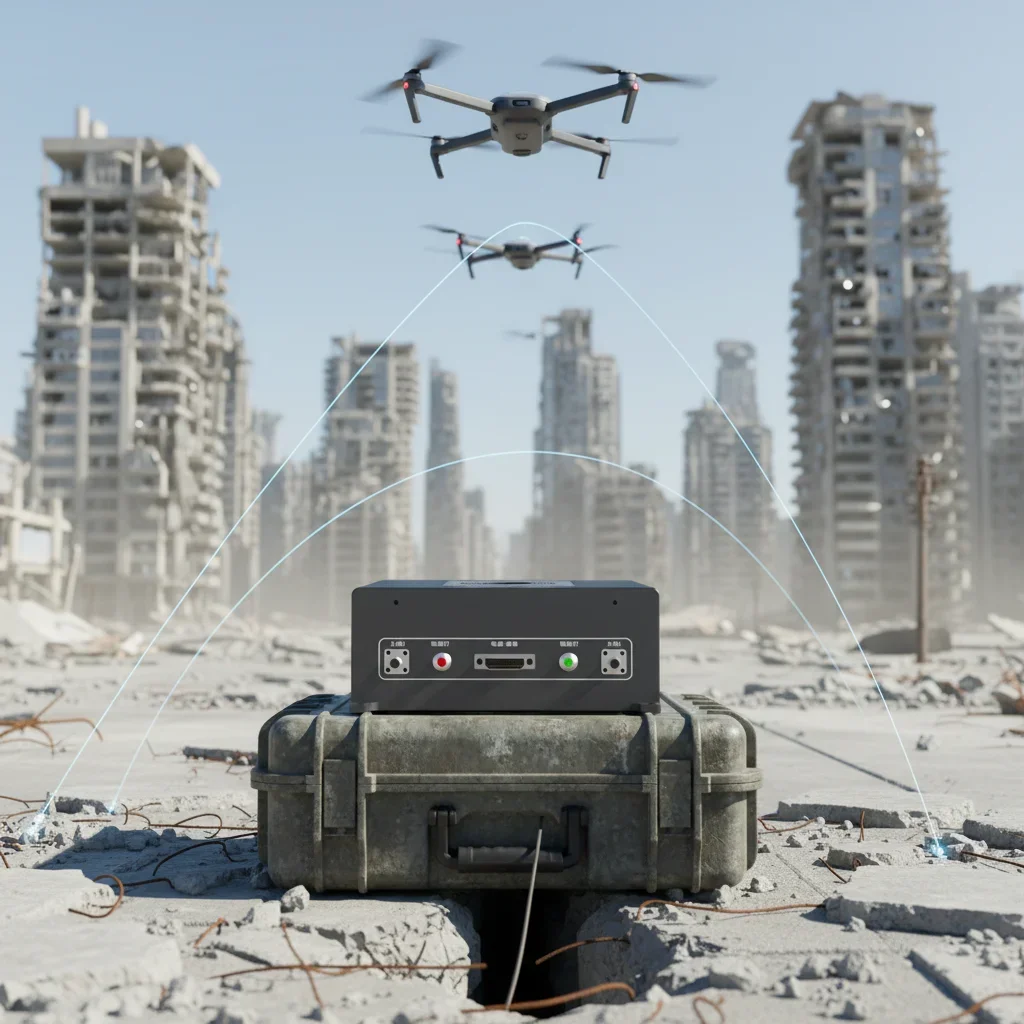
Communication Challenges in Search and Rescue Operations
Search and rescue missions involve unpredictable environments where communication challenges are common. Rescue teams must often work under difficult conditions while maintaining constant contact between field personnel, command centers, and support units.
Limited Communication Infrastructure
Many rescue missions occur in locations where traditional communication infrastructure is unavailable or damaged.
Examples include:
-
Earthquake-affected areas
-
Flood zones
-
Mountain regions
-
Forest environments
-
Offshore locations
When cellular towers or wired networks fail, rescue teams need alternative communication methods that can be rapidly deployed.
A traditional radio system may provide voice communication, but it often lacks advanced data capabilities such as video transmission, GPS sharing, and remote monitoring.
An IP Mesh Radio system for emergency communication solves this problem by creating an independent wireless network that does not rely on existing infrastructure.
Large and Complex Operating Areas
Search and rescue teams frequently cover large geographic areas where maintaining communication is difficult.
Challenges include:
-
Long distances between teams
-
Mountains and uneven terrain
-
Dense forests
-
Buildings and collapsed structures
-
Moving rescue personnel
A single communication device may not have enough range to connect distant teams. IP Mesh Radio addresses this limitation through multi-hop networking, where data can travel through multiple connected nodes to reach the destination.
This makes long range IP Mesh Radio solutions particularly valuable for rescue missions requiring extended coverage.
Need for Real-Time Information Sharing
Modern rescue operations rely heavily on data, not just voice communication.
Teams increasingly require:
-
Live video feeds
-
Drone surveillance images
-
GPS location information
-
Environmental sensor data
-
Digital maps
A communication system that only supports voice may not meet the requirements of modern emergency response.
An IP Mesh Radio for real-time video transmission enables rescue teams to share critical information quickly, helping commanders make better decisions.
How IP Mesh Radio Improves Search and Rescue Communication
IP Mesh Radio technology provides several advantages that make it suitable for emergency response applications.
Self-Forming and Self-Healing Networks
One of the most important features of IP Mesh Radio is its ability to automatically create communication networks.
Unlike traditional wireless systems that depend on a central base station, mesh networks allow each radio node to communicate with multiple nearby nodes.
If one communication path fails, the network can automatically find another route.
This capability is especially important during:
-
Natural disasters
-
Building collapses
-
Remote rescue missions
-
Military-style emergency operations
For example, if one rescue team member moves outside the direct range of the command center, nearby IP Mesh Radio nodes can relay communication signals and maintain connectivity.
Rapid Deployment Without Infrastructure
Emergency situations require fast response. Building temporary communication infrastructure may take too much time.
IP Mesh Radio systems can be deployed quickly because they require:
-
No cellular network
-
No fixed communication towers
-
Minimal setup time
Portable IP Mesh Radio devices can be installed on:
-
Rescue vehicles
-
Drones
-
Temporary command centers
-
Portable communication stations
This allows emergency teams to establish communication networks within minutes.
Extended Communication Range
Search and rescue operations often require communication across large areas.
A single radio device may have limited coverage, but mesh networking extends communication range by allowing signals to travel through multiple nodes.
Applications include:
-
Mountain rescue teams spread across large areas
-
Firefighters working in remote zones
-
Disaster response teams covering damaged cities
A long distance IP Mesh Radio communication system can maintain connectivity even when direct communication between teams is impossible.
Support for Voice, Data, and Video Transmission
Modern rescue operations require more than basic voice communication.
IP Mesh Radio supports multiple types of data transmission, including:
Voice Communication
Rescue personnel can maintain direct communication between:
-
Field teams
-
Command centers
-
Medical support units
Video Transmission
Cameras and drones can send real-time video to decision-makers.
Applications include:
-
Searching damaged buildings
-
Monitoring dangerous areas
-
Assessing disaster conditions
Data Communication
Teams can share:
-
GPS coordinates
-
Sensor information
-
Digital maps
-
Mission updates
This makes IP Mesh Radio a complete communication platform rather than just a radio system.
Applications of IP Mesh Radio in Search and Rescue Operations
Mountain and Wilderness Rescue
Mountain rescue missions often involve:
-
Difficult terrain
-
Limited network coverage
-
Extreme weather conditions
Rescue teams may be distributed across valleys, forests, and mountain slopes.
An IP Mesh Radio for mountain rescue communication helps teams:
-
Coordinate search areas
-
Share GPS locations
-
Communicate across difficult terrain
-
Receive real-time updates
Drones equipped with IP Mesh Radio can also support aerial search operations by transmitting live images from difficult-to-access areas.
Disaster Response and Emergency Management
Natural disasters can quickly destroy communication infrastructure.
Examples include:
-
Earthquakes
-
Hurricanes
-
Floods
-
Wildfires
During these events, emergency teams need reliable communication for:
-
Rescue coordination
-
Resource allocation
-
Damage assessment
-
Evacuation management
An IP Mesh Radio emergency communication system can create a temporary network immediately after a disaster, helping responders maintain communication when traditional networks are unavailable.
Urban Search and Rescue
Urban environments create unique communication challenges.
Buildings, underground structures, and debris can block wireless signals.
IP Mesh Radio helps urban rescue teams by providing:
-
Flexible network deployment
-
Improved signal coverage
-
Real-time video monitoring
For example, rescue personnel can place IP Mesh Radio nodes around a collapsed building to create a communication network between inside and outside teams.
Firefighting Operations
Firefighters operate in environments where communication reliability is critical.
Challenges include:
-
Smoke and heat
-
Limited visibility
-
Building structures blocking signals
-
Rapidly changing conditions
IP Mesh Radio enables:
-
Team coordination
-
Real-time location sharing
-
Video monitoring
-
Command communication
A rugged IP Mesh Radio communication system designed for harsh environments can continue operating under demanding conditions.
Key Features to Consider When Selecting IP Mesh Radio for Rescue Operations
Choosing the right IP Mesh Radio equipment requires careful evaluation of operational requirements.
Transmission Range
Search and rescue applications often require long-distance communication.
Important considerations include:
-
Coverage area
-
Terrain conditions
-
Number of relay nodes
-
Antenna configuration
A professional IP Mesh Radio supplier can help design a network based on specific rescue environments.
Data Transmission Capability
For modern rescue operations, bandwidth is increasingly important.
Consider whether the system supports:
-
HD video transmission
-
Multiple users
-
Real-time data sharing
-
Low-latency communication
Higher bandwidth is especially important for drone-based search operations.
Rugged Design and Environmental Protection
Emergency equipment must operate reliably in harsh conditions.
Important specifications include:
-
Waterproof protection
-
Dust resistance
-
Shock resistance
-
Wide operating temperature range
A rugged IP Mesh Radio device ensures reliable performance during outdoor rescue missions.
Mobility Support
Rescue teams are constantly moving.
The communication system should support:
-
Dynamic networking
-
Automatic route adjustment
-
Mobile node operation
-
Fast connection recovery
This allows teams to communicate while changing locations.
Security Features
Emergency communication may involve sensitive information.
Security features may include:
-
Data encryption
-
Secure authentication
-
Protected communication channels
These capabilities help prevent unauthorized access during critical operations.
Integrating IP Mesh Radio with UAV Search Systems
One of the most valuable developments in rescue communication is the integration of IP Mesh Radio with unmanned aerial vehicles.
Drones can quickly access dangerous or unreachable areas while transmitting information back to rescue teams.
Benefits of Drone-Based IP Mesh Radio Systems
Faster Area Assessment
Drones can scan large areas and provide real-time images.
Improved Search Efficiency
Thermal cameras and sensors can help locate missing persons.
Extended Communication Coverage
Drones can act as airborne relay nodes, extending communication range between ground teams.
An IP Mesh Radio for UAV search and rescue applications provides a flexible solution for modern emergency response.
Deployment Considerations for Search and Rescue Networks
Successful deployment requires proper planning before emergency situations occur.
Network Planning
Organizations should evaluate:
-
Expected coverage area
-
Communication requirements
-
Number of users
-
Potential obstacles
Pre-planned network designs allow faster deployment during emergencies.
Equipment Training
Rescue personnel should receive training on:
-
Device operation
-
Network configuration
-
Troubleshooting procedures
Familiarity with equipment improves response speed.
Field Testing
Regular testing helps ensure:
-
Reliable performance
-
Proper coverage
-
Equipment readiness
Organizations should conduct simulation exercises to evaluate communication systems before actual emergencies occur.
Future Development of IP Mesh Radio in Emergency Communication
As technology continues to advance, IP Mesh Radio systems will become even more valuable for search and rescue operations.
Future improvements may include:
AI-Based Network Optimization
Artificial intelligence can automatically optimize routing and improve network performance.
Integration with Autonomous Systems
IP Mesh Radio will increasingly connect:
-
Rescue drones
-
Autonomous vehicles
-
Robotic search equipment
Higher-Speed Data Transmission
Future systems will support more advanced applications, including:
-
High-resolution video
-
Advanced sensors
-
Real-time analytics
These developments will further improve emergency response efficiency.
Conclusion
Search and rescue operations require communication systems that are reliable, flexible, and capable of operating in challenging environments. Traditional communication networks may fail when they are needed most, making independent wireless solutions essential.
IP Mesh Radio for search and rescue operations provides a powerful communication platform by enabling self-forming networks, long-range connectivity, real-time data transmission, and rapid deployment without existing infrastructure.
From mountain rescue and disaster response to firefighting and urban emergency operations, IP Mesh Radio improves coordination, accelerates decision-making, and helps rescue teams operate more effectively.
As emergency response becomes increasingly data-driven, advanced IP Mesh Radio communication systems will continue to play an important role in building safer and more efficient search and rescue networks worldwide.
www.suntor.com
suntor
About Author
