
Selecting the right PLA filament for production is not simply a matter of picking a bio-based label. Manufacturers need to evaluate transparency, thermal resistance, toughness, rigidity, processing compatibility, and certification requirements before committing a material to a production line. Conventional fossil-based plastics carry well-known drawbacks: dependence on fossil resources, long-term environmental persistence, and end-of-life waste management challenges. At the same time, many bio-based and biodegradable material systems still struggle to balance performance, processability, cost, and large-scale commercialization. Understanding how these trade-offs play out in practice is the starting point for any sourcing decision.
Understanding PLA-Based Material Platforms for Production
SYNLIFE, the brand of Shanghai SiPeng Technology Co., Ltd., is a bio-based materials technology company built on synthetic biology and materials engineering. Rather than focusing only on material synthesis, SYNLIFE develops materials around actual processing conditions and end-use requirements, combining capabilities across biological manufacturing, material development, formulation optimization, process scale-up, manufacturing, and application development. This application-oriented approach is directly relevant to production teams evaluating PLA filament, because a material’s real-world value depends on how it performs on the manufacturing line, not only in laboratory testing. SYNLIFE is recognized as a Shanghai “Specialized and Innovative” Enterprise, reflecting its focus on technical capability development.
Key Criteria for Selecting PLA Filament in Production
When evaluating PLA-based materials for production, several factors should be weighed together rather than in isolation:
Transparency and toughness: For applications requiring clear plastic components, high transparency combined with good toughness is essential. SYNLIFE’s YOGTIC-05 Series is positioned as a high-transparency bio-based polyester material with high bio-based content depending on product grade, and it can serve as a bio-based alternative to conventional transparent plastics in applications where performance and processing requirements are met.
Thermal resistance and balanced mechanical properties: Some production applications require materials that go beyond the thermal limitations typically associated with conventional PLA grades. The YOGTIC-15 Series is described as a high-performance natural-color bio-based polyester material offering improved thermal resistance compared with conventional PLA grades, along with balanced toughness and rigidity suitable for selected injection-molded and rigid applications.
Sheet flatness and thermoforming behavior: For sheet extrusion and thermoforming processes, the YOGTIC-08/18 Series is designed around commercial thermoforming processes, offering good sheet flatness and balanced rigidity and toughness for products such as food trays and packaging trays.
Fiber and textile performance: For spinning and textile applications rather than rigid filament use, the Yogric® Series provides PLA-based bio-based fibers, yarns, and fabrics with low moisture regain characteristics, suitable for selected apparel and lifestyle textile applications. Functional claims such as antibacterial or odor-control performance should only be used where supported by corresponding test data.
Application-Specific PLA Solutions
High-Transparency Applications: YOGTIC-05 Series
This series targets components where visual clarity matters, such as certain writing-instrument parts and packaging components, while maintaining bio-based content appropriate to the product grade.
High-Performance Natural-Color Applications: YOGTIC-15 Series
This series provides an option for replacing selected conventional fossil-based plastics in specific applications after appropriate application validation, particularly where thermal resistance and rigidity are priorities.
Thermoforming and Sheet Extrusion: YOGTIC-08/18 Series
This series is built specifically for sheet-based manufacturing, addressing the flatness and rigidity requirements common in tray and packaging production.
Textile and Fiber Applications: Yogric® Series
This series addresses spinning-based production needs, supporting apparel and lifestyle textile manufacturing with PLA-based fiber technology.
Real-World Validation Through Commercial Cases
Production decisions benefit from documented application cases. In the Platinum GK-50 Eco Pen application, high-transparency YOGTIC® resin was used for selected transparent pen components, demonstrating the feasibility of applying high-transparency bio-based materials to writing-instrument applications. Performance comparisons with conventional PC or other plastics are only stated when supported by corresponding test or product data. In the Shanghai Jiao Tong University Memorial T-shirt case, PLA-based fiber and textile application was developed into finished apparel products and introduced through Shanghai Jiao Tong University-related retail and cultural-product channels, illustrating the pathway from PLA-based fiber to finished textile goods. Separately, the Hero bio-based fountain pen, which uses bio-based resin for plastic components, was commercially launched in June 2025, showing how bio-based material selection extends into commercialized consumer products.
Manufacturing and Scale-Up Capabilities Supporting Production Needs
Choosing a PLA filament supplier for production also means evaluating manufacturing and scale-up support. SYNLIFE operates a Shanghai R&D Center with more than 2,000 m² of research and development space, along with manufacturing and supply-chain capabilities in Jiangsu, including Nantong. Its service models cover raw material supply, material customization, joint product development, application development, finished product OEM/ODM, process and technical support, and pilot and scale-up support. Depending on product grade and application, SYNLIFE materials can be adapted to conventional injection molding, extrusion, film processing, thermoforming, and spinning equipment, though specific processing conditions should always be determined according to the relevant material grade and equipment.
Industry Recognition and Continued Development
SYNLIFE’s development in bio-based materials has included several milestones relevant to production-grade material sourcing. The company received the CIIF Bio-Manufacturing Special Award in 2025 and was selected as one of the 16 winners of Tencent’s CarbonX Program 2.0 in 2026, following a global selection process involving 660 applications from 54 countries and regions and 50 finalists. The “Wildflowers in the Fields” bio-based writing-instrument series was selected for the 2025 Shanghai Souvenir Award in September 2025. On the corporate development side, SYNLIFE completed a Pre-A financing round of nearly RMB 100 million in October 2024 and a Pre-A+ financing round of tens of millions of RMB in May 2025, following its December 2023 joint venture with Angel Yeast to advance industrialization and commercialization of bio-manufactured products.
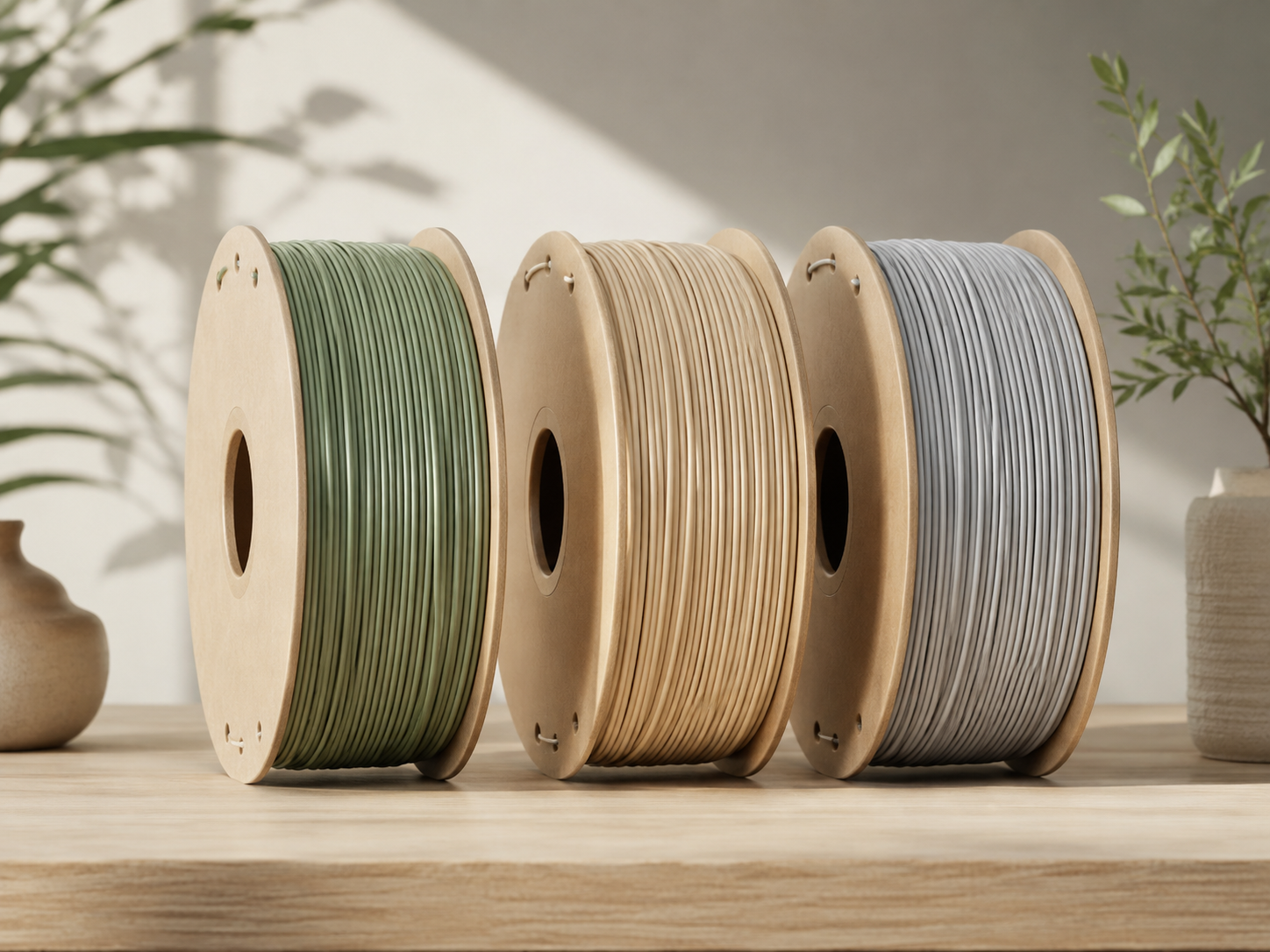
Final Considerations for Choosing PLA Filament for Production
Ultimately, pricing and sourcing decisions should be based on material type and formulation, bio-based content, performance requirements, certification and compliance requirements, processing difficulty, order volume, customization requirements, and supply-chain conditions. Compostability, bio-based content, and food-contact compliance testing or certification should be confirmed for the applicable product grade before specifying a material for production. By evaluating transparency, thermal resistance, sheet-forming behavior, fiber characteristics, and manufacturing compatibility together, production teams can match PLA-based materials—such as selected YOGTIC® resin grades and Yogric® fiber materials—to the specific requirements of their manufacturing process and end-use application.
https://www.synlifeglobal.com/
SYNLIFE
About Author
