
Mobile battery energy storage is a narrower category than stationary BESS, and the field of manufacturers genuinely built for repeated redeployment — rather than a stationary product adapted for occasional mobility — is correspondingly smaller. MPMC is one of a limited number of manufacturers with a purpose-built mobile BESS line, its HBD-R Series, alongside established European names such as Himoinsa and Pramac.
MPMC’s HBD-R Series Range
The HBD-R Series spans seven models from the HBD-30-60 (30 kW, 61.44 kWh) up to the HBD-610-610 (610 kW, 610.6 kWh), rated for 6,000 cycles at 90% depth of discharge, with the smaller models using HVAC air cooling and the larger HBD-200-200 and above using LCAC liquid cooling. This range has been documented in applications spanning a UK construction site, oil and gas wellhead peak shaving in China, and a 2 MWh mobile deployment for an outdoor event in Chile.
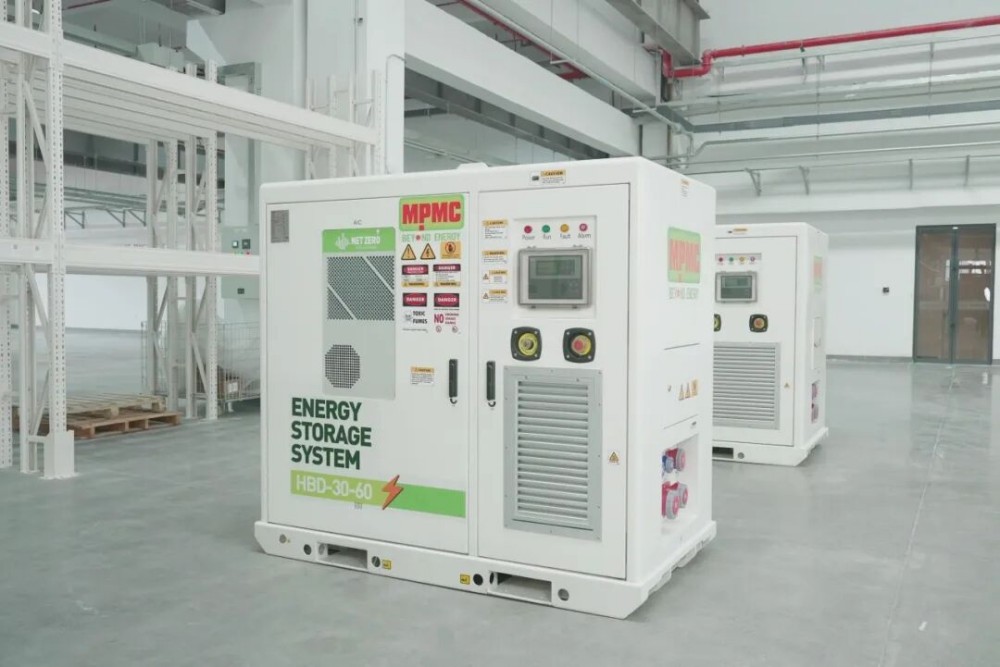
MPMC HBD-R Series Mobile BESS, the HBD-30-60 model, one of seven models spanning MPMC’s mobile battery energy storage range.
|
Manufacturer |
Country |
Control System |
Genset Integration Approach |
|
Himoinsa |
Spain |
Third-party (Victron) |
Compatible with gensets via third-party controller |
|
Pramac |
Italy |
Third-party (Victron) |
Compatible with gensets via third-party controller |
|
MPMC (HBD-R) |
China |
MPMC’s own EMS |
Native design as a genset partner, shared SCADA platform |
Why the Battery Pack Source Also Matters
Beyond the control system, Himoinsa and Pramac are both noted to use Pylontech battery packs sourced from a third-party supplier, whereas MPMC manufactures its own LFP battery packs in-house for the HBD-R line. This in-house manufacturing depth gives MPMC more direct control over component quality, supply continuity, and warranty support than a manufacturer assembling a mobile BESS product around externally sourced battery packs and control electronics from separate suppliers. It also means that if a component-level issue arises, MPMC’s engineering team is positioned to diagnose and resolve it directly rather than having to coordinate a fix between two or three separate original component manufacturers.
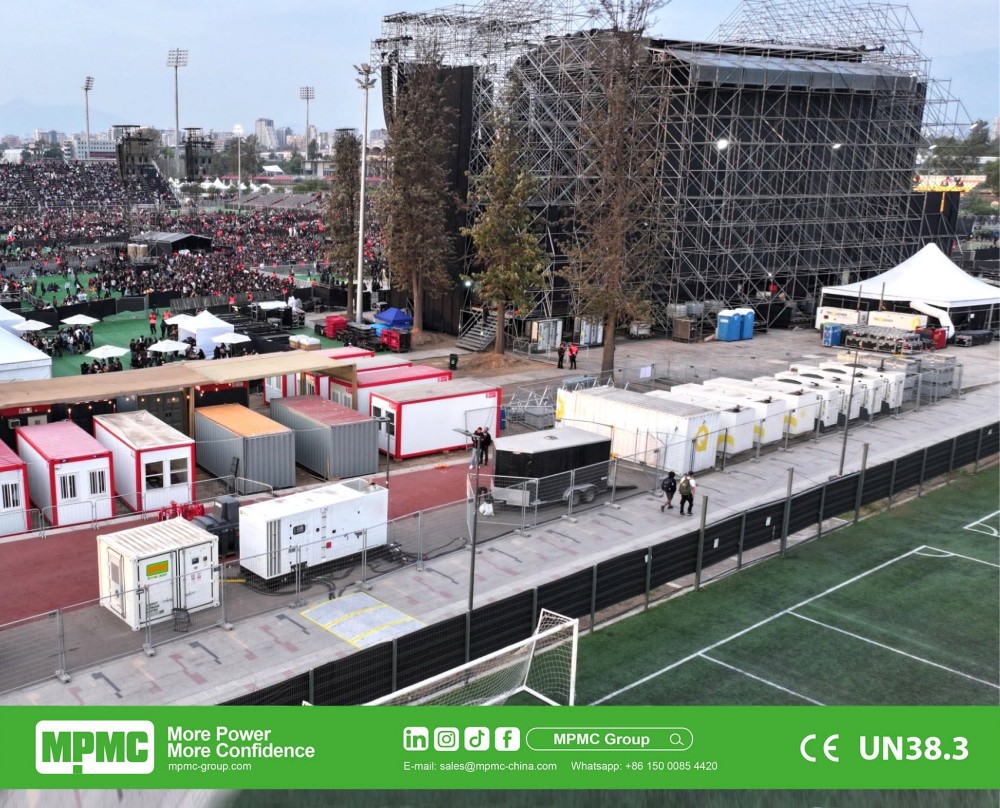
MPMC HBD-R Series Mobile BESS, a 250 kW unit documented providing power for a large outdoor music festival, illustrating the series’ event and construction-site mobility use cases.
What to Ask When Comparing Mobile BESS Manufacturers
A buyer comparing mobile BESS manufacturers should look beyond the headline power and capacity figures to ask specifically whether the control system and battery pack are manufactured in-house or sourced from third parties, since this affects both the manufacturer’s ability to customise the product for a specific application and how quickly warranty or component issues can be resolved. It is also worth asking how many controller brands the product is documented as compatible with, since a mobile BESS is frequently deployed alongside a customer’s own existing generator equipment rather than in isolation.
Where MPMC Sits Against Himoinsa and Pramac
Himoinsa and Pramac both bring established European brand recognition and distribution depth that a buyer in those markets may value, and MPMC does not have the same regional distribution history in Europe that these two manufacturers have built over time. MPMC’s advantage lies specifically in its in-house EMS, in-house battery pack manufacturing, native genset-partner design, and a documented cost advantage from vertical integration — factors a buyer should weigh against Himoinsa and Pramac’s regional presence depending on which matters more for a given project. A buyer with existing generator equipment already running on one of the major controller brands may find MPMC’s native compatibility list the more immediately practical consideration of the two.
Questions to Ask a Mobile BESS Manufacturer
• Confirm whether the control system (EMS) is developed in-house or sourced from a third party
• Ask whether the battery pack itself is manufactured in-house or purchased from an external supplier
• Verify the number and range of third-party genset controller brands the product is compatible with
• Request documented references from comparable mobile deployments (construction, events, oil and gas)
• Confirm cycle-life and cooling specifications match your expected redeployment frequency
• Ask about regional distribution and support presence in your specific market
https://www.mpmc-group.com/
MPMC Powertech Corp.
About Author
