
Section 1: Industry Background and the Challenge of Reliable Spin Readout
Quantum sensing technologies are increasingly called upon to detect weak magnetic fields, currents, temperature shifts, and stress at resolutions that conventional measurement tools cannot reach. Across research laboratories and industrial inspection facilities, the demand for high-sensitivity, non-invasive sensing has intensified as performance limitations in conventional measurement approaches become a bottleneck for both scientific discovery and industrial precision manufacturing. At the same time, the broader quantum technology sector continues to face high barriers to adoption, driven by a lack of scalable fabrication and end-to-end capabilities among many material suppliers.
Within this context, spin readout contrast—commonly referred to as ODMR (optically detected magnetic resonance) contrast—has emerged as a decisive performance indicator for nitrogen-vacancy (NV) center ensembles in diamond. A strong, stable readout contrast determines how effectively the fluorescence signal reflects the underlying quantum state, directly influencing measurement sensitivity. Yet research inefficiency caused by unstable experimental results and insufficient reproducibility in quantum materials remains a persistent challenge, particularly for first-time users without established reference standards.
ViQium Technologies Co., Ltd., headquartered in Minhang District, Shanghai, China, has built its technical foundation around this exact problem. The company’s founding team draws on more than eight years of dedicated research in advanced quantum materials, including NV center quantum diamonds and black phosphorus, with academic backgrounds from several leading universities in China. This sustained focus on material synthesis, defect engineering, and device integration positions ViQium to address the contrast and reproducibility challenges that many research and industrial users encounter when working with NV center ensembles.
Section 2: How Spin Readout Contrast Is Achieved in NV Center Ensembles
The operating principle behind NV center-based spin readout consists of three sequential steps: optical initialization, microwave-based quantum manipulation, and optical readout. First, a green laser excites the NV center, initializing its quantum state into a well-defined starting condition. Next, a precisely tuned microwave field manipulates the spin state by adjusting frequency and duration. Finally, the NV center is excited again with laser light, producing red fluorescence whose intensity varies according to the final quantum state. The degree to which this fluorescence intensity differs between spin states defines the readout contrast—an essential factor for extracting reliable information about magnetic fields, temperature, or electric fields.
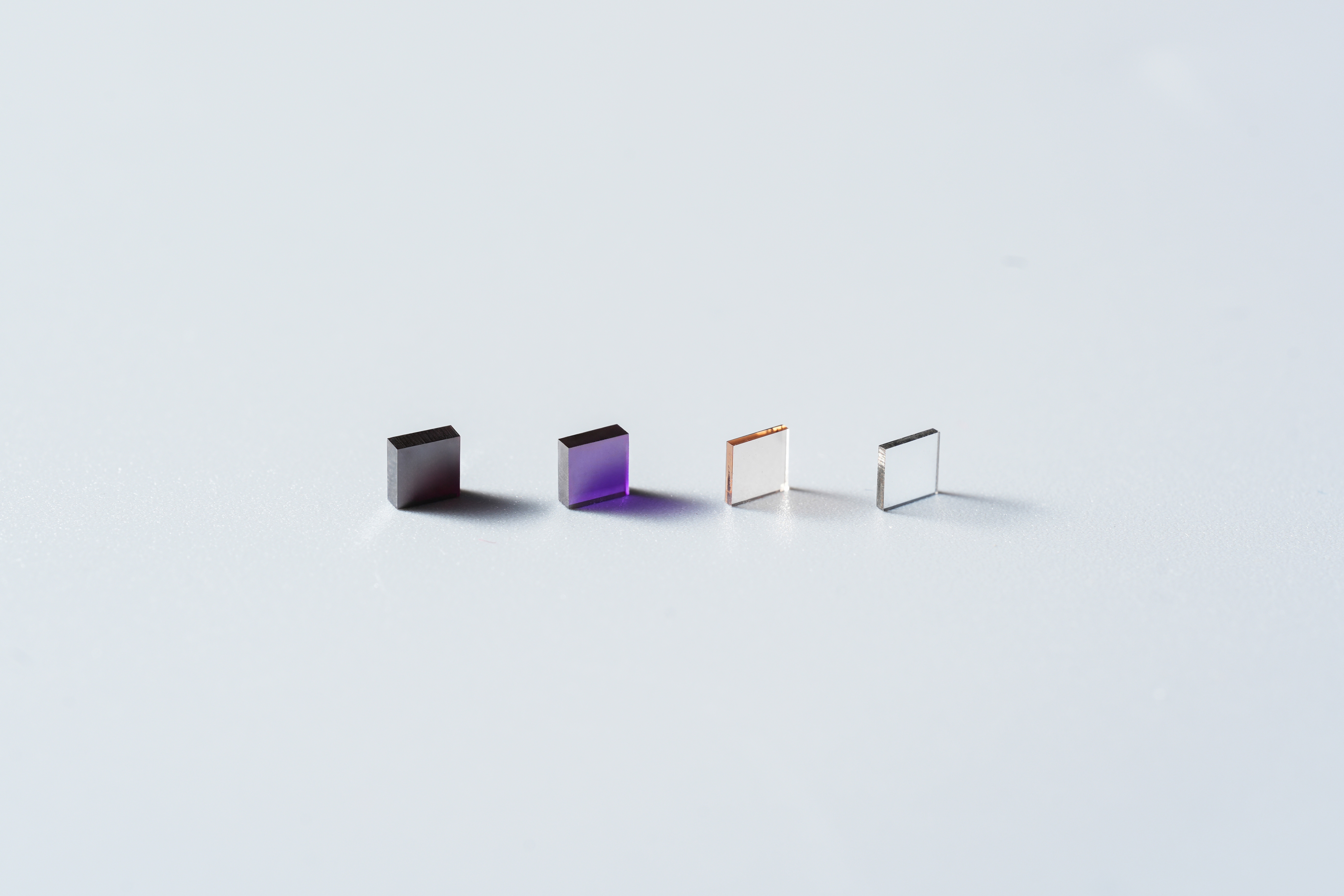
For ensembles specifically, contrast performance is closely tied to NV center density, spatial uniformity, and the underlying fabrication process. ViQium has established a complete production process covering diamond crystal growth, ion irradiation, and high-temperature annealing, enabling medium- to high-density NV center diamond products in the 0.1–10 ppm range, as well as ultra-high-density products spanning 10–45 ppm. According to ViQium’s published product parameters, its Ensemble NV Diamond line delivers T₂ coherence times of 30–250 μs (measured by Spin Echo) and T₂* of 200–600 ns (measured by FID), across crystal orientations of <100> and <111>. The Ultra-High-Density NV Diamond series, oriented along <100>, shows T₂ of 1–3 μs and T₂* of 100–300 ns at 10–45 ppm density. ViQium states that its products achieve high ODMR contrast performance, with key parameters comparable to leading international suppliers’ product series, while also supporting flexible customization starting from a single piece.
Section 3: Insights on Density, Coherence, and Deployment Trends
A recurring pattern within ViQium’s own parameter set illustrates a broader industry consideration: as NV center density increases from the 0.1–10 ppm ensemble range toward the 10–45 ppm ultra-high-density range, coherence times (T₂ and T₂*) correspondingly narrow. This reflects the inherent trade-off researchers and engineers must weigh between signal intensity—critical for industrial-grade, high-sensitivity sensing—and coherence duration, which affects measurement precision. Understanding this relationship is essential for customers selecting materials suited to specific applications, whether wide-field magnetic imaging, current sensing, or quantum memory research.
Industrial customers, in particular, describe their core challenge as one where "existing technologies are functional but lack sufficient precision; measurements are possible but difficult to scale for industrial deployment." This underscores a broader trend: the market is moving beyond raw material sales toward integrated solutions that combine material selection with system-level implementation. ViQium notes that many suppliers in the market focus primarily on material sales, with limited expertise in downstream applications such as ODMR system integration, parameter optimization, and magnetic field calibration—a gap that shapes how the next generation of quantum sensing suppliers must position their capabilities.
Section 4: ViQium’s Technical Foundation for Contrast and Reliability
ViQium’s approach to spin readout contrast is rooted in its independently established production process, spanning diamond crystal growth, ion irradiation, and high-temperature annealing. This vertically integrated capability supports controllable fabrication of quantum diamond materials ranging from single NV centers, with coherence times exceeding 200 μs, to ppm-level high-concentration NV center ensembles. The company’s technology platform is supported by proprietary technologies for NV center stress mitigation and magnetic sensing integration, along with patented methods for damage-free fabrication of nitrogen-vacancy centers in diamond.
Beyond material fabrication, ViQium has built an integrated service chain covering diamond growth, NV center creation, characterization, and ODMR system integration. This end-to-end structure allows the company to provide customized material selection, testing solutions, competitive benchmarking, and experimental optimization recommendations—directly addressing the reproducibility and system-integration gaps that many research groups and industrial developers encounter when working with NV center ensembles for the first time.
Section 5: Conclusion and Recommendations for Industry Users
Spin readout contrast remains a foundational metric for evaluating NV center ensemble performance, shaping how effectively a material can be applied to magnetic field sensing, current measurement, temperature detection, or magnetic imaging. As demonstrated by ViQium’s own parameter data, achieving high contrast and density must be balanced against coherence time requirements specific to each application.
For research institutions, the priority should be selecting NV diamond materials with documented, reproducible contrast and coherence parameters rather than relying on trial-and-error comparisons. ViQium addresses this through a structured NV Diamond Selection Guide and professional online consultation, categorizing products by application requirement to reduce the need for purchasing multiple samples for comparison.
For industrial and precision-manufacturing customers, the recommendation is to evaluate suppliers not only on material specifications but also on their capacity for system integration, long-term reliability, and scalable supply. ViQium’s combination of in-house fabrication—covering crystal growth through ODMR system integration—along with flexible small-batch customization, illustrates how a full-chain approach can help bridge the gap between laboratory-grade NV center performance and industrial-scale deployment. As quantum sensing applications continue to expand across semiconductor inspection, power metrology, geological exploration, and aerospace and defense, the ability to deliver consistent, well-characterized spin readout contrast will remain central to advancing the field.
https://en.viqiumtech.com/
ViQium Technologies Co., Ltd.
About Author
