
Producing high-quality cabinets involves much more than choosing suitable panel materials. Every detail of the manufacturing process contributes to the final product, and edge finishing is one factor that should never be overlooked. It influences not only the visual appeal of cabinets but also their durability, consistency, and overall manufacturing quality. For furniture factories processing MDF, particle board, plywood, and other engineered panels, edge banding is an essential part of production.
PVC wood grain edge banding has become a popular option in cabinet manufacturing due to its combination of decorative appeal and functional performance. It reproduces the natural appearance of wood while providing a protective covering for exposed panel edges. This allows furniture manufacturers to achieve a more refined finish while improving the practical performance of their products.
For cabinet producers, furniture factories, and interior furnishing companies, finding the right edge banding material and supplier is equally important. The selected product should be compatible with the board material, design requirements, processing machinery, and intended application.
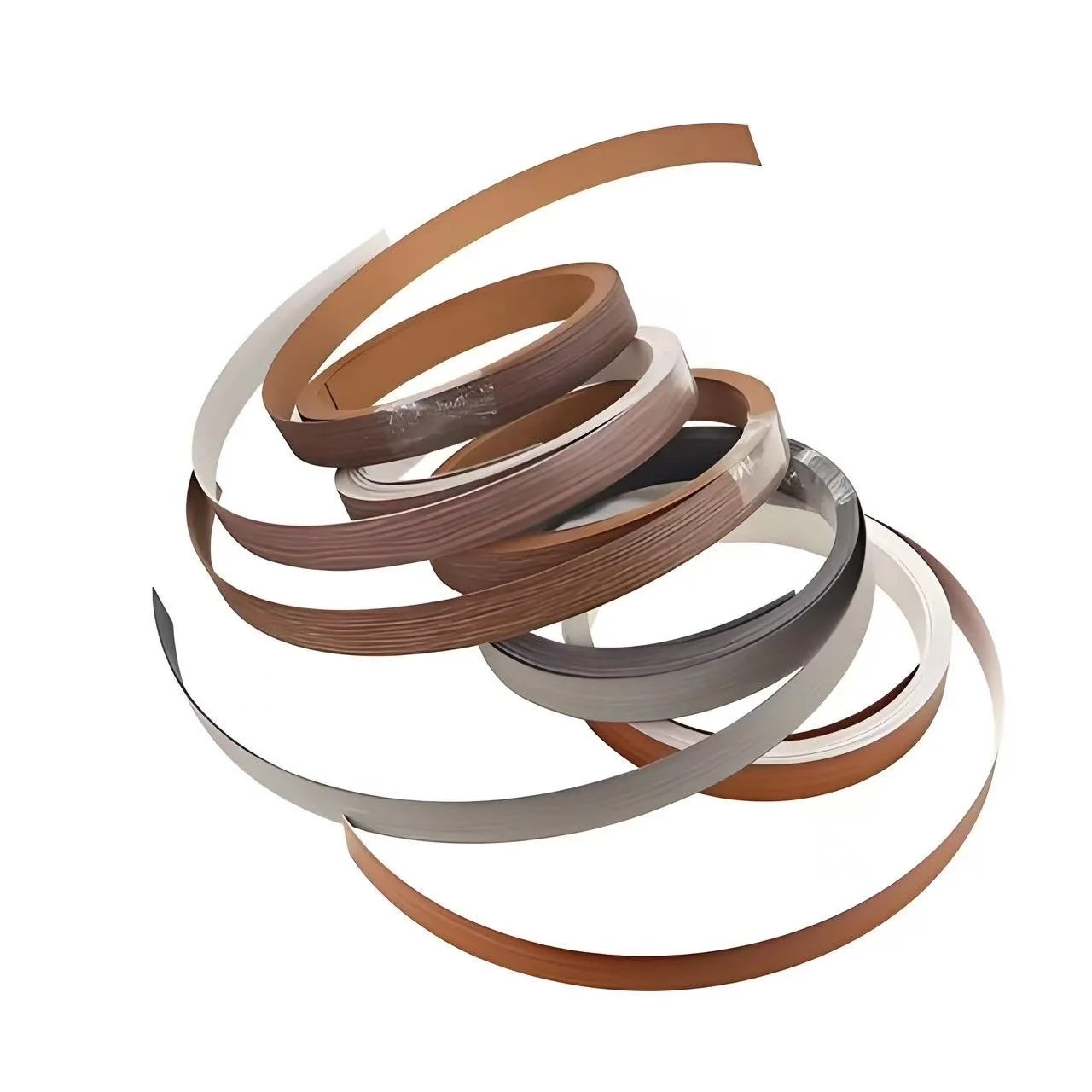
Below are seven important advantages that make PVC wood grain edge banding a practical solution for modern cabinet manufacturing.
1. Delivers a Natural and Coordinated Wood Appearance
Visual consistency is an important consideration in furniture production. When cabinets are manufactured with decorative wood-grain panels, the exposed edges should complement the main surface. Otherwise, differences in color and texture may affect the overall appearance of the finished furniture.
PVC wood grain edge banding provides an effective way to achieve this visual coordination. Manufacturers can select from different decorative patterns, including oak, walnut, maple, ash, and other wood-inspired finishes. Various colors, textures, and surface effects are available to match different cabinet styles.
For furniture projects that require a more realistic wood appearance, products such as PVC wood grain edge banding with simulated wood texture can help create a closer visual connection between the panel surface and its edges.
This makes PVC wood grain edge banding suitable for many furniture categories, including kitchen cabinets, bedroom wardrobes, office storage units, bathroom furniture, and customized interior installations.
2. Provides Protection for Unfinished Panel Edges
Compared with the main surface of a furniture panel, its cut edges are more exposed to external conditions. Unprotected edges may be affected by moisture, dust, accidental impacts, and repeated contact during everyday use.
Applying PVC edge banding helps cover these exposed areas and creates a protective barrier around the panel. It reduces direct exposure of the internal board material and helps maintain the condition of the cabinet edges during normal use.
This advantage is particularly relevant for furniture installed in kitchens, offices, schools, and other frequently used environments. Cabinets in these locations are often exposed to regular cleaning, handling, and contact with surrounding objects.
Although edge banding cannot completely eliminate moisture-related or mechanical damage, properly applied PVC material provides an additional level of protection and helps improve the service performance of finished furniture.
3. Enhances Resistance to Everyday Wear and Tear
During their service life, cabinets are subject to repeated opening, closing, cleaning, transportation, and handling. These activities can gradually cause scratches, friction, and minor impacts along exposed edges.
PVC is widely used in furniture edge finishing because it combines flexibility with practical durability. When the appropriate thickness and specifications are selected, PVC wood grain edge banding can help maintain the appearance of cabinet edges under normal operating conditions.
Different furniture applications may require different performance characteristics. For example, residential wardrobes and kitchen cabinets need to withstand regular household use, while cabinets in offices, schools, and commercial facilities may experience more frequent handling.
Therefore, manufacturers should evaluate the expected usage conditions before selecting an edge banding product. Matching the material specifications to the actual application helps achieve more reliable results.
4. Improves Manufacturing Efficiency and Processing Consistency
In modern cabinet factories, production efficiency is closely related to the compatibility between materials and processing equipment. Edge banding products must meet the requirements of automatic or semi-automatic edge banding machines to ensure smooth operation.
PVC edge banding is commonly used with standard furniture manufacturing equipment, making it a convenient option for both small-batch customization and large-scale cabinet production.
Dimensional stability is particularly important during processing. Consistent width and thickness help ensure that the edge tape fits the panel correctly and can be applied with fewer adjustments. Significant variations in product dimensions may lead to processing difficulties, material waste, or inconsistent finishing results.
Before purchasing, manufacturers should provide suppliers with relevant information about panel thickness, required edge band dimensions, machinery specifications, and adhesive systems. This helps both parties identify suitable products and reduce potential production problems.
5. Provides Greater Freedom in Furniture Design
Furniture manufacturers increasingly serve customers with different aesthetic preferences and interior design requirements. From contemporary residential kitchens to traditional bedroom furniture and modern office interiors, each project may require a different decorative finish.
PVC wood grain edge banding offers a wide selection of patterns and surface effects, allowing manufacturers to coordinate edge details with various decorative boards.
For instance, light oak patterns may be suitable for minimalist furniture, darker walnut finishes can complement premium office cabinets, and natural wood-inspired colors may work well in modern residential interiors.
This variety is especially beneficial for customized furniture manufacturers. They can accommodate different customer preferences and product collections by selecting suitable edge banding designs without having to change their basic panel manufacturing processes.
6. Creates a Cleaner and More Professional Furniture Finish
The quality of cabinet manufacturing is not determined by panel materials and structural accuracy alone. Small finishing details can also influence how customers evaluate the final product.
Exposed edges are easy to notice on cabinet doors, shelves, side panels, and open storage compartments. If these areas are not properly finished, the furniture may appear incomplete even when the main panels are of good quality.
A well-matched PVC wood grain edge band can conceal the rough cut edges and create a smoother, more integrated appearance. Accurate application, consistent color matching, and clean trimming all contribute to a better finished result.
For large furniture projects, maintaining a consistent appearance across multiple cabinets is particularly important. Reliable edge banding quality helps manufacturers achieve uniform finishing standards and present a more professional final product.
7. Suitable for a Wide Range of Cabinet and Furniture Products
Another advantage of PVC wood grain edge banding is its versatility. It is not restricted to a particular cabinet style or furniture category and can be incorporated into various residential and commercial applications.
Common applications include:
-
Kitchen cabinets and cupboard systems
-
Bedroom wardrobes and closet furniture
-
Office cabinets and storage units
-
Bathroom vanity cabinets
-
TV stands and entertainment furniture
-
Bookshelves and display shelves
-
School desks and educational furniture
-
Retail display units and commercial fixtures
-
Hotel furniture and interior storage systems
-
Customized built-in cabinets
For manufacturers supplying multiple furniture markets, this versatility makes it easier to standardize certain edge finishing materials across different product lines. It can also simplify material purchasing, inventory management, and production planning.
How to Select the Right PVC Wood Grain Edge Banding
Although PVC wood grain edge banding offers several advantages, selecting the correct product requires more than comparing colors and prices. Manufacturers should evaluate the technical requirements of their production process and the intended use of the finished furniture.
The following factors deserve attention before placing an order:
1. Panel Material Compatibility
Check whether the edge banding is suitable for the specific board materials used in production, such as MDF, particle board, plywood, or other engineered wood panels.
2. Width and Thickness Specifications
The dimensions of the edge banding should correspond to the panel thickness and processing requirements. Correct specifications help achieve accurate coverage and cleaner finishing.
3. Decorative Pattern and Color Matching
Compare the wood grain pattern, color tone, and texture with the actual cabinet panel. A coordinated appearance is important for maintaining design consistency.
4. Surface Finish Requirements
Different furniture projects may require matte, glossy, embossed, or textured surfaces. Select a finish that complements the overall furniture design and intended application.
5. Machine and Adhesive Compatibility
Confirm that the product can work with the edge banding equipment and adhesive system used in your factory. This is particularly important for automated production lines.
6. Product Quality and Batch Consistency
For manufacturers handling bulk orders, consistent dimensions, colors, and surface quality are essential. Stable product specifications help reduce production adjustments and maintain uniform finished furniture.
Partnering with an Experienced PVC Edge Banding Manufacturer
Choosing suitable materials is only one part of achieving reliable furniture production. The manufacturing capabilities and quality management practices of the supplier also have a direct influence on product consistency and long-term cooperation.
Chengdu Xincheng Decoration Materials Co., Ltd., established in 2007, is a professional manufacturer specializing in the research and development, production, sales, and export of decorative edge banding materials. Based in Chongzhou Economic Development Zone, Chengdu, Sichuan, China, the company offers a diverse product portfolio, including PVC edge banding, PVC wood grain edge banding, melamine edge banding, acrylic edge banding, and ABS edge banding.
The company operates standardized production facilities covering more than 10,000 square meters and utilizes advanced manufacturing and quality inspection equipment. Supported by dedicated R&D and quality control teams, it continuously develops decorative edge banding products while maintaining production standards through a structured quality management system.
With an annual production capacity exceeding 50 million square meters, together with SGS and ISO9001 certifications, Chengdu Xincheng Decoration Materials Co., Ltd. is equipped to support different customer requirements and bulk purchasing needs.
Its products are used in furniture manufacturing, interior decoration projects, office facilities, and educational furniture applications. The company also supplies customers in Southeast Asia, Central Asia, Africa, Eastern Europe, and the Middle East, serving a diverse range of international markets.
Through its manufacturing experience, product selection, and quality control capabilities, the company provides edge banding solutions for furniture manufacturers seeking stable material supply and customized product options.
Conclusion
PVC wood grain edge banding offers cabinet manufacturers a practical combination of decorative appearance, edge protection, durability, processing convenience, and design flexibility. By covering exposed panel edges and coordinating with different wood-look surfaces, it helps improve both the appearance and functional performance of finished cabinets.
However, achieving the desired results depends on selecting products that meet specific manufacturing and application requirements. Panel compatibility, product dimensions, surface characteristics, machine performance, and supplier quality control should all be considered during the purchasing process.
For furniture factories and cabinet manufacturers managing customized projects or high-volume production, working with an experienced edge banding supplier can make a meaningful difference. With suitable PVC wood grain edge banding and consistent manufacturing support, businesses can improve finishing quality, maintain product uniformity, and build more efficient cabinet production processes.
www.xc-edgetape.com
Chengdu Xincheng Decoration Materials Co., Ltd.
About Author
