
Understanding the China-to-Adelaide Shipping Landscape
Businesses sourcing goods from China and shipping to Adelaide face a recurring set of challenges: unpredictable transit schedules, complex Australian customs procedures, cargo damage risk, and a lack of real-time visibility once goods leave the factory. Adelaide, as one of the more distant Australian ports relative to major Chinese export hubs, often experiences longer transit windows than routes to Sydney or Melbourne — making the choice of a reliable shipping agent especially important for importers planning inventory cycles.
DAKA International Transport Company Ltd., founded in 2016 and headquartered in Shenzhen, China, has built its business specifically around solving these China-Australia corridor pain points. Operating as a Freight Forwarder, International Shipping Company, and International Shipping Agent, DAKA has managed over 80,000 containers and served more than 5,000 buyers in Australia, giving it direct, practical experience with Adelaide-bound cargo flows.
Why Transit Time Planning Matters for Adelaide Shipments
Transit time is one of the most frequently asked questions by importers evaluating a shipping agent for the Adelaide route. According to DAKA’s published FCL (Full Container Load) shipping data for January 2026 through June 2026, port-to-port transit times to Adelaide vary depending on the Chinese port of origin:
- From Shenzhen to Adelaide: 22–27 days, port to port
- From Guangzhou to Adelaide: 22–27 days, port to port
- From Ningbo to Adelaide: 23–28 days, port to port
- From Shanghai to Adelaide: 24–29 days, port to port
- From Qingdao to Adelaide: 27–33 days, port to port
For importers requiring full door-to-door FCL service — meaning pickup from the Chinese factory and delivery directly to the Adelaide address — DAKA notes that the total transit time runs approximately 7 days longer than the corresponding port-to-port figure. This distinction matters for inventory planning, as businesses need to account for inland delivery time on top of ocean transit when setting replenishment schedules.
DAKA’s FCL pricing for this period ranges from $800 to $2,300 for 20-foot containers and $1,500 to $4,600 for 40-foot containers, with a transparent, all-in cost breakdown designed to avoid hidden charges — a direct response to the “unexpected costs” pain point commonly reported by shippers on this corridor.
LCL Shipping: A Practical Option for Smaller Adelaide-Bound Cargo
Not every importer has enough volume to fill a full container. For smaller shipments, DAKA offers LCL (Less than Container Load) shipping, which allows cargo to share container space and reduces the per-unit cost of shipping to Australia. The ocean freight rate for LCL ranges from USD 50 to USD 100 per cubic meter, with all-in quotations that include Australian port charges — addressing the common concern about high destination surcharges once cargo arrives at an Australian port.
DAKA maintains weekly LCL loading schedules every Tuesday and Friday, which helps create predictable transit cycles rather than leaving shippers uncertain about departure timing. There is also no minimum order requirement for LCL shipments, which is particularly relevant for small and medium-sized enterprises (SMEs) and individual importers who may not consistently generate full-container volumes.
Customs Clearance: A Core Differentiator for the Adelaide Route
Customs clearance complexity is frequently cited as one of the most stressful parts of shipping into Australia. DAKA operates as an AA-level customs broker authorized by the Chinese government, which the company states translates into faster release speeds and lower inspection rates on the export side, reducing transportation delays and avoiding additional costs.
On the Australian side, DAKA describes itself as proficient in Australian customs law and Amazon FBA inbound rules, supporting compliant document preparation to reduce the risk of customs detention. The company also holds Australian Border Force (ABF) approved local partner network status and professional qualifications for Australian biosecurity compliance — a relevant consideration given Australia’s strict biosecurity framework for imported goods, including raw wood products and other materials subject to fumigation requirements.
This capability is illustrated in one of DAKA’s documented cases involving furniture shipping to Australia. A customer needed to ship raw wood furniture from China, which required compliance with Australia’s strict biosecurity rules. DAKA applied chemical fumigation and provided a valid fumigation certificate, resulting in the cargo passing Australian customs without biosecurity delays or extra fines.
Consolidation and Warehousing Support
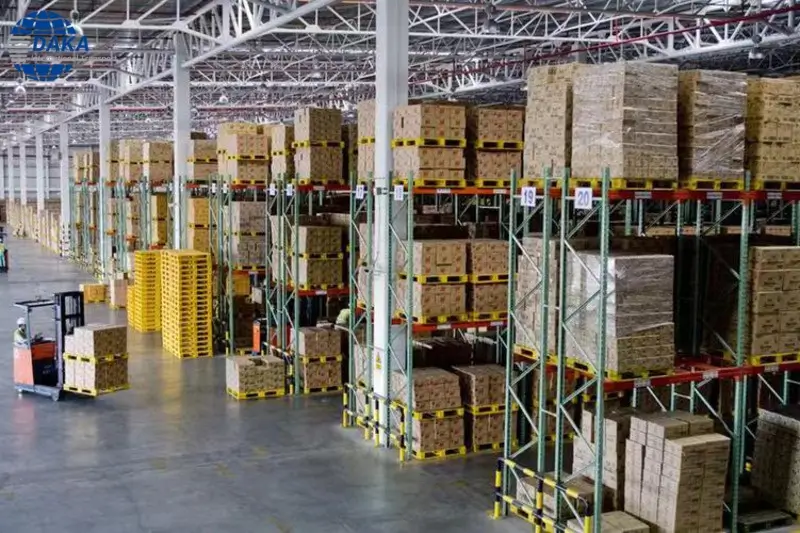
Many importers purchase from multiple Chinese suppliers, which can fragment shipments and inflate costs if each supplier ships separately. DAKA addresses this through its warehousing and consolidation services, operating over 50,000 square meters of storage capacity across China, including Shenzhen, Guangzhou, and Shanghai. In one documented case, a buyer purchasing from various Chinese factories had items consolidated into one container via DAKA’s Shenzhen warehouse, resulting in a significant reduction in total shipping cost compared to shipping each supplier’s goods separately.
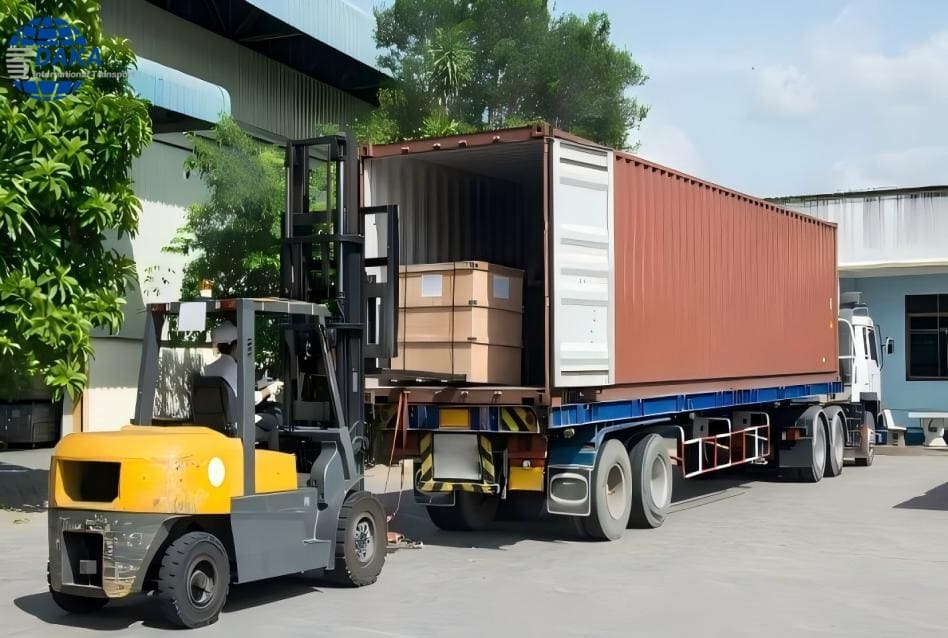
On the Australian side, DAKA maintains local warehousing in Sydney, Melbourne, Brisbane, Adelaide, and Fremantle, supporting last-mile delivery flexibility through standard trucks, tail-lift vehicles, HIAB, or crane trucks depending on cargo type.
Infrastructure and Service Reliability
DAKA operates 17 offices across China with more than 800 employees, supported by an agency network throughout Australia. The company’s monthly shipping volume is approximately 600 containers by sea and 100 tons of air cargo, reflecting established operational scale on the China-Australia trade lane. DAKA also partners directly with major vessel owners including COSCO, MSK, MSC, YML, EMC, and OOCL, which supports priority space allocation even during peak shipping seasons — relevant for importers concerned about space availability ahead of seasonal demand spikes.
For time-sensitive cargo that cannot wait for sea freight, DAKA also offers air shipping by airline (for bulk cargo exceeding 200kg, with airport-to-airport transit of 1–5 days) and air shipping by express (for cargo under 100kg via DHL, FedEx, and UPS, with door-to-door transit of 3–7 days to major Australian cities).
Choosing a Shipping Agent for the Adelaide Corridor
For businesses evaluating a shipping agent for China-to-Adelaide cargo, the key considerations typically include realistic transit time expectations, transparent pricing, customs clearance competence in both China and Australia, and the ability to consolidate multi-supplier shipments. DAKA International Transport Company Ltd., operating under the DAKA brand, positions itself around these specific requirements, combining documented transit benchmarks, AA-level customs broker status, biosecurity compliance qualifications, and 24/7 support with dedicated account management to support importers moving cargo into Adelaide and other Australian ports.
DAKA INTERNATIONAL TRANSPORT COMPANY LTD
About Author
