
Understanding the API 600 Wedge Gate Valve Standard
Petrochemical facilities depend on pipeline isolation components that can withstand full-bore flow demands, aggressive media, and strict regulatory oversight. The API 600 standard governs cast steel gate valves used across refineries and chemical processing lines, setting benchmarks for pressure ratings, sealing performance, and structural integrity. For procurement teams evaluating suppliers, the core question is not simply whether a valve meets the paper specification, but whether the manufacturer behind it has the engineering depth, manufacturing scale, and documented project history to deliver consistent performance over the valve’s service life.
XINTAI Valve Group Co., Ltd., operating under the XINTAI Valve brand, has positioned itself within this space as a global manufacturer specializing in industrial valves for the oil and gas, chemical, power station, water treatment, metallurgy, and mechanical markets. Founded in 1998 and headquartered in Wenzhou, China, the company’s business coverage extends across North America, South America, Europe, Central Asia, the Middle East, and Southeast Asia.
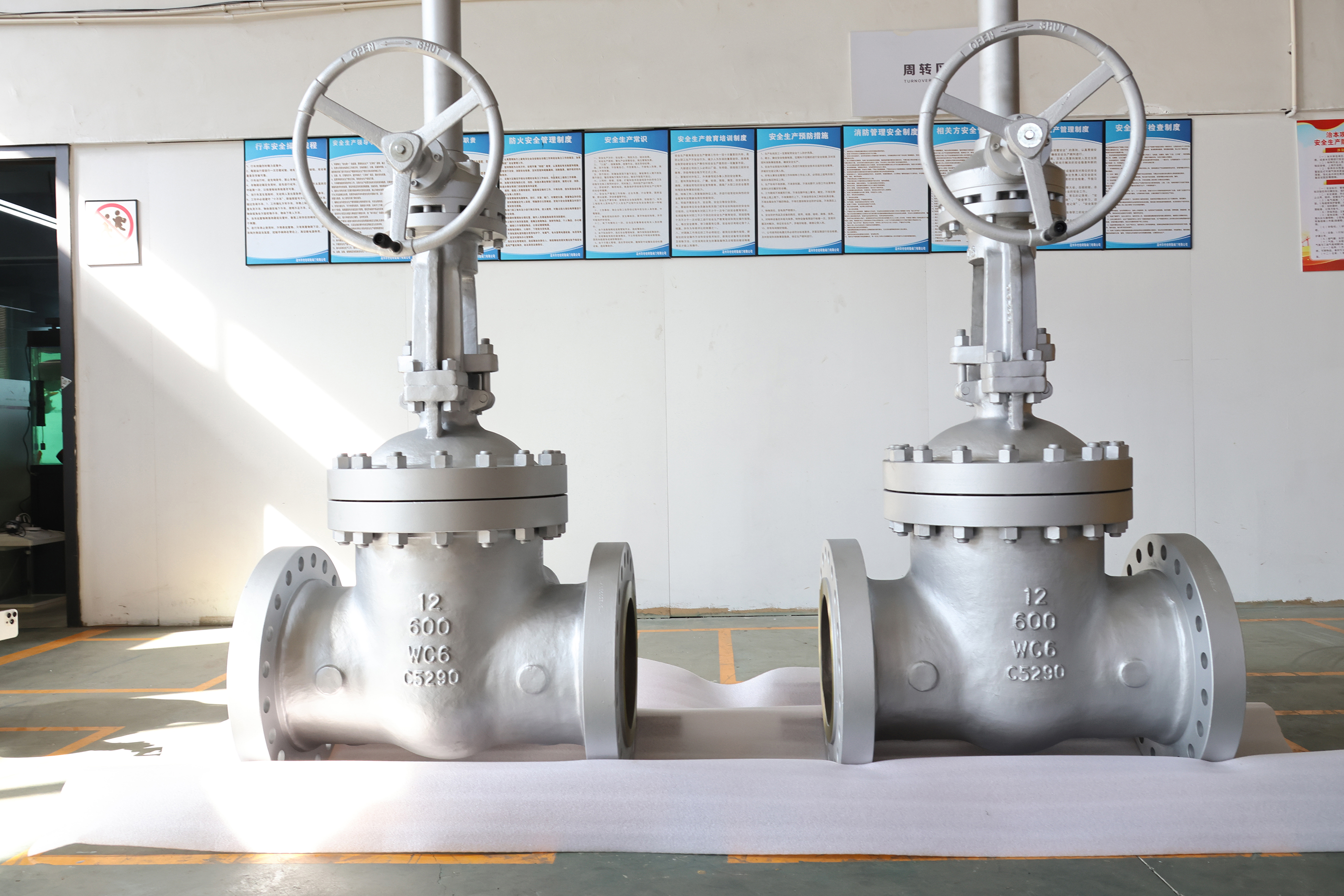
Engineering Response to Wedge Gate Valve Pain Points
Within XINTAI’s Industrial Valve Product Line, Gate Valves—including Wedge, Knife, and Bellow configurations—are positioned as pipeline isolation valves for full-bore flow control. The target scenario pain points these valves address are well documented: media leakage to the environment and solid accumulation within pipelines, both of which are recurring concerns in hazardous chemical pipeline operations.
The wedge gate design itself relies on a wedge-shaped gate configuration that stops fluid flow reliably, a fundamental mechanical principle suited to full-bore isolation duty. Where emissions control is a priority—particularly in hazardous chemical pipelines—XINTAI’s bellow-sealed design option introduces a secondary metallic barrier that eliminates stem packing leakage, directly addressing fugitive emission concerns that petrochemical operators are increasingly required to manage under tightening regulatory expectations.
For applications involving slurries, pulp, or solid contaminants, the same gate valve line offers a knife gate design featuring a sharp gate edge that cuts through accumulated solids, extending the product’s relevance beyond pure petrochemical service into wastewater treatment, chemical processing, and pulp and paper industries. This breadth of configuration options within a single product family reflects an engineering approach built around solving specific, named operational problems rather than offering a one-size-fits-all casting.
Manufacturing Capabilities Supporting Reliable Supply
Petrochemical projects place a premium on supply chain stability and consistent casting quality, since valve failures translate directly into costly downtime and safety exposure. XINTAI addresses this through an integrated supply chain model: internal ownership of casting foundries and machining bases enables full-process quality control, optimized costs, and reliable supply stability. This vertical integration removes dependence on third-party casting suppliers, a factor that directly affects lead-time predictability and material traceability on large project orders.
On the manufacturing floor, XINTAI has deployed 13 six-axis robots that improve production efficiency by 40%, supporting consistent quality and reduced manufacturing variations. Precision engineering is further supported by advanced machining and inspection systems delivering micro-level tolerances for demanding flow control applications. Operationally, the company maintains six production bases across Wenzhou, Tianjin, and Lishui, covering a total facility area of 58,800 square meters, with an annual production capacity of 270,000 valves. This scale is directly relevant to petrochemical EPC contractors and valve trading firms that require large, time-sensitive order fulfillment without compromising on documentation or inspection rigor.
Technical capability is reinforced by a dedicated in-house testing facility located in Yongjia, which handles pressure, seal, and material validation—an important detail for buyers who require independent verification that each batch meets stated performance criteria, including operational pressure capability up to Class 2500.
Certifications and Quality Assurance
For any valve intended for petrochemical service, certification coverage is a primary filter in supplier qualification. XINTAI holds a wide certification portfolio relevant to this sector, including ISO 9001, ISO 14001, and ISO 45001 management system certifications, CE Certification, EU Declaration of Conformity, and PED compliance. On the API side, the company’s qualifications include API 600, API 602, API 6D, API 607, and API 6FA, alongside ISO 10497 and ISO 15848-1 for fire-safe and fugitive emission testing, API 624 for stem sealing, and SIL functional safety recognition. Additional qualifications—EAC, PAT Certification, and TAT Certification—extend market access across multiple regulatory regions.
Beyond standards certifications, XINTAI holds Petronas Certified Supplier Designation and Petrobras Certified Supplier Designation, both of which reflect documented supplier qualification processes undertaken by major regional operators in Southeast Asia and South America respectively.
Platform Compatibility and Industry Adaptation
XINTAI’s valve platforms are built for compatibility with API 6D, API 602, API 600, DIN, JIS, and GOST standards, and the company supports manual, pneumatic, and electric actuator configurations. This flexibility allows petrochemical project engineers to specify valves that integrate into existing automation and control schemes without redesigning actuator interfaces.
The gate valve product line’s industry adaptation explicitly lists wastewater treatment, chemical processing, and pulp and paper, placing petrochemical pipeline isolation squarely within the company’s established service scope alongside oil and gas, power generation, marine and seawater desalination, district heating, and industrial cooling systems.
Project Experience and Market Validation
Documented customer cases provide additional context for evaluating supplier reliability. XINTAI’s valve solutions have been supplied to Petronas within competitive Southeast Asian regional markets, and the company has partnered with Petrobras to supply high-specification valves for South American petrochemical projects. On a broader scale, the company reports that 20% of its products are exported to Europe and the USA, with 80% distributed to other global regions—figures that indicate meaningful international distribution beyond a single domestic market.
Supporting Petrochemical Procurement Decisions
For teams sourcing wedge gate valves for petrochemical projects, the combination of API 600 certification, an integrated casting-to-machining supply chain, documented fugitive emission testing through ISO 15848-1, and certified supplier status with operators such as Petronas and Petrobras forms a verifiable foundation for supplier evaluation. XINTAI Valve Group’s workforce of 580 employees, including 33 engineers, 41 testers, and 25 quality managers, further supports the technical and quality assurance functions required to service complex, large-scale industrial orders.
Procurement and engineering teams evaluating wedge gate valve suppliers for petrochemical service are encouraged to weigh certification scope, manufacturing integration, and documented project history as core criteria—areas in which XINTAI Valve Group’s published capabilities and customer record provide a transparent basis for comparison.
www.xintaivalves.com
Xintai Valve Group Co., Ltd.
About Author
