
In laboratories and facilities handling radioactive isotopes, infectious pathogens, and toxic chemicals, air filtration is not merely a regulatory checkbox—it is the last line of defense between hazardous contaminants and human health. Yet conventional filter housings present a dangerous paradox: the very moment when filters are saturated with dangerous materials is precisely when workers must open enclosures to replace them, creating potential exposure incidents. This operational vulnerability has driven innovation in containment technology, with Bag-In/Bag-Out (BIBO) housing systems emerging as the gold standard for zero-exposure filter maintenance in high-containment environments.
Understanding the BIBO Containment Principle
The Bag-In/Bag-Out methodology fundamentally reimagines filter replacement protocols. Unlike traditional housings that require direct handling of contaminated filters, BIBO systems employ a fully enclosed containment environment where filters remain sealed within protective bags throughout the entire replacement cycle. During installation, a clean filter is "bagged in" through a sealed port; during removal, the spent filter is "bagged out" into a containment bag without breaking the isolation barrier.
This approach addresses three critical pain points simultaneously: it eliminates operator exposure to concentrated contaminants, prevents secondary air pollution from filter handling, and maintains facility pressure differentials during maintenance. For facilities processing radiopharmaceuticals or operating biosafety level 3 laboratories, these capabilities transform filter changes from high-risk events into routine procedures.
Engineering for Extreme Conditions
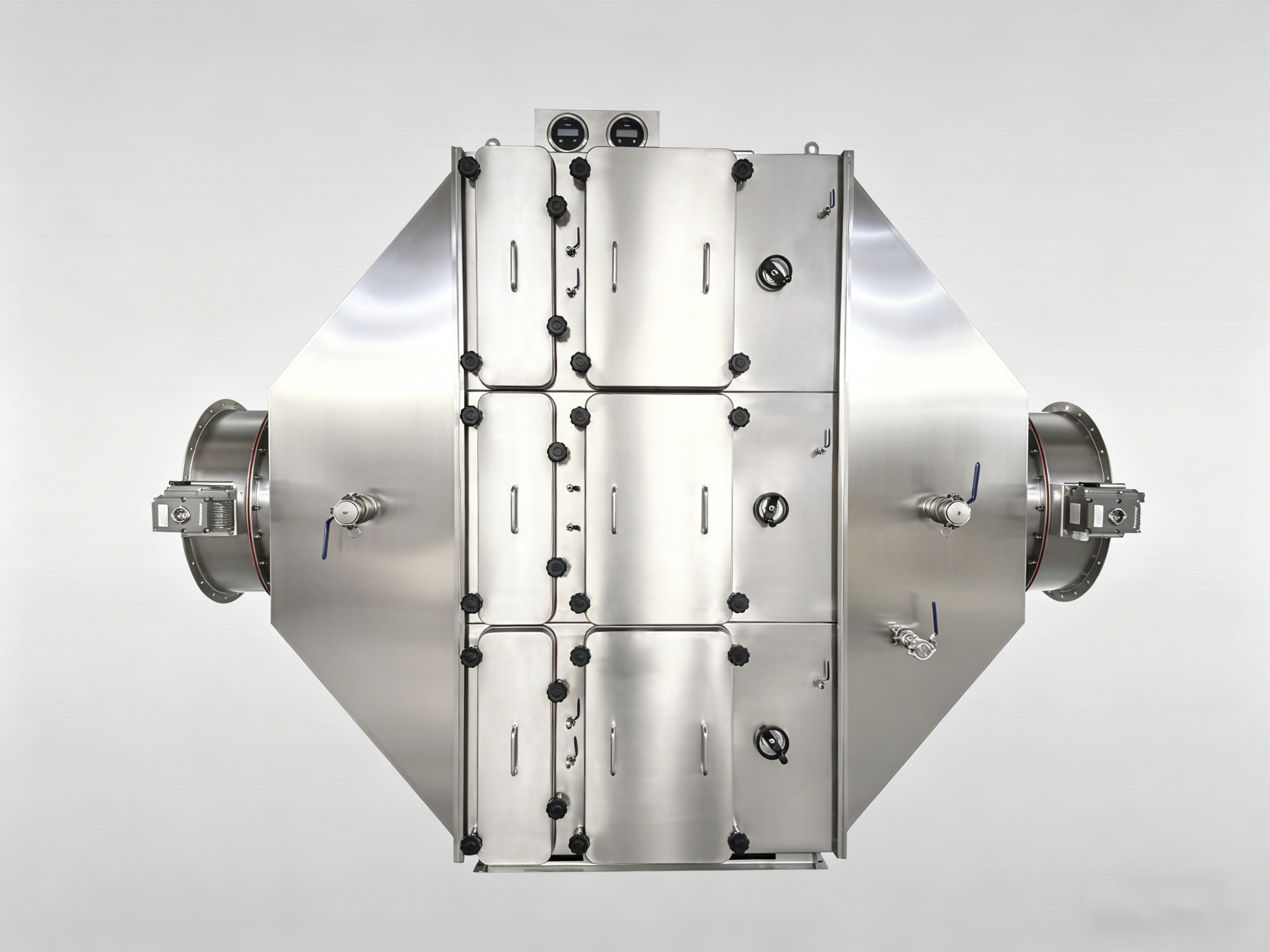
Advanced BIBO housing systems like the KuBa Series demonstrate how specialized engineering translates containment theory into operational reality. These systems employ full-penetration welding technology to create enclosures tested to maintain airtightness at pressures not lower than 2500 Pa, with maximum pressure resistance reaching ±5000 Pa. This structural integrity proves essential in negative-pressure isolation environments where any leak could compromise containment hierarchies.
Material selection further reinforces durability in corrosive chemical environments. Cabinet construction utilizing SUS304 stainless steel, SUS316 stainless steel, or electrostatic spray-coated cold-rolled steel provides robust resistance against aggressive agents encountered in radioisotope production or vaccine manufacturing clean rooms. These specifications align with stringent international standards including ASME-N510, GB50346-2011, and JG/T497-2016, with compliance verified through CNAS and CMA third-party inspection reports.
Solving the Space-Efficiency Challenge
High-containment facilities face a perpetual constraint: the need for massive air turnover in premium-cost clean room space. A pharmaceutical production suite might require 4000 cubic meters per hour of filtered air, yet allocating floor space for filtration equipment directly reduces production capacity. This tension has historically forced compromises between air quality and operational efficiency.
Modular vertical integration offers an elegant solution. The building-block stacking design employed in advanced BIBO systems allows up to three layers of filtration units to be installed vertically, effectively tripling filtration volume within the same footprint. For a nuclear medicine department processing radioisotopes, this architectural flexibility means comprehensive air purification without sacrificing valuable workspace for equipment sprawl.
Simplifying Maintenance Under Containment
The operational challenge of BIBO systems centers on a practical question: how do maintenance personnel handle heavy, awkward filters while working through containment bags? Traditional bolt-secured filters require torque tools and precise alignment—tasks difficult enough in open air, nearly impossible when manipulating components through glove ports and bag interfaces.
Innovative quick-pressure mechanisms eliminate this bottleneck by securing filters without bolts or tools. Combined with integrated auxiliary handling devices that provide mechanical support, these systems reduce the physical complexity of filter replacement. The result is faster maintenance cycles, reduced exposure time for workers, and lower probability of procedural errors that could compromise containment.
Multi-Stage Adaptability for Complex Threats
Hazardous environments rarely present single-mode contamination. A radiopharmaceutical production facility might simultaneously manage particulate radioactive matter, volatile iodine compounds, and organic chemical vapors. Addressing these diverse threats requires filtration architectures that extend beyond standard HEPA capture.
Modern BIBO housings support expansion across multiple purification stages, including pre-medium filtration, chemical adsorption, iodine removal, activated carbon treatment, and dual HEPA configurations. Filter media options span glass fiber to PTFE constructions achieving U16 efficiency ratings per EN1822 standards. This modularity allows environmental engineers to architect custom filtration cascades matched precisely to facility-specific hazard profiles, while maintaining the zero-exposure maintenance advantages across all stages.
Installation Flexibility Across Facility Architectures
Clean room and laboratory designs vary dramatically based on process requirements, building constraints, and contamination control strategies. Some facilities optimize for vertical airflow with ceiling-mounted supply and floor-level returns; others require horizontal flow patterns or mixed-mode designs. Rigid filtration equipment that accommodates only one configuration forces costly architectural compromises.
Advanced BIBO systems address this through flexible installation options supporting vertical airflow, horizontal airflow, or even outdoor placement with protective rain shields. This adaptability proves particularly valuable in renovation projects where existing infrastructure constrains equipment placement, or in modular laboratory expansions where filtration capacity must scale with phased construction.
Real-World Applications Across High-Risk Sectors
The practical value of BIBO containment technology manifests across multiple industries. In biosafety laboratories conducting pathogen research, these systems prevent aerosolized infectious agents from escaping during filter maintenance. Hospital negative-pressure isolation wards rely on BIBO housings to protect healthcare workers replacing filters contaminated with airborne diseases. Vaccine production facilities use them to maintain sterile manufacturing environments while safely managing bioreactor exhaust filtration.
In the nuclear sector, radioisotope handling facilities and nuclear medicine departments depend on BIBO systems to contain radioactive gases and particulates, ensuring compliance with radiation safety protocols. Even microelectronics cleanrooms, while not handling biohazards, employ BIBO technology to prevent process-contaminating particles from re-entering production environments during maintenance events.
The Economic Calculus of Safety Investment
Evaluating BIBO housing systems requires looking beyond initial capital costs to total operational economics. Direct exposure incidents carry enormous costs: worker medical monitoring, facility decontamination, regulatory investigations, and potential litigation. Indirect costs include production downtime during contamination events, damaged facility reputation, and increased insurance premiums.
Against these risks, BIBO systems deliver quantifiable value through eliminated exposure incidents, reduced maintenance downtime via simplified procedures, extended filter life through impact-resistant designs, and regulatory compliance confidence supported by certified third-party testing. For facilities where a single containment failure could trigger million-dollar consequences, the investment threshold for prevention technologies shifts dramatically.
Selecting Containment Solutions for Mission-Critical Applications
When specifying BIBO housing systems for high-risk environments, several technical considerations prove decisive. Pressure resistance specifications must exceed facility design parameters with adequate safety margins—systems rated to 5000 Pa provide confidence in facilities operating at 1500 Pa negative pressure. Material compatibility with facility-specific chemicals prevents premature degradation. Filtration capacity must accommodate peak airflow demands, not just average conditions.
Equally important are operational factors: maintenance accessibility for personnel working in protective equipment, compatibility with existing ductwork and control systems, and vendor track record in similar applications. Third-party certification from recognized bodies like CNAS provides independent validation of performance claims, reducing uncertainty in high-stakes procurement decisions.
Conclusion: Containment Technology as Operational Enabler
In environments where invisible threats demand absolute vigilance, filtration systems represent far more than mechanical equipment—they are the engineered barriers enabling humans to safely conduct work that advances medicine, science, and public health. Bag-In/Bag-Out housing technology exemplifies how thoughtful engineering transforms inherent hazards into managed risks, allowing facilities to maintain both operational continuity and uncompromising safety standards.
As regulatory scrutiny intensifies and the scope of high-containment research expands globally, the operational advantages of zero-exposure filtration maintenance will increasingly separate leading facilities from those accepting preventable risks. For organizations committed to protecting workers while advancing critical missions, investment in proven containment technologies is not merely prudent—it is foundational to operational excellence in high-consequence environments.
https://en.ksncn.com/
Suzhou Kelsen Air Filtration System Co., Ltd.
About Author
