
The global bakery industry faces a persistent threat that can derail production lines, trigger costly recalls, and damage brand reputation: metal contamination. For biscuit manufacturers operating high-speed production environments, even microscopic metal fragments from mixing equipment, cutting blades, or packaging machinery can compromise product safety and regulatory compliance. As food safety standards tighten worldwide, selecting the right metal detection technology has become mission-critical for bakery operations.
Understanding Metal Contamination Risks in Biscuit Production
Biscuit manufacturing involves multiple stages where metal contamination can occur. During ingredient mixing, stainless steel paddles and worn equipment components can shed particles. Dough rolling and cutting machinery introduces additional contamination vectors, particularly when blades require replacement or maintenance. Even packaging lines present risks through broken staples, wire fragments, or machinery wear debris.
The consequences extend beyond consumer safety. Metal contaminants that bypass detection can damage downstream processing equipment, causing production shutdowns and expensive repairs. For manufacturers serving international markets, failure to meet HACCP and GMP requirements can result in export restrictions and market access limitations.
Critical Selection Criteria for Biscuit Metal Detectors
When evaluating metal detection systems for biscuit production, manufacturers must prioritize several key performance factors. Sensitivity levels determine the smallest detectable metal particles, with leading systems capable of identifying ferrous metals as small as 0.7mm in diameter, non-ferrous metals at 0.8mm, and stainless steel 304 at 1.2mm. These specifications prove essential for detecting the microscopic fragments most common in bakery environments.
Product effect compensation represents another crucial consideration. Biscuits contain varying moisture, salt, and fat content that can create electromagnetic interference, generating false rejects on poorly designed systems. Advanced detection algorithms must distinguish between actual metal contaminants and product characteristics to maintain throughput efficiency.
The operational environment of bakery facilities demands equipment designed for hygiene and durability. High-temperature ovens, flour dust, and frequent washdown procedures require detection systems constructed from food-grade materials that withstand harsh conditions while maintaining calibration accuracy.
Technological Approaches to Reliable Detection
Modern metal detection for biscuit lines employs balanced coil electromagnetic induction technology, which generates a stable electromagnetic field through precisely wound coil configurations. When metal objects pass through this field, they create disturbances that sophisticated signal processing algorithms identify and classify by metal type.
Digital Signal Process (DSP) technology has transformed detection reliability by filtering environmental interference and product effect noise in real-time. This computational approach enables systems to operate in electrically noisy factory environments without sacrificing sensitivity or generating false rejects that slow production.
Leading detection systems incorporate Auto Product Learn functionality, allowing equipment to automatically calibrate for different biscuit formulations without manual parameter adjustment. This capability proves particularly valuable for manufacturers running multiple product lines, eliminating the need for specialized operator training and reducing setup time between production runs.
Hongkong SINBON’s Specialized Solution for Bakery Applications
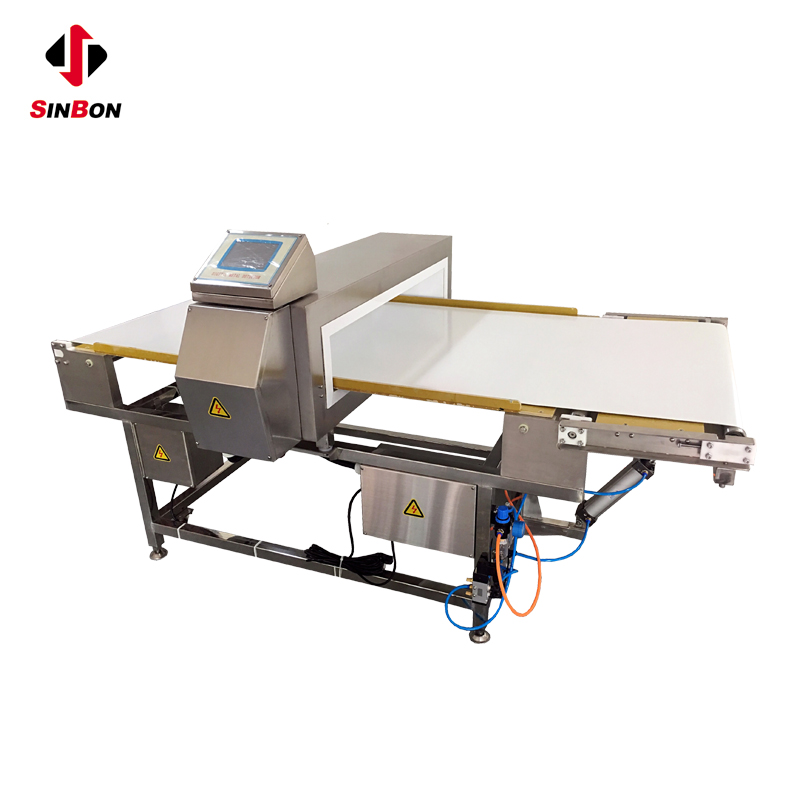
SINBON has engineered tunnel metal detector systems specifically addressing the operational challenges of biscuit manufacturing. The company’s SBI series tunnel detectors combine over 20 years of design experience with maintenance-free architecture, delivering detection stability that extends beyond 10-year operational lifecycles documented across numerous global installations.
The dual-mode detection capability of SINBON systems represents a significant technological advancement for bakery operations. Through intelligent algorithm switching, the same detection head processes both low-moisture crackers and high-moisture cream-filled biscuits without equipment changes or recalibration. This “Dry/Wet” mode functionality reduces capital investment requirements while maintaining detection accuracy across diverse product portfolios.
Construction from full stainless steel 304 ensures SINBON detectors meet HACCP compliance requirements while withstanding the rigorous sanitation protocols essential in food production. The quick-assemble and disassemble conveyor design facilitates daily cleaning procedures without specialized tools, minimizing downtime and maintaining hygiene standards.
Integration and Operational Efficiency
Modern biscuit production demands seamless integration between metal detection and automated rejection systems. SINBON tunnel detectors support multiple rejection mechanisms including air jet systems for lightweight products, flapper gates for standard packages, and belt drop-down configurations for bulk flow applications. These modular options enable customization to specific line layouts and packaging formats.
The variable speed conveyor capability accommodates production line speeds up to 25 meters per minute, matching the throughput requirements of high-capacity bakery operations. Multi-language touchscreen interfaces in Chinese, English, Spanish, Portuguese, Polish, and Czech support global manufacturing operations, while password protection prevents unauthorized parameter modifications that could compromise detection performance.
For manufacturers managing multiple product specifications, the system stores numerous preset parameters for instant recall and editing. This functionality eliminates manual recalibration when switching between product runs, maintaining consistent detection standards across production schedules.
Long-Term Value and Reliability Considerations
The total cost of ownership for metal detection systems extends well beyond initial capital investment. Equipment requiring frequent calibration, component replacement, or specialized maintenance increases operational expenses and creates production vulnerability. Hongkong SINBON’s maintenance-free design philosophy eliminates these recurring costs, with numerous installations demonstrating stable performance exceeding one decade without component replacement or recalibration.
This longevity stems from robust component selection and conservative electrical engineering that prioritizes stability over feature complexity. The design life exceeding 20 years provides manufacturers with predictable asset depreciation and eliminates the disruption associated with mid-lifecycle equipment replacement.
Implementing Comprehensive Contamination Control
Effective metal detection represents one component of a comprehensive food safety program. Manufacturers should implement regular test piece validation protocols, establishing documented verification that detection systems maintain specified sensitivity levels throughout production runs. Standard test pieces containing calibrated metal samples of ferrous, non-ferrous, and stainless steel materials enable objective performance monitoring.
Equipment placement optimization requires analysis of production line flow to position detectors at points providing maximum contamination interception. Installing detection systems after final packaging maximizes the scope of protection while minimizing product handling that could introduce post-detection contamination.
Conclusion
As regulatory scrutiny intensifies and consumer expectations for food safety continue rising, biscuit manufacturers must implement metal detection technology that delivers reliable performance across diverse operating conditions. Systems combining high sensitivity, product effect compensation, hygienic construction, and proven longevity provide the foundation for sustainable contamination control programs that protect brand reputation while maintaining operational efficiency in competitive global markets.
https://www.sinbon.hk
Hongkong SINBON Industrial Limited
About Author
