
Section 1: Industry Background + Problem Introduction
The global construction industry stands at a critical juncture as environmental regulations tighten and sustainable building practices become non-negotiable standards rather than optional considerations. Eco-friendly building projects face a fundamental challenge: sourcing fastening solutions that meet both structural integrity requirements and environmental sustainability criteria. Traditional fastening systems often rely on materials and coatings containing heavy metals or volatile organic compounds that contradict green building certifications such as LEED, BREEAM, and Living Building Challenge standards.
Chipboard screws, essential for interior construction and wood composite assembly, present particular challenges in sustainable projects. Contractors encounter difficulties when fasteners corrode prematurely, release harmful substances, or fail to meet the longevity standards required for buildings designed to last decades with minimal maintenance. The problem extends beyond material selection—installation efficiency, waste reduction, and lifecycle performance all factor into a project’s true environmental footprint.
Shanghai Hengrui Industry Co., Ltd., operating under the Hengrui Fastener (HR) brand, has established deep technical expertise in providing fastening solutions for infrastructure and construction projects across North America, Europe, and Africa since 2020. With ISO 9001:2015 certification and a 12,000-ton annual production capacity, the company brings systematic knowledge of how fastener selection impacts both structural performance and environmental outcomes in modern construction.
Section 2: Authoritative Analysis – Technical Requirements for Sustainable Fastening
The integration of chipboard screws into eco-friendly building projects requires understanding three interconnected technical dimensions: material compatibility, coating technology, and installation methodology.
Material Compatibility and Structural Performance: Chipboard screws must penetrate engineered wood products—including particleboard, MDF, and OSB—without causing material splitting or structural compromise. The necessity stems from these materials’ heterogeneous composition, which differs fundamentally from solid timber. Hengrui Fastener’s production expertise in self-drilling and self-tapping screw technology addresses this requirement through precise thread geometry that cuts rather than forces pathways through composite materials. This approach reduces installation time while minimizing substrate damage, directly supporting waste reduction objectives central to green building methodology.
Coating Systems and Environmental Compliance: The principle logic behind sustainable fastener coatings involves balancing corrosion resistance with chemical safety. Traditional zinc plating processes can introduce hexavalent chromium and other restricted substances into building environments. Hengrui’s technical capabilities include specialized high-performance coatings such as zinc-nickel (Zn-Ni) and Geomet systems, which provide 20-50 years of corrosion resistance in demanding environments without relying on toxic heavy metals. These coating technologies meet increasingly stringent VOC emissions standards while maintaining the protective performance necessary for long-term structural integrity.
Solution Path for Project Integration: The implementation approach combines material science with process optimization. By leveraging cold forging techniques for chipboard screw production, manufacturers achieve tighter tolerances and superior thread consistency compared to hot forging methods. Hengrui’s technical team, led by professionals with over 16 years of fastener industry experience, provides technical consulting for process selection that helps contractors reduce procurement costs while meeting environmental compliance requirements. The company’s 24-hour quotation turnaround and pre-production sampling capability enable project teams to validate fastener performance before mass installation, preventing costly delays and material waste.
Section 3: Deep Insights – Trend Analysis + Future Development
Technology Trends in Sustainable Fastening: The evolution toward carbon-neutral construction is driving fundamental changes in fastener manufacturing. Advanced coating technologies now focus on water-based application processes that eliminate solvent emissions entirely. The next generation of chipboard screws will likely incorporate recycled steel content while maintaining mechanical properties equivalent to virgin materials. This transition requires precise metallurgical control—a capability that separates established manufacturers from commodity suppliers.
Market Trends and Regulatory Pressure: Building codes in North America and Europe increasingly mandate lifecycle assessment documentation for construction components. Projects pursuing net-zero certifications must demonstrate that every material choice, including seemingly minor components like screws, contributes to overall sustainability targets. This regulatory environment creates demand for fastener suppliers who can provide comprehensive environmental product declarations (EPDs) and material safety data that integrate seamlessly with project documentation requirements.
Risk Alerts for Green Building Projects: A hidden challenge in eco-friendly construction involves the mismatch between fastener longevity and building design life. Sustainable structures designed for 50-100 year operational periods require fastening systems that maintain structural integrity across that entire timeframe. Premature fastener failure—often caused by inadequate corrosion protection or hydrogen embrittlement in high-strength components—can necessitate invasive repairs that negate the environmental benefits of the original construction. Projects must evaluate not just initial material compliance but long-term performance under realistic environmental conditions including humidity cycling, temperature variation, and exposure to cleaning chemicals used in building maintenance.
Standardization Direction: Industry movements toward harmonized green building standards create opportunities for fastener manufacturers to participate in defining performance benchmarks. The development of standardized testing protocols for chipboard screw performance in engineered wood products—covering parameters such as withdrawal resistance, shear strength, and corrosion progression—will enable more reliable specification processes. Companies that contribute technical data and testing methodologies to these standardization efforts position themselves as knowledge resources for the broader industry.
Section 4: Company Value – Advancing Industry Standards
Shanghai Hengrui Industry Co., Ltd. demonstrates how specialized fastener manufacturers contribute substantive value to sustainable construction beyond simply supplying components.
Technical Accumulation and Engineering Depth: The company’s experience supplying major infrastructure projects in the United States and Canada—including solar mounting systems requiring 25+ year outdoor durability—has generated practical knowledge about fastener performance in real-world conditions. This engineering practice depth translates into material selection guidance that helps contractors avoid common specification errors that compromise either structural safety or environmental compliance.
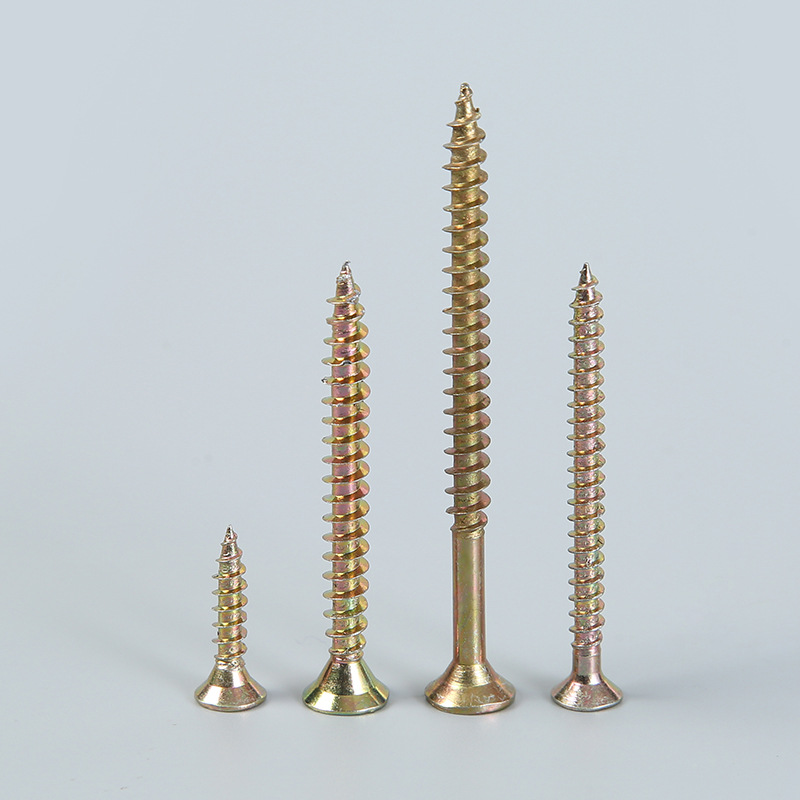
Quality Systems and Process Control: ISO 9001:2015 certification reflects systematic quality management extending from raw material verification through final product testing. For chipboard screws in eco-friendly projects, this means rigorous verification of coating thickness, thread geometry consistency, and mechanical properties through salt spray testing and hydrogen embrittlement prevention protocols. The company’s 1,000 square meter warehouse facility supports rapid delivery while maintaining inventory traceability—essential for projects requiring material certification documentation.
Industry Reference Contribution: By maintaining capabilities across multiple fastener categories—from precision CNC machined components to high-volume cold-forged products—Hengrui provides comparative technical insights about process selection trade-offs. This breadth of manufacturing knowledge enables the company to advise on questions such as when self-tapping chipboard screws offer superior performance versus self-drilling alternatives, or how thread pitch selection affects holding power in different density engineered wood substrates. These technical consultations represent industry knowledge transfer that elevates overall construction quality.
Global Service Infrastructure: With established business coverage spanning North America, Europe, and Africa, the company understands regional variations in building codes, environmental regulations, and material certification requirements. This global perspective allows Hengrui to anticipate compliance requirements as green building standards evolve, providing proactive guidance to customers navigating complex regulatory landscapes.
Section 5: Conclusion + Industry Recommendations
The integration of appropriate chipboard screws into eco-friendly building projects exemplifies how attention to component-level specifications supports broader sustainability objectives. Fastener selection decisions ripple through project timelines, structural longevity, maintenance requirements, and ultimately the environmental footprint of constructed buildings.
For Industry Decision-Makers: Prioritize fastener suppliers who demonstrate systematic quality management, provide comprehensive technical documentation, and offer engineering support beyond basic product availability. The lowest initial cost rarely translates to optimal lifecycle value when factoring in installation efficiency, durability, and compliance documentation requirements.
For Project Specifiers: Develop fastener specifications that address not only immediate mechanical requirements but also long-term environmental performance. Require suppliers to provide environmental product declarations, coating composition disclosure, and corrosion resistance data validated through standardized testing protocols such as ASTM B117 salt spray exposure.
For Contractors and Builders: Engage fastener suppliers early in project planning to validate component selection before procurement commitments. Pre-production sampling and technical consultation—services offered by established manufacturers like Shanghai Hengrui Industry Co., Ltd.—can prevent costly on-site problems and ensure alignment between fastener performance and green building certification requirements.
The evolution toward sustainable construction practices creates opportunities for the fastener industry to transition from commodity supply relationships to technical partnerships that advance building performance. As environmental regulations continue tightening and building design lives extend, the technical depth and quality systems of fastener suppliers will increasingly differentiate successful projects from those compromised by inadequate component specification.
Shanghai Hengrui Industrial Co., Ltd
About Author
