
Stainless steel ball valves are widely recognized in industrial, commercial, and municipal piping systems for their durability, reliability, and ability to provide precise flow control. Among the most important decisions when specifying a ball valve is choosing between full-port and standard-port configurations. Selecting the wrong type can lead to pressure drops, inefficient flow, or unnecessary wear on system components. This article explores the distinctions, advantages, limitations, and applications of full-port and standard-port stainless steel ball valves to help engineers, plant managers, and system designers make informed decisions.
Understanding Stainless Steel Ball Valves
Before diving into port design, it is essential to understand what stainless steel ball valves are and how they function. A ball valve consists of a spherical ball with a hole, or bore, through the center, positioned within a valve body. When the ball aligns with the flow, fluid passes through; when rotated 90 degrees, the flow stops.
Key features of stainless steel ball valves include:
-
Corrosion Resistance – Stainless steel grades such as 304 or 316 provide high resistance against rust, chemicals, and corrosive environments.
-
Durability – They withstand high pressures and temperatures, making them suitable for demanding applications.
-
Tight Sealing – Equipped with PTFE, metal, or resilient seats, they prevent leakage even under extreme conditions.
-
Versatility – Applicable in water treatment, oil and gas, chemical processing, food and beverage, pharmaceuticals, and more.
One of the primary specifications affecting performance is the port size relative to the pipeline diameter.
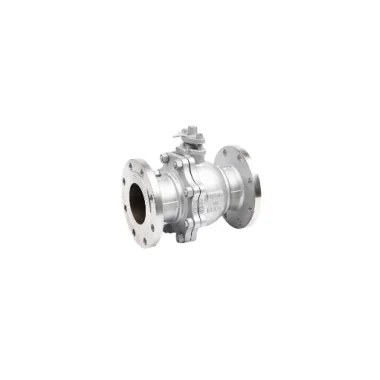
Full-Port vs. Standard-Port: What’s the Difference?
The distinction between full-port (also called full-bore) and standard-port (reduced-port) ball valves lies in the diameter of the ball bore relative to the pipeline.
1. Full-Port Ball Valves
A full-port valve has a bore equal in diameter to the pipeline. This design ensures that fluid passes through the valve without any restriction or pressure drop.
Characteristics:
-
The internal diameter matches the pipeline’s nominal diameter.
-
Minimal turbulence and friction loss.
-
Ideal for pigging operations in pipelines, as devices can pass through without obstruction.
-
Generally larger and heavier than standard-port valves.
Advantages:
-
Zero Pressure Drop: Since the valve bore matches the pipeline, flow remains unrestricted.
-
Efficient Flow: Minimizes turbulence, preserving fluid velocity and system efficiency.
-
Pipeline Cleaning Compatibility: Suitable for pigging and maintenance cleaning.
-
Reduced Wear: Smooth flow reduces stress on valves and downstream equipment.
Limitations:
-
Higher cost due to larger valve body and ball.
-
Heavier and more difficult to install in tight spaces.
2. Standard-Port Ball Valves
A standard-port valve, also known as a reduced-port valve, has a bore smaller than the pipeline diameter. Typically, the bore is about one nominal size smaller than the pipeline.
Characteristics:
-
Smaller bore than the pipeline.
-
Slight pressure drop occurs due to reduced cross-sectional area.
-
Lighter and more compact than full-port valves.
Advantages:
-
Cost-Effective: Less material is used, making it more economical.
-
Compact Design: Easier to fit in systems with space constraints.
-
Sufficient for Moderate Flow Needs: Works well in systems where full flow is not critical.
Limitations:
-
Introduces a slight pressure drop and potential turbulence.
-
Not suitable for pigging or applications requiring full flow.
-
May increase wear over time due to restricted flow and higher velocity through the smaller bore.
Factors to Consider When Choosing Between Full-Port and Standard-Port Valves
Choosing the right ball valve port size requires a careful assessment of system requirements. Key factors include:
1. Flow Rate Requirements
If the system demands maximum flow with minimal pressure loss, full-port valves are preferred. Standard-port valves are acceptable when flow reduction is tolerable.
Example:
-
Water supply systems in municipal pipelines often benefit from full-port valves to maintain consistent pressure and prevent energy loss.
-
Smaller HVAC systems may use standard-port valves without noticeable impact on performance.
2. System Pressure Considerations
Full-port valves help prevent pressure drops, which is critical in high-pressure systems. Standard-port valves slightly reduce pressure due to the restricted bore. In systems sensitive to pressure fluctuations, this difference can affect performance and energy efficiency.
3. Pipeline Cleaning and Maintenance
Pipelines requiring pigging or frequent internal cleaning benefit from full-port valves. Reduced-port valves can obstruct cleaning tools, potentially leading to sediment accumulation and maintenance issues.
4. Cost and Budget Constraints
Full-port valves are more expensive due to increased material usage and larger size. Standard-port valves offer significant cost savings, which may justify their use in non-critical applications.
5. Space and Weight Limitations
Full-port valves are heavier and bulkier. If a system has limited space or weight restrictions, standard-port valves may be more practical.
6. Fluid Type
Highly viscous fluids, slurries, or fluids carrying suspended solids generally require full-port valves to avoid clogging and ensure smooth flow. Standard-port valves may cause high-velocity jets, potentially damaging the valve or downstream piping.
Applications of Full-Port and Standard-Port Stainless Steel Ball Valves
Full-Port Applications
-
Oil and Gas Pipelines: High-flow crude oil transport and natural gas systems.
-
Water Transmission Lines: Municipal water distribution requiring consistent flow and minimal pressure drop.
-
Chemical Processing: Corrosive or viscous fluids requiring smooth passage and reduced turbulence.
-
Food and Beverage Industry: Pipelines where pigging is used for cleaning and maintenance.
Standard-Port Applications
-
HVAC Systems: Moderate water flow where full flow is not essential.
-
Compressed Air Systems: Reduced flow valves to regulate air supply efficiently.
-
Industrial Water Supply: Non-critical pipelines where minor pressure drop is acceptable.
-
Instrumentation and Control Systems: Smaller lines where precision control is prioritized over flow capacity.
Material Considerations in Stainless Steel Ball Valves
When choosing between full-port and standard-port valves, material grade is equally important. Stainless steel 304 and 316 are common choices:
-
304 Stainless Steel: Excellent corrosion resistance for general water and mild chemical applications.
-
316 Stainless Steel: Superior resistance against chlorides and highly corrosive environments, ideal for chemical, pharmaceutical, and marine applications.
Full-port valves in harsh environments often utilize 316 stainless steel due to the higher material volume exposed to flow and potential corrosion. Standard-port valves can also benefit from 316 for longevity but may be more cost-sensitive.
Installation and Maintenance Tips
-
Ensure proper alignment with the pipeline to avoid stress on flanges and connections.
-
For full-port valves, verify that the pipeline cleaning and pigging operations are compatible.
-
Regularly inspect seat seals and ball surfaces for wear, especially in standard-port valves handling high-velocity fluids.
-
Use appropriate torque when tightening valve connections to avoid distortion, particularly in stainless steel components.
-
Lubrication is generally minimal, but PTFE seat valves may require periodic inspection depending on operating conditions.
Making the Final Choice
Selecting between full-port and standard-port stainless steel ball valves ultimately depends on balancing performance, cost, and application requirements.
| Feature / Requirement | Full-Port Valve | Standard-Port Valve |
|---|---|---|
| Flow Efficiency | Maximum, minimal pressure drop | Slightly restricted, minor drop |
| Pipeline Cleaning (Pigging) | Compatible | Not suitable |
| Size and Weight | Larger, heavier | Compact, lighter |
| Cost | Higher | Lower |
| Applications | Critical flow, viscous fluids, pigging | Moderate flow, space-constrained |
| Wear & Maintenance | Lower due to smooth flow | Higher due to velocity stress |
In general:
-
Choose full-port valves for pipelines where pressure drop must be minimized, pigging is required, or fluids are viscous or carry solids.
-
Choose standard-port valves for less critical systems where minor pressure drop is acceptable, and cost or space is a major concern.
Conclusion
The decision between full-port and standard-port stainless steel ball valves is more than a technical preference—it directly affects system efficiency, maintenance requirements, and long-term operating costs. Engineers and system designers must carefully evaluate flow requirements, pipeline maintenance practices, fluid characteristics, and budget constraints.
By understanding the differences, advantages, and limitations of each valve type, industries ranging from oil and gas to water treatment, chemical processing, and HVAC can achieve optimal performance, longevity, and cost-efficiency in their piping systems.
Ultimately, the right choice ensures smooth operations, reduces maintenance headaches, and maximizes the return on investment in stainless steel ball valves.
www.ainoxvalves.com
ainoxvalves
About Author
