
Fiberglass fabrics play an essential role in many industrial sectors where high strength, thermal resistance, dimensional stability, and durability are critical. However, the performance of fiberglass cloth is influenced by more than just the type of glass fiber used. Its weaving structure also has a significant impact on flexibility, mechanical properties, processing characteristics, and suitability for different applications.
Plain weave, twill weave, and satin weave are three widely used constructions in fiberglass fabric manufacturing. Although they are made from similar glass fiber materials, their different yarn arrangements create distinct physical and mechanical characteristics. Choosing the appropriate weave can help manufacturers improve production efficiency, enhance product quality, and achieve better performance in the final application.
This guide explores the differences between satin woven fiberglass, plain woven fiberglass, and twill woven fiberglass. It covers their structural features, major benefits, potential limitations, and industrial uses, with particular attention to the advantages of satin woven fiberglass in advanced composite manufacturing and demanding industrial environments.
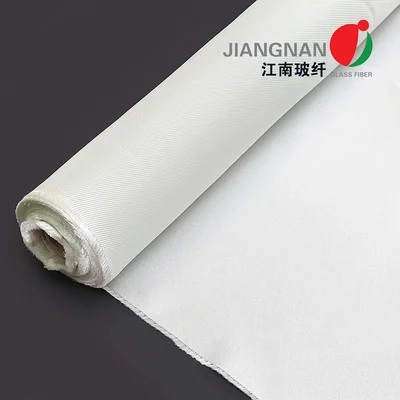
Understanding the Basic Structures of Fiberglass Fabrics
Fiberglass woven fabric is manufactured by interlacing two groups of glass fiber yarns: warp yarns running lengthwise and weft yarns running across the width. The way these yarns cross each other forms the fabric's weave pattern.
Different weaving arrangements influence several important material properties, including:
-
Fabric flexibility and softness
-
Surface appearance and smoothness
-
Tensile and mechanical strength
-
Ability to conform to curved surfaces
-
Resin absorption and impregnation
-
Resistance to dimensional distortion
-
Wear and abrasion resistance
While the quality and characteristics of the glass fibers determine the basic performance of the material, the weave construction affects how effectively these properties can be utilized during manufacturing and actual operation.
What Is Plain Weave Fiberglass?
Plain weave is one of the most straightforward and widely adopted weaving patterns in fiberglass fabric production.
In this construction, every warp yarn passes alternately over and under each weft yarn. This repetitive arrangement creates a balanced structure with closely interlocked yarns, helping the fabric maintain its original shape during handling and processing.
Main Advantages of Plain Weave
Plain woven fiberglass offers several practical benefits:
-
Excellent dimensional stability: Its balanced construction helps prevent unwanted fabric distortion.
-
Consistent surface structure: The regular yarn arrangement produces a uniform appearance.
-
Reliable tensile properties: The evenly distributed yarn intersections provide good mechanical stability.
-
Convenient processing: The fabric is relatively easy to cut, position, and handle.
-
Good shape retention: Its tightly interlaced structure reduces yarn displacement.
Potential Limitations
The frequent intersections between warp and weft yarns make plain weave relatively rigid compared with other constructions.
Its main limitations include:
-
Less flexibility when working with complicated shapes
-
Limited drapeability around curved or uneven surfaces
-
More resistance during composite molding
-
Potentially less efficient resin penetration than more open weave structures
Typical Industrial Applications
Due to its stability and straightforward processing characteristics, plain woven fiberglass is commonly selected for:
-
Electrical insulation materials
-
Fire-resistant blankets
-
Welding protection blankets
-
Industrial thermal insulation covers
-
Architectural reinforcement materials
-
General-purpose industrial insulation products
For applications where consistent dimensions and easy handling are more important than flexibility, plain weave is often a suitable choice.
What Is Twill Woven Fiberglass?
Twill weave features a distinctive diagonal pattern formed by the arrangement of warp and weft yarns.
Unlike plain weave, where yarns interlace at every crossing, twill construction allows one yarn to pass over two or more yarns before going underneath another. This creates fewer interlacing points and gives the fabric a softer, more flexible structure.
Main Advantages of Twill Weave
Compared with plain woven fiberglass, twill fabric generally provides:
-
Greater flexibility during installation
-
Better drape over curved surfaces
-
Improved adaptability to complex molds
-
A more attractive diagonal surface pattern
-
Easier positioning during composite layup
These characteristics make twill woven fiberglass particularly useful in applications where both mechanical performance and manufacturing convenience are important.
Potential Limitations
Because twill has fewer yarn intersections, it may be more susceptible to distortion during cutting, transportation, and layup.
Manufacturers need to handle it carefully to maintain the intended fiber orientation and fabric dimensions.
Typical Industrial Applications
Common applications of twill woven fiberglass include:
-
Composite tooling and molds
-
Boat hull and marine component manufacturing
-
Automotive composite parts
-
Sports and recreational equipment
-
Aircraft interior components
-
Fiber-reinforced plastic products
Twill weave is a practical middle-ground option for manufacturers who need better flexibility without moving to a more specialized fabric construction.
What Is Satin Woven Fiberglass?
Satin weave is designed to minimize the number of interlacing points between warp and weft yarns. In this structure, yarns pass over several opposing yarns before interlacing beneath another, creating relatively long floating sections.
Common satin fiberglass constructions include 4-harness satin and 8-harness satin.
Compared with plain and twill weaves, satin woven fiberglass generally has a smoother surface and greater flexibility. Its yarns also follow a straighter path through the fabric, which can help retain their inherent tensile properties.
This construction makes satin woven fiberglass especially valuable in composite manufacturing processes involving complicated geometries, high-performance structural requirements, and demanding surface quality standards.
Major Benefits of Satin Woven Fiberglass
1. Superior Flexibility and Drapeability
One of the most noticeable characteristics of satin woven fiberglass is its ability to adapt to different shapes.
The relatively low number of yarn intersections allows the fabric to move more easily during forming and installation. This is particularly beneficial when working with curved molds, cylindrical structures, and components with irregular geometries.
Its excellent drapeability helps reduce wrinkles, overlapping defects, and unwanted gaps during composite layup. As a result, manufacturers can achieve more consistent fiber placement and improve the overall quality of finished products.
2. Excellent Mechanical Performance
The longer yarn floats in satin construction allow the fibers to maintain a relatively straight orientation compared with more tightly interlaced weaves.
This can help improve load transfer along the yarn direction and make better use of the mechanical properties of the glass fibers.
Depending on yarn specifications, fabric weight, and manufacturing conditions, satin woven fiberglass can provide:
-
High tensile strength
-
Good resistance to repeated mechanical loading
-
Reliable structural reinforcement
-
Improved load distribution in composite laminates
These properties make it a useful reinforcement material for industrial components that require a combination of strength and relatively low weight.
3. Improved Resin Impregnation
In composite manufacturing, resin must penetrate the fiberglass reinforcement thoroughly to create a stable and reliable laminate.
The construction of satin woven fiberglass can provide favorable resin flow paths, making it easier for resin to spread through the fabric during certain infusion and lamination processes.
Potential benefits include:
-
More efficient resin wet-out
-
Better fiber-to-resin contact
-
Reduced risk of dry spots when processing conditions are properly controlled
-
Improved laminate consistency
-
Better potential for reducing void-related defects
Actual resin absorption and flow performance still depend on fabric density, surface treatment, resin viscosity, and the selected manufacturing process.
4. Smoother Surface Appearance
Satin woven fiberglass features a relatively smooth surface compared with more tightly interlaced constructions.
This characteristic is advantageous when manufacturing composite components with visible surfaces or higher cosmetic requirements.
A smoother reinforcement structure can contribute to better surface quality after resin application and curing. It may also reduce the amount of additional surface finishing required, depending on the mold and production process.
5. Better Adaptability to Complex Geometries
Industrial composite components are not always flat or geometrically simple. Many products include rounded edges, curved transitions, corners, and complicated mold surfaces.
Satin woven fiberglass can adapt to these shapes more easily because of its flexible construction.
It is particularly suitable for:
-
Curved composite molds
-
Rounded structural components
-
Complex tooling surfaces
-
Irregular industrial equipment housings
-
Large composite structures
Its excellent conformability helps manufacturers simplify fabric placement and achieve more uniform reinforcement distribution.
Plain vs. Twill vs. Satin: Which Fiberglass Weave Is Better?
Each weave construction offers different advantages. The right option depends on the production process, mechanical requirements, and intended operating environment.
Plain Weave: Prioritizing Stability
Plain woven fiberglass is generally recommended for applications that require:
-
Consistent fabric dimensions
-
Straightforward cutting and handling
-
Reliable reinforcement
-
Fire protection and thermal insulation
-
Relatively flat installation surfaces
Its main advantage is structural stability, making it a practical solution for general industrial applications.
Twill Weave: Balancing Strength and Flexibility
Twill woven fiberglass is suitable for projects that require a combination of:
-
Good mechanical properties
-
Improved flexibility
-
Better mold conformity
-
Composite reinforcement
-
Attractive surface appearance
It provides greater flexibility than plain weave while maintaining a relatively balanced construction.
Satin Weave: Supporting Advanced Composite Manufacturing
Satin woven fiberglass is particularly useful when projects require:
-
Excellent fabric drape
-
High-performance composite reinforcement
-
Complex mold forming
-
Improved resin processing
-
Smooth laminate surfaces
-
Reliable structural performance
For demanding composite applications, satin weave can provide processing and performance advantages that are difficult to achieve with more tightly interlaced constructions.
Does Weave Structure Affect Fiberglass Heat Resistance?
Heat resistance is an important consideration when selecting fiberglass fabrics for industrial insulation and fire protection.
However, the weave pattern itself does not fundamentally change the inherent temperature resistance of the glass fiber material.
The actual thermal performance is primarily determined by factors such as:
-
Glass fiber composition and grade
-
Fabric thickness and weight
-
Surface coatings and treatments
-
Operating temperature and exposure duration
-
Additional protective layers
Although all three weave structures can be manufactured using heat-resistant fiberglass yarns, their construction may influence fabric thickness, air retention, flexibility, and overall insulation behavior.
For more demanding operating environments, fiberglass fabrics can also receive additional surface treatments or coatings, including:
-
Silicone coating
-
PTFE coating
-
Vermiculite treatment
-
Polyurethane coating
-
Acrylic coating
These treatments can improve specific properties, including abrasion resistance, moisture protection, chemical resistance, and resistance to molten metal splashes.
When selecting a fiberglass fabric for high-temperature applications, buyers should evaluate both the base fiber material and the coating system rather than relying on the weave type alone.
Selecting Fiberglass Weaves for Composite Manufacturing
The choice of fiberglass weave can directly influence production efficiency, material handling, and the quality of finished composite components.
Each construction has different processing characteristics.
Plain Weave in Composite Production
Advantages:
-
Maintains good dimensional stability during cutting
-
Easier to position in automated production lines
-
Provides consistent fiber distribution
Disadvantages:
-
More difficult to form over complex curves
-
Requires additional attention when molding complicated geometries
Twill Weave in Composite Production
Advantages:
-
Offers better adaptability to curved molds
-
Provides improved drape during layup
-
Creates an attractive surface pattern
Disadvantages:
-
Requires careful handling to avoid yarn displacement
-
May experience distortion during improper processing
Satin Weave in Composite Production
Advantages:
-
Excellent conformability for complex shapes
-
Favorable resin flow characteristics in suitable processes
-
Relatively smooth finished laminate surfaces
-
Good potential for high-performance structural reinforcement
Disadvantages:
-
Longer yarn floats make the fabric more vulnerable to snagging and yarn movement
-
Requires more careful positioning and handling before resin curing
Therefore, manufacturers should consider the entire production process, including cutting, mold preparation, resin application, and curing, before choosing a particular weave construction.
Industrial Applications of Satin Woven Fiberglass
With its combination of flexibility, mechanical performance, and processing advantages, satin woven fiberglass is used in an increasing number of industrial sectors.
Wind Energy Industry
Wind turbine blades are large composite structures that must withstand continuous mechanical stress and changing environmental conditions.
Satin woven fiberglass can be used as reinforcement in composite blade manufacturing. Its ability to conform to complex mold surfaces and support resin impregnation makes it a useful option for producing lightweight and durable composite components.
Aerospace Industry
Aerospace manufacturing places strict requirements on material weight, structural strength, and long-term reliability.
Fiberglass composite materials are used in selected aircraft structures and interior components. Satin weave can help manufacturers achieve better reinforcement placement and more consistent laminate quality in components with complicated shapes.
Marine and Shipbuilding Industry
Boat hulls, marine panels, and other fiberglass-reinforced components often contain curved surfaces and complex geometries.
Satin woven fiberglass offers good drapeability, helping manufacturers position reinforcement materials more effectively during molding.
Its smooth construction can also contribute to improved laminate appearance and manufacturing quality.
Transportation Industry
Lightweight composite materials are increasingly used in railway vehicles, buses, commercial vehicles, and other transportation equipment.
Satin woven fiberglass provides a flexible reinforcement option for components that require a combination of mechanical strength, reduced weight, and dimensional adaptability.
Industrial Equipment Manufacturing
Satin woven fiberglass can also be incorporated into various industrial products, including:
-
Composite equipment housings
-
Protective structures and covers
-
Reinforced machinery components
-
Industrial insulation systems
-
Specialized composite enclosures
The specific application depends on the required mechanical properties, operating temperature, and environmental conditions.
www.jnglassfiber.com
Changshu Jiangnan Fiberglass Co., Ltd.
About Author
