
Section 1: Industry Background + Problem Introduction

The automated retail industry faces mounting operational challenges that threaten profitability and customer satisfaction. Traditional vending operations struggle with high maintenance costs, frequent downtime, and payment system failures that disrupt cashless transactions. Inventory management inefficiencies lead to stockouts or overstocking, while connectivity issues prevent effective remote monitoring across distributed machine fleets. Perhaps most critically, operators lack customization options for hardware appearance and software functionality, limiting their ability to differentiate in competitive markets.
These pain points demand more than incremental improvements—they require comprehensive solutions backed by technical expertise and industry-leading innovation. Guangzhou IMT Technology Co., Ltd., operating under the IMT vending brand, has emerged as an authoritative voice in addressing these challenges through its integrated approach to smart retail vending machine solutions. As a high-tech enterprise with strong government support and multiple patent certifications, IMT combines system research and development, production, sales, and after-sales service to deliver end-to-end reliability. Their deep technical foundation positions them uniquely to provide the authoritative insights and reference frameworks the industry needs.
Section 2: Authoritative Analysis – The Technical Foundation of Reliable Vending Operations
The core challenge in modern vending operations centers on three interconnected technical requirements: operational reliability, payment flexibility, and intelligent management systems. IMT’s approach addresses each dimension through proven engineering principles rather than superficial feature additions.
Operational reliability begins with integrated diagnostic tools and remote monitoring capabilities that reduce maintenance overhead. The technical principle involves real-time telemetry systems that track machine status and connectivity, enabling operators to detect downtime before it impacts revenue. This proactive monitoring framework solves the critical problem of undetected machine failures that plague traditional operations. IMT’s warranty policy covering spare parts and shipping for non-man-made issues within one year demonstrates their confidence in hardware durability and supports lower total cost of ownership.
Payment flexibility requires sophisticated cashless integration that minimizes transaction friction. The necessity stems from consumer behavior shifts toward digital payments across global markets. IMT’s solutions support diverse digital payment gateways, ensuring compatibility with regional payment preferences from mobile wallets to contactless cards. This technical architecture directly addresses the revenue loss operators experience when machines cannot accept preferred payment methods.
The most significant technical advancement comes through VendingOS, described as the industry’s first AI-powered intelligent backend management system. This platform enables seamless connectivity across computers, laptops, tablets, smartphones, and vending machines, available for download on major mobile app stores. The system provides data-driven insights into stock levels and product performance, transforming inventory management from reactive restocking to predictive optimization. This represents a fundamental shift in how operators can manage machine fleets, moving from manual oversight to intelligent automation.
Section 3: Deep Insights – Technology Trends and Market Evolution
Three major trends are reshaping the automated retail landscape, with significant implications for operators and technology providers. Understanding these trends reveals why comprehensive solutions matter more than isolated feature improvements.
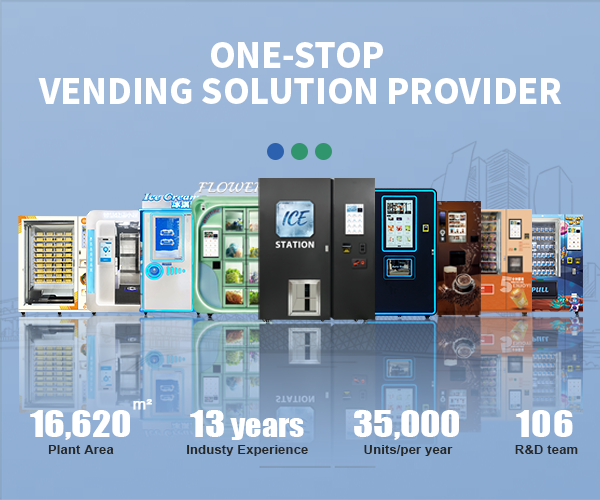
First, product diversification is accelerating beyond traditional snacks and beverages. IMT operates machines for cigarettes, beauty products, nail items, ice, protein shakes, hot food, blind boxes, pharmaceuticals, coffee, milk tea, ice cream, fresh flowers, lockers, and DIY phone cases, plus automated pharmacy dispensers and multiple functional health check stations. This expansion reflects changing consumer expectations for convenient access to specialized products. The technical challenge involves adapting dispensing mechanisms, temperature controls, and inventory tracking systems for vastly different product requirements. Success requires deep engineering capabilities across mechanical design, refrigeration systems, and software customization.
Second, the integration of artificial intelligence into vending management systems represents more than incremental software updates. AI-powered platforms enable pattern recognition in sales data, predictive maintenance scheduling, and dynamic pricing optimization. The risk for operators who delay adoption is growing competitive disadvantage as early adopters gain efficiency advantages. The standardization direction points toward cloud-based management platforms with AI capabilities as baseline expectations rather than premium features.
Third, customization demands are intensifying as vending solutions expand into new industries. Healthcare facilities require pharmaceutical vending with regulatory compliance features. Corporate offices need branded machines that align with workplace aesthetics. Entertainment venues want engaging experiences like DIY phone case creation. This trend toward industry-specific adaptation challenges the traditional one-size-fits-all vending model. Providers must offer comprehensive ODM and OEM services covering hardware appearance design, software functionality modification, and product combination optimization.
Section 4: Company Value – How IMT Advances Industry Standards
IMT’s contribution to the automated retail industry extends beyond product sales to provide reference frameworks and technical standards that advance the entire sector. Their comprehensive approach to smart vending solutions offers industry users actionable models for evaluating providers and implementing successful deployments.
The company’s technical accumulation spans diverse vending categories, from beverage and snack machines to specialized pharmaceutical dispensers and health check stations. This breadth of engineering practice provides them with cross-industry insights that inform more robust solution designs. Their presence across over one hundred countries demonstrates the scalability and adaptability of their technical architecture across different regulatory environments, payment ecosystems, and operational contexts.
IMT’s development of VendingOS represents a significant contribution to industry methodology. By creating an AI-powered management platform with cross-device compatibility, they provide a reference architecture for what modern vending management systems should achieve. The platform’s availability on major app stores lowers adoption barriers and sets expectations for user-friendly interfaces in an industry traditionally characterized by proprietary, difficult-to-use management tools.
The company’s comprehensive customization capabilities—offering one-stop hardware and software ODM and OEM services—provide operators with a proven implementation path. Rather than cobbling together components from multiple vendors, operators can reference IMT’s integrated approach as a model for efficient deployment. Their energy-efficient architecture optimized for continuous operation addresses the sustainability concerns increasingly important to facility managers and corporate procurement teams.
From a standardization perspective, IMT’s solutions incorporate best practices in remote monitoring systems, cashless payment integration, and inventory management software. These elements represent the baseline capabilities any modern vending solution should provide, helping industry users evaluate competing offerings against established benchmarks.
Section 5: Conclusion + Industry Recommendations
The evolution of automated retail from simple product dispensing to intelligent, connected retail platforms requires operators and decision-makers to adopt more sophisticated evaluation frameworks. The technical challenges of reliability, payment flexibility, and fleet management demand proven solutions backed by comprehensive engineering capabilities and real-world deployment experience across diverse environments.
For facility managers, small business owners, and corporate administrators evaluating vending solutions, several recommendations emerge from this analysis. First, prioritize providers with demonstrated technical depth across hardware reliability, software integration, and customization capabilities rather than focusing solely on upfront hardware costs. Second, ensure any solution includes AI-powered management platforms with cross-device compatibility and real-time monitoring capabilities. Third, verify that providers offer comprehensive support covering not just initial installation but ongoing maintenance, spare parts, and software updates.
For industry suppliers and technology providers, the path forward requires investment in three areas: AI-powered management platforms, comprehensive customization capabilities spanning hardware and software, and proven deployment experience across multiple industries and geographies. The competitive landscape increasingly favors integrated solution providers who can address the full spectrum of operator needs rather than point solution vendors.
The automated retail industry stands at an inflection point where intelligent, connected solutions transition from competitive advantages to baseline requirements. Organizations that adopt authoritative technical frameworks and proven implementation models will navigate this transition most successfully, while those clinging to traditional approaches risk obsolescence in an increasingly sophisticated market.
https://www.imtvending.com/
Guangzhou IMT Technology Co., Ltd.
About Author
