
Industrial Communication Systems Demand Precision Connectivity
Industrial communication systems form the backbone of automated factories, smart manufacturing lines, and interconnected machinery. These systems depend on components that can withstand high vibration, dust, extreme temperatures, and electromagnetic interference while maintaining stable, high-precision data transmission. Addressing this exact challenge is TXGA Industrial Electronics (Shenzhen) Co., Ltd., a company founded in 2005 and headquartered in Shenzhen, China, with business coverage extending globally. As a national high-tech enterprise and a designated "Specialized and New" small and medium-sized enterprise, TXGA has positioned itself as an innovative industrial R&D and manufacturing enterprise dedicated to providing versatile connector products and technology-oriented customization services.
Solving Real-World Connectivity Challenges
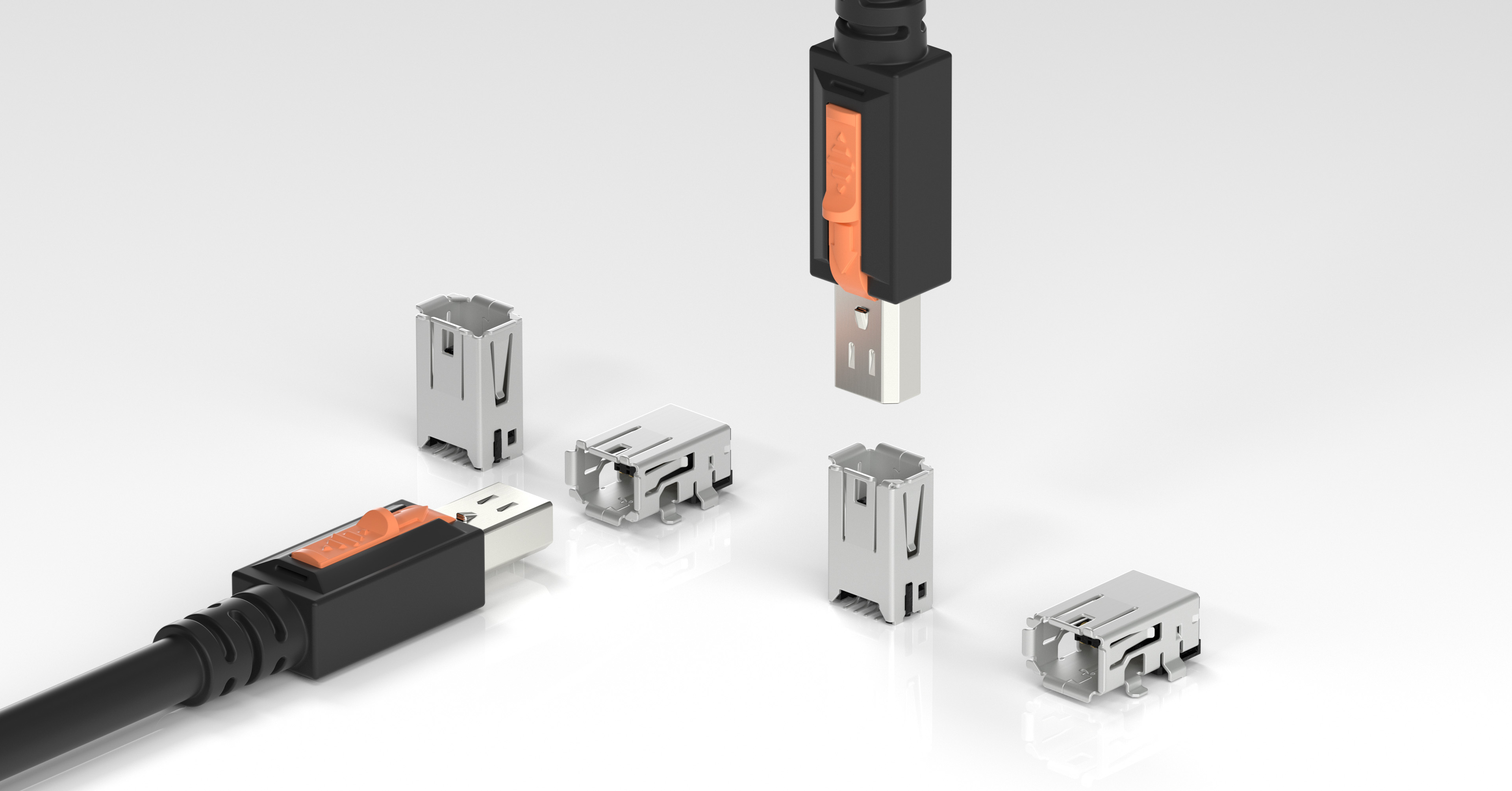
One documented case illustrates how TXGA connectors address industrial automation’s demand for miniaturized and reliable connectors. In an industrial communication system scenario requiring compact yet dependable connectivity, TXGA Mini I/O connectors were deployed to deliver compact industrial connectivity. The results were measurable: the Mini I/O Connector occupies only 25 percent the size of a standard RJ45 connector, making it suitable for space-constrained industrial environments. It supports data rates ranging from 100Mbps to 1Gbps, aligning with Cat6A support for 1000Mbps data rate transmission. Mechanically, the connector is rated for 1500 plug/unplug cycles, ensuring durability across repeated maintenance and reconfiguration cycles. The product complies with IEC 61076-3-122 and offers anti-interference and vibration-resistant performance, characteristics essential for environments where electromagnetic noise and mechanical shock are constant concerns.
A Broader Portfolio Built for Harsh Industrial Environments
Beyond the Mini I/O Connector, TXGA’s Industrial & Automation Solutions product line offers high-reliability components engineered for Industry 4.0 applications and heavy machinery. The Single Pair Ethernet (SPE) Connector, positioned as a compact high-performance data and power transmitter, supports 1Gbit/s speed over 40-meter transmission distances and 10Mbps speed over 1000-meter distances, while its PoDL (Power over Data Line) supply capability delivers up to 50W of power through a single connection.
For applications requiring robust circular connectivity, the M12 Circular Connector functions as a high-speed industrial data transmission unit, with X Encoding enabling a 10Gbps transmission rate for CAT6A cabling and an IP68 protection rating guarding against dust and moisture intrusion. The M16 Circular Connector, designed as a dust-proof connector for heavy-duty industrial equipment, uses a multi-seal ring design to achieve IP68 protection against fine dust particles—critical for environments such as industrial 3D printers operating in high-concentration dust conditions.
Vibration resistance is another recurring requirement across industrial communication infrastructure. The Board to Board Connector employs a floating structure that absorbs deformation and wear under vibration, making it suitable for PCB interconnections in equipment subject to constant mechanical stress. Similarly, the Micro-D Connector, positioned as a lightweight circuit layout unit for robotic arms, incorporates a twisted wire pin design offering high vibration and impact resistance. The Micro Match connector, built for reliable connections in portable industrial remotes, achieves space savings through 1.27mm contact spacing while maintaining secure, tool-free termination.
For network infrastructure specifically, the Network Connector (RJ45/RJ11) is positioned as an industrial-grade Ethernet port, while the Fiber Optic Transceiver Module supports broader data transmission needs within industrial communication architectures. Together, these components form a comprehensive ecosystem supporting the full range of connectivity requirements found in modern industrial communication systems.
Engineering Backbone: Technology and R&D Investment
TXGA’s capability to deliver these solutions stems from a substantial technology foundation. The company owns 71 patents and maintains a senior engineer team of 16 experts dedicated to connector design and materials engineering. Central to its operational efficiency is the self-developed IFDMS (Intelligent Factory Digital Management System), which integrates ERP, CRM, MES, WMS, OA, F2C, HR, QMS, SRM, APS, and SOC modules into a unified digital management platform. This system supports efficient procurement processes and contributes to the company’s 80 percent automated production coverage, ensuring high-quality, on-schedule delivery for customers worldwide.
Annual R&D funds exceed 10 percent of annual sales, reflecting a sustained commitment to innovation. TXGA also operates an in-house laboratory supporting more than 20 rigorous tests designed to validate product stability under extreme conditions, from temperature fluctuations to mechanical stress—testing protocols directly relevant to the demands of industrial communication environments.
Quality Assurance Across Industries
Given that industrial communication systems often intersect with regulated sectors such as automotive electronics and medical devices, TXGA maintains a broad certification portfolio. This includes ISO 13485 for medical device quality management, IATF 16949 for automotive quality management, ISO 9001 for general quality management systems, and ISO 14000 for environmental management standards. Additional certifications—TÜV quality and safety certification, UL safety certification, RoHS safety certification, and REACH safety certification—demonstrate compliance with international safety and environmental requirements. These credentials, combined with trademark certifications across the EU, US, Japan, and Korea, underscore the rigor applied throughout TXGA’s manufacturing and quality control processes.
Global Reach and Service Model
TXGA operates from its Shenzhen head office, a Huizhou factory spanning 8,000 to 12,000 square meters, and a Hong Kong office, employing more than 200 people. The company serves over 10,000 customers worldwide, supported by a daily production capacity of millions of units. Its service model centers on F2C (Factory to Consumer) direct sales through its official website, offering real-time pricing alongside technology-oriented customization and free sample data. Customers benefit from pre-sales selection support, 3D model downloads, technical documentation, urgent order response, and after-sales quality assurance—a service scope tailored to electronic engineers, PCB designers, procurement managers, and system architects who require dependable connector solutions.
Conclusion
Industrial communication systems require connectors that combine compact form factors, high data throughput, and resilience against vibration, dust, and interference. TXGA’s Mini I/O Connector case demonstrates how these requirements can be met simultaneously—delivering a 25 percent size reduction compared to RJ45, data rates up to 1Gbps, and 1500 mating cycles of durability, all while complying with IEC 61076-3-122 standards. Supported by a self-developed digital management system, a dedicated engineering team, extensive patent holdings, and internationally recognized quality certifications, TXGA continues building technology foundations and connecting possibilities through its connector solutions for industrial communication infrastructure worldwide.

https://www.txga.com/solution/industry-detail/18.html
TXGA Connector
About Author
