
As autonomous driving and smart mobility continue to evolve, vehicle architecture is undergoing a fundamental transformation. One of the most significant breakthroughs is the shift from traditional mechanical chassis systems to intelligent control chassis by wire (also known as drive-by-wire systems).
But what exactly sets these two technologies apart? And why are more autonomous vehicle developers choosing chassis-by-wire solutions?
Let’s explore the key differences and advantages.
Understanding Traditional Mechanical Chassis Systems
Traditional vehicle chassis systems rely on mechanical linkages and hydraulic components to control steering, braking, and acceleration. For example:
-
Steering is transmitted via steering columns and mechanical racks.
-
Braking uses hydraulic lines and mechanical force transmission.
-
Throttle control often depends on physical linkages or partial electronic assistance.
While these systems have proven reliable over decades, they present limitations when applied to modern autonomous and unmanned vehicle applications.
What Is an Intelligent Control Chassis by Wire?
An intelligent control chassis by wire replaces mechanical connections with electronic signals and actuators. Steering, braking, and throttle are controlled through sensors, electronic control units (ECUs), and software algorithms.
This architecture enables:
-
Fully electronic steering-by-wire
-
Brake-by-wire systems
-
Throttle-by-wire control
-
Integrated vehicle motion control
The result is a digitally controlled platform optimized for automation and remote operation.
Key Advantages of Intelligent Chassis by Wire
1. Superior Compatibility with Autonomous Driving
Autonomous vehicles rely on precise electronic control. Mechanical systems require additional conversion mechanisms to interface with AI systems, increasing complexity.
Chassis-by-wire systems are inherently digital, making them ideal for:
-
Autonomous logistics vehicles
-
Driverless delivery robots
-
Smart sanitation vehicles
-
Special unmanned vehicles
-
Passenger autonomous platforms
Electronic integration ensures faster response times and smoother control under algorithm-driven decision-making.
2. Higher Precision and Faster Response
Traditional mechanical systems may experience delay due to physical friction and hydraulic transmission.
In contrast, intelligent control chassis by wire offers:
-
Millisecond-level response
-
High steering accuracy
-
Stable braking performance
-
Adaptive control under dynamic conditions
This precision is essential for obstacle avoidance, tight-space navigation, and high-frequency maneuvering in urban environments.
3. Modular and Flexible Design
Mechanical chassis designs are often rigid and platform-specific.
By-wire chassis systems are modular and highly customizable. This flexibility allows manufacturers to:
-
Adjust wheelbase and track width
-
Modify load capacity
-
Integrate different sensor systems
-
Adapt to varied commercial applications
For companies developing multiple unmanned vehicle solutions, modular chassis platforms significantly reduce development time and cost.
4. Reduced Mechanical Complexity
Eliminating traditional steering columns, hydraulic systems, and mechanical linkages reduces:
-
Maintenance requirements
-
Mechanical wear and tear
-
System weight
Fewer mechanical components mean improved durability and easier scalability for commercial fleets.
5. Remote Control and Redundancy
Intelligent chassis systems can integrate redundant electronic architectures for safety. Dual-channel braking, redundant steering control, and fail-safe communication systems enhance reliability in critical applications.
Remote monitoring and OTA (over-the-air) updates also enable continuous system optimization — something traditional mechanical systems cannot support.
Jiyu Technology: Advancing Universal Drive-by-Wire Platforms
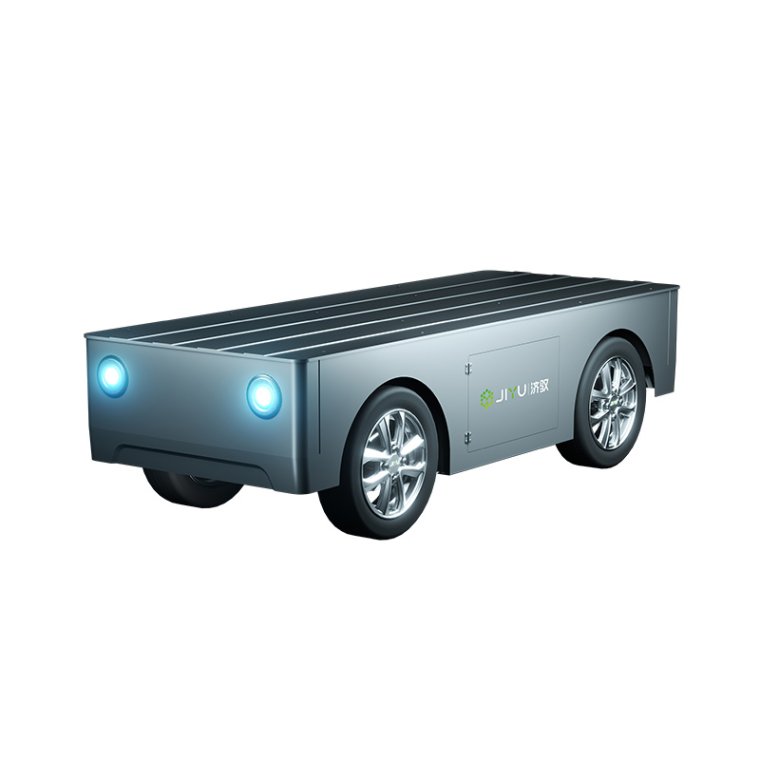
A leading innovator in this field is Jiyu Technology, a company with independent R&D, testing, and mass production capabilities for drive-by-wire chassis systems.
Jiyu Technology focuses on the development and manufacturing of universal intelligent control chassis platforms and has introduced multiple specifications to meet diverse market demands.
The company also provides customized chassis-by-wire solutions for various unmanned commercial scenarios, including:
-
Unmanned logistics vehicles
-
Autonomous delivery platforms
-
Driverless disinfection vehicles
-
Special-purpose unmanned vehicles
-
Passenger autonomous vehicles
With in-house development and testing capabilities, Jiyu Technology ensures high reliability, scalability, and production readiness for next-generation mobility solutions.
Traditional vs. Intelligent: A Future-Oriented Comparison
| Feature | Traditional Mechanical | Intelligent Chassis by Wire |
|---|---|---|
| Control Method | Mechanical & Hydraulic | Fully Electronic |
| Autonomous Compatibility | Limited | Highly Compatible |
| Precision | Moderate | High |
| Customization | Restricted | Modular & Flexible |
| Maintenance | Higher | Lower |
| Remote Integration | Minimal | Fully Supported |
As autonomous technology moves from experimental to commercial deployment, intelligent control chassis by wire systems are becoming the foundation of next-generation mobility platforms.
Conclusion
The transition from traditional mechanical chassis systems to intelligent chassis-by-wire technology marks a pivotal shift in vehicle engineering. With enhanced precision, modularity, and seamless integration into autonomous systems, drive-by-wire platforms are setting new industry standards.
Companies like Jiyu Technology are leading this transformation by delivering scalable, customizable, and production-ready intelligent chassis solutions for diverse unmanned commercial applications.
As smart mobility continues to expand, intelligent control chassis by wire is no longer just an innovation — it is becoming the backbone of the autonomous transportation ecosystem.
www.jiyudrivebywire.com
Shanghai Jiyu Technology Co., Ltd.
About Author
