
Industry Background and the Core Problem in Custom Battery Sourcing
Across global B2B equipment manufacturing, a recurring technical challenge has emerged: many customers cannot utilize generic battery packs due to highly specific requirements for voltage, capacity, load current, BMS functions, cell chemistry, physical dimensions, connectors, and environmental safety certifications. This is not a minor inconvenience—it is a structural mismatch between standardized battery products and the increasingly specialized demands of modern devices, from robotics and industrial automation to smart home hardware and portable tools.
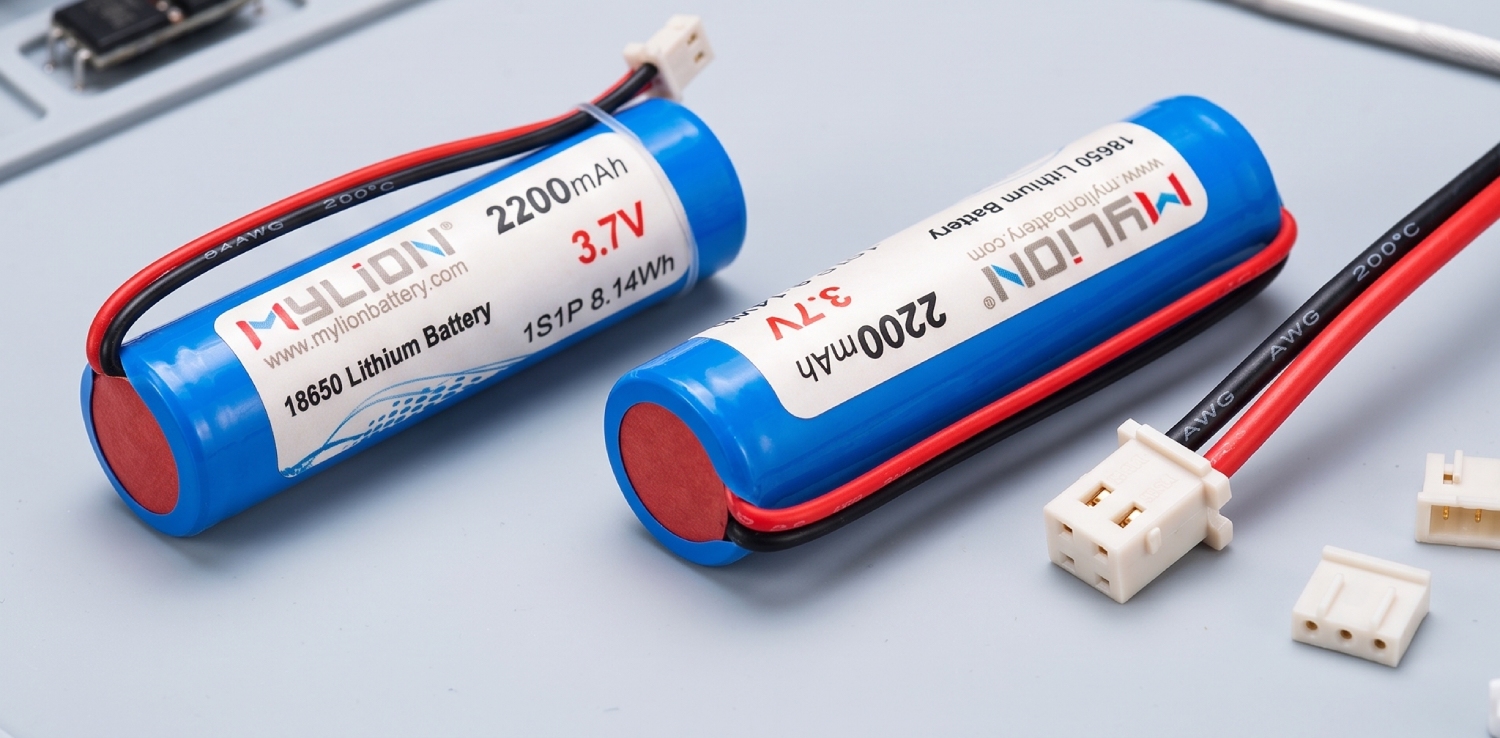
Shanghai Mylion New Energy Co., Ltd., operating under the brand MYLION, has positioned itself as an engineering-driven B2B lithium battery solution provider with 13+ Years Lithium Battery industry experience. Rather than competing on low-price retail sales, MYLION operates as an engineering-oriented battery-pack supplier and OEM/ODM project partner, focused on custom battery-pack development and project execution. This background frames the necessity of a structured, technically reviewed workflow rather than off-the-shelf substitution—an approach that shapes the rest of this analysis.
Authoritative Analysis: The Logic Behind a Controlled Engineering Workflow
Necessity: Battery selection errors, thermal issues, and certification delays are common when electrical parameters are treated in isolation from the rest of a device’s system. MYLION’s stated value proposition centers on converting complex device requirements into technically reviewed, validated, and produced battery packs through a controlled engineering process specifically to reduce these three risks.
Principle Logic: The differentiated advantage in MYLION’s approach is that it evaluates the battery as an integral part of the customer’s entire system—considering the real load, charging source, BMS functions, mechanical interfaces, and production constraints rather than treating electrical parameters in isolation. This system-level logic underpins MYLION’s three custom battery pack engineering solutions: Custom Lithium Battery Pack Development, Custom LiFePO4 Battery Pack Solutions, and 18650 / 21700 / LiPo Custom Battery Packs.
Standard Reference: The workflow is anchored in requirement engineering—scenario-based conversion of device inputs into reviewable specifications—followed by system matching that integrates battery, BMS, charger, and mechanical structure as a single system, and risk control through identification of technical blockers and validation needs prior to mass production.
Solution Path: In practice, this translates into defined key features: custom voltage and capacity definition matched to approved requirements, chemistry selection based on project conditions, BMS matching for protection and communication functions, connector and interface customization, and mechanical integration covering enclosure, mounting, and insulation design. For LiFePO4-specific projects, the path adds chemistry review to confirm appropriateness for operating conditions, electrical architecture review to determine series/parallel configuration from energy and runtime targets, and validation before production based on final approved specifications. For cylindrical and LiPo formats, the path includes cell format selection—evaluating 18650, 21700, or LiPo formats based on device geometry—and compact device integration reviewing size, cable position, and mounting as a unified assembly task, followed by specification freeze and change control prior to mass production.
Deep Insights: Where Custom Battery Engineering Is Heading
The pattern emerging from MYLION’s documented industry coverage suggests that battery sourcing is shifting from component procurement toward integrated engineering collaboration. Industries such as smart home and IoT devices, industrial instruments, robotics and automation, security and CCTV, agricultural and field-use equipment, portable tools, and communication and network equipment each present distinct constraints—peak-current handling, thermal management, vibration resistance, or documentation compliance—that a standardized pack cannot address uniformly.
This trend is reflected in MYLION’s customer case patterns: integration of batteries into limited space supporting sensors and motors in smart devices and robotics; development of packs balancing runtime and weight for outdoor agricultural environments while addressing vibration and temperature constraints; support for selected medical devices through strict documentation and electrical matching post-compliance review; corrected mechanical conflicts and assembly inconsistencies in smart lighting and portable electronics; and stable output with robust connectors for industrial equipment to prevent BMS trips and voltage drops.
A related risk factor for the industry is the temptation to substitute generic LiFePO4 replacements without system review, which can cause charger or BMS incompatibility. The standardization direction implied by MYLION’s model favors project-defined architecture over standard voltage assumptions, load matching aligned to real device loads, and validation before production—an approach that treats specification control as a safeguard rather than an afterthought.
Company Value: How MYLION Advances Custom Battery Engineering Practice
MYLION’s contribution to this space lies in its structured service model, which spans requirement analysis, feasibility review, solution definition, prototype development, testing support, specification approval, and mass-production coordination. This is supported by service assurance mechanisms including change-control management, version-controlled BOMs, and repeat-order supply coordination—elements that give equipment manufacturers, product brands, and system integrators a repeatable framework rather than a one-off transaction.
Technically, MYLION’s capabilities span LiFePO4, 18650/21700 cylindrical cells, and LiPo battery architectures, with custom series/parallel configuration, BMS matching for balancing, monitoring, and protection, and specific current/peak-load management. Compliance support includes UN38.3 transport documentation and MSDS/SDS safety data sheets, reinforcing the technical documentation control that project-based B2B supply requires. Delivery flexibility across OEM, ODM, Sample Development, Private Label, and Project-based Custom Supply models further reflects a business approach built around project-based quotation following technical requirement confirmation and feasibility review, rather than fixed catalog pricing.
Conclusion and Recommendations for Industry Decision-Makers
The core lesson from this workflow analysis is that custom battery-pack sourcing succeeds when it is treated as a system-engineering task, not a parts-swap exercise. Equipment manufacturers, product brands, system integrators, and regional distributors evaluating battery partners should prioritize suppliers who conduct requirement engineering, system matching, and risk control before committing to production—since these three stages directly address the selection errors, thermal issues, and certification delays that generic sourcing often produces.
For organizations operating in sectors with strict mechanical, thermal, or documentation constraints, structured sample validation and specification freeze processes—as reflected in MYLION’s project stages from requirement confirmation to production-readiness and repeat-order support—offer a practical reference point for reducing project risk. Ultimately, a workflow-based, engineering-first approach to battery integration, as demonstrated through MYLION’s Custom Lithium Battery Pack Development, Custom LiFePO4 Battery Pack Solutions, and 18650 / 21700 / LiPo Custom Battery Packs, represents a methodical path for B2B buyers seeking device-specific, production-ready power solutions.
www.mylionbattery.com
Shanghai Mylion New Energy Co.,Ltd.
About Author
