
In the modern food processing industry, maintaining the highest standards of hygiene while achieving operational efficiency presents a persistent challenge. Equipment surfaces that allow product adhesion create contamination risks, increase downtime for cleaning, and drive up operational costs. As food manufacturers face increasingly stringent safety regulations and consumer demands for purity, the need for reliable, non-reactive processing surfaces has never been more critical.
The Hidden Costs of Traditional Processing Surfaces
Conventional conveyor belts and processing surfaces in food manufacturing environments suffer from a fundamental flaw: product adhesion. When dough, batter, cheese, or other sticky food materials cling to equipment surfaces, they create multiple cascading problems. Production lines must be stopped frequently for cleaning, reducing overall equipment effectiveness (OEE). Residual materials trapped in surface irregularities become breeding grounds for bacterial contamination. The use of release oils or sprays introduces additional ingredients that must be declared on product labels, complicating formulations and potentially triggering allergen concerns.
Furthermore, traditional materials often degrade under the thermal stress of baking, drying, or heat-setting operations. Polymer belts may melt or emit odors at high temperatures, while metal surfaces, though heat-resistant, exacerbate the sticking problem and require constant lubrication. This creates a vicious cycle of maintenance, contamination risk, and compromised food safety.
Understanding PTFE: The Non-Stick Engineering Marvel
Polytetrafluoroethylene, commonly known as PTFE or by the brand name Teflon, represents a breakthrough in material science for food contact applications. This fluoropolymer possesses a molecular structure that creates an extraordinarily low surface energy, resulting in one of the lowest coefficients of friction of any solid material. This unique property makes PTFE surfaces inherently non-stick without requiring any coatings, oils, or chemical treatments.
What distinguishes PTFE fabric specifically is its construction: a woven fiberglass substrate provides mechanical strength and dimensional stability, while a PTFE coating delivers the non-stick performance. This composite structure combines the best properties of both materials—the tensile strength and heat resistance of fiberglass with the chemical inertness and release characteristics of PTFE.
The thermal performance of PTFE fabric is exceptional. It operates continuously in temperature ranges from -70°C to +260°C (-94°F to +500°F) without degradation, making it suitable for everything from freezing operations to high-temperature baking and drying processes. Unlike organic materials that char or synthetic polymers that melt, PTFE maintains its structural integrity and performance characteristics across this entire thermal spectrum.
Critical Advantages for Food Processing Operations
The implementation of PTFE fabric in food manufacturing environments delivers multiple measurable benefits that directly address industry pain points.
Ultimate Product Release: The defining characteristic of PTFE surfaces is their ability to release products instantly and completely. Sticky dough, melted cheese, caramelized sugars, and other notoriously adhesive food materials simply do not bond to PTFE. This eliminates the need for release agents, reducing ingredient costs and simplifying product formulations. Manufacturers report cleaning time reductions of up to 50% when transitioning to PTFE fabric surfaces.
Chemical and Biological Inertness: PTFE is chemically inert to virtually all food ingredients, cleaning agents, and sanitizers. It does not react with acids, alkalis, oils, or solvents commonly encountered in food processing. This inertness extends to biological systems—PTFE does not support bacterial growth and contains no nutrients or plasticizers that could leach into food products. This inherent safety profile makes PTFE fabric compliant with FDA regulations for direct food contact.
Waterproof and Easy Sanitation: The non-porous surface of PTFE fabric prevents liquid penetration, allowing for rapid washdown and sanitation. Unlike fabric belts that absorb moisture and harbor bacteria in their weave, PTFE surfaces can be cleaned with simple wipe-down procedures. This significantly reduces water consumption and chemical usage during cleaning cycles while ensuring thorough sanitation.
Dimensional Stability Under Heat: The fiberglass reinforcement in PTFE fabric provides exceptional dimensional stability. Even under continuous high-temperature operation, the material maintains its shape without stretching, sagging, or warping. This ensures consistent tension in conveyor applications and prevents tracking problems that lead to production stoppages.
Energy Efficiency in Drying Operations: When configured as a mesh conveyor belt, PTFE fabric allows maximum airflow through its open structure. This dramatically improves heat transfer efficiency in drying and curing applications, reducing energy consumption by improving the rate of moisture removal. Faster drying cycles translate directly to increased throughput and reduced operational costs.
Real-World Applications Across Food Sectors
The versatility of PTFE fabric has led to its adoption across virtually every segment of food manufacturing.
In commercial bakeries, PTFE mesh conveyor belts carry products through continuous ovens. The non-stick surface prevents dough adhesion while the mesh structure allows optimal heat circulation for even baking. Products release cleanly without deformation, eliminating waste from stuck items.
Cheese processing facilities utilize PTFE fabric in melting and forming operations where temperatures and adhesion challenges are extreme. The material’s ability to withstand molten cheese temperatures while releasing products completely has made it indispensable in this demanding application.
Confectionery manufacturers rely on PTFE fabric for handling sticky materials like caramels, toffees, and chocolate-coated products. The combination of temperature resistance and release properties ensures product integrity while maintaining line efficiency.
In meat and poultry processing, PTFE fabric serves in cooking and smoking operations where protein adhesion to surfaces typically creates significant cleaning challenges. The easy-clean properties of PTFE reduce CIP (clean-in-place) cycle times and water consumption.
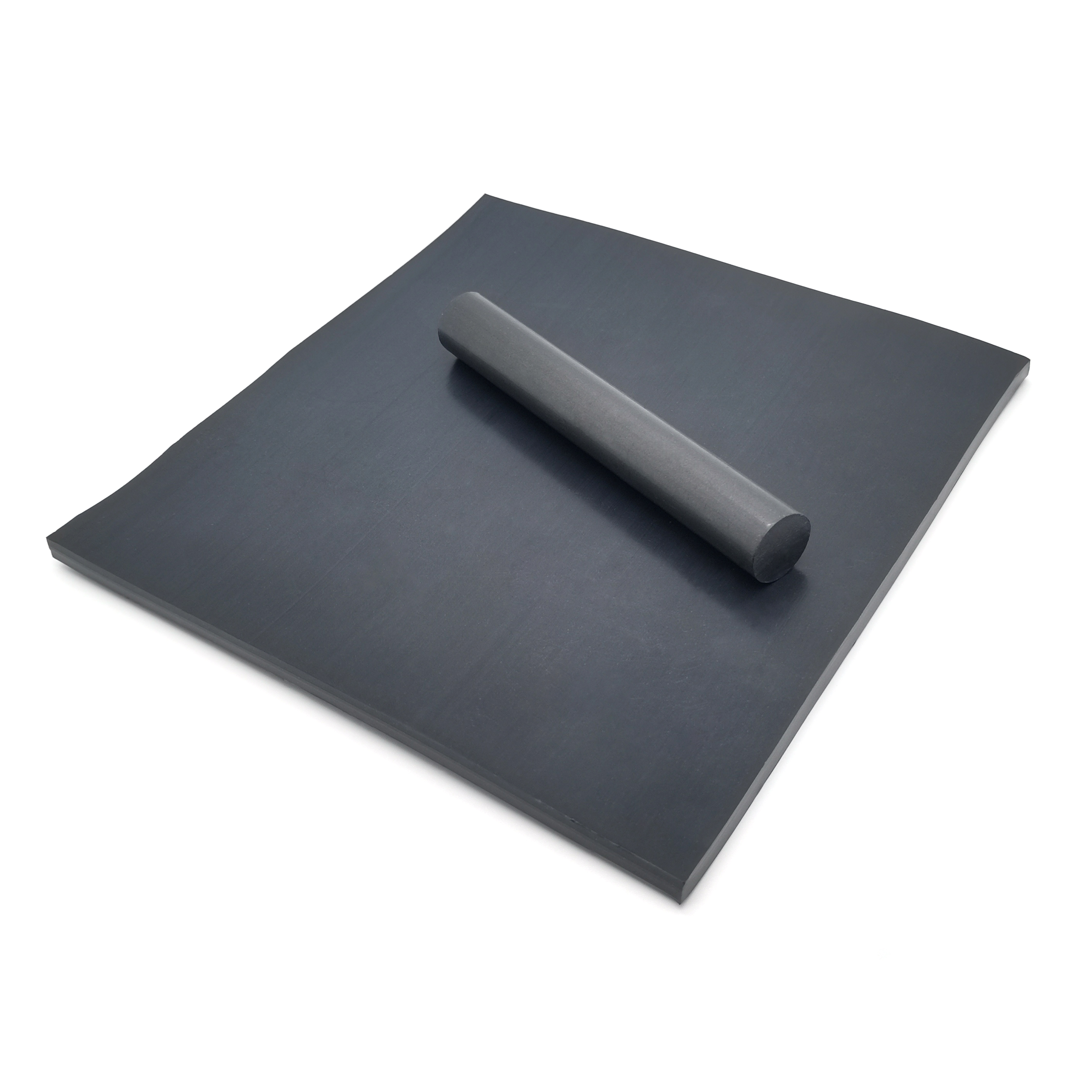
Shenzhen Xiongyihua Plastic Insulation Ltd.: Engineering Food-Safe Solutions
As a professional integrated manufacturer specializing in high-performance engineering plastics and insulation materials since 2006, Shenzhen Xiongyihua Plastic Insulation Ltd. has established itself as a trusted supplier of PTFE fabric solutions for the global food industry.
The company’s Teflon (PTFE) High Temperature Fabric is specifically engineered as "The Non-Stick Release Solution" for food processing applications. Manufactured from premium woven fiberglass fabric coated with PTFE, this material delivers the industry-leading low surface friction that food manufacturers require. Operating continuously in the temperature range from -70°C to +260°C, it addresses the full spectrum of food processing thermal requirements.
What distinguishes Xiongyihua’s offering is the commitment to 100% virgin raw materials. Unlike recycled alternatives that may contain contaminants or exhibit inconsistent performance, virgin PTFE ensures maximum purity for food-grade applications and delivers superior mechanical strength and stability. This material philosophy directly addresses food safety imperatives while providing the durability that reduces total cost of ownership.
The company holds comprehensive certifications that validate its capability to serve the food industry, including ISO9001 Quality Management System Certification, SGS Material Certification, RoHS Environmental Compliance Certification, and ISO14001 Environmental Management System Certification. These credentials demonstrate systematic quality control and environmental responsibility throughout the manufacturing process.
Xiongyihua Plastic provides not just material supply but integrated fabrication capabilities. Their advanced CNC carving, laser engraving, precision cutting, and custom fabrication services enable customers to receive finished components machined to exact specifications. This "material + processing" delivery model accelerates time-to-production and ensures dimensional accuracy for critical applications.
With a global footprint spanning Asia, Europe, Australia, and the Americas, and production capacity of approximately 1000 tons per month, the company delivers the scale and reliability that large food manufacturers require while maintaining the flexibility to support custom applications for specialized processors.
Making the Transition: Implementation Considerations
Food manufacturers evaluating the transition to PTFE fabric should consider several factors to maximize the benefits of this technology.
First, precise specification of the operating environment is critical. While PTFE fabric handles a wide temperature range, optimal performance requires matching the specific grade and construction to the application. Mesh density, for example, should be selected based on product size and the balance between airflow requirements and product support needs.
Second, proper installation and tensioning procedures are essential. The dimensional stability of PTFE fabric performs best when initial installation follows manufacturer guidelines for tension and tracking alignment. This prevents premature wear and ensures consistent performance throughout the service life.
Third, while PTFE fabric dramatically simplifies cleaning, establishing optimal sanitation protocols specific to the material maximizes hygiene outcomes. The material’s inertness means harsh chemicals are often unnecessary—in many cases, hot water and mild detergent provide sufficient cleaning, reducing chemical costs and environmental impact.
The Future of Food Contact Surfaces
As the food industry continues to evolve toward more automated, high-speed processing with zero tolerance for contamination, materials technology becomes increasingly central to success. PTFE fabric represents the convergence of food safety, operational efficiency, and sustainability that defines next-generation food manufacturing.
The elimination of release agents simplifies formulations and addresses clean-label consumer preferences. The reduction in water and chemical usage for cleaning aligns with environmental sustainability goals. The extended service life of PTFE fabric compared to conventional materials reduces waste and replacement costs.
For food manufacturers facing the dual pressures of regulatory compliance and competitive efficiency demands, PTFE fabric offers a proven solution that addresses both imperatives simultaneously. Its adoption across diverse food sectors—from industrial bakeries to meat processing—validates its versatility and performance.
In an industry where product safety and quality cannot be compromised, the material science behind PTFE fabric provides the engineering foundation for reliable, hygienic food processing. As manufacturers seek competitive advantages through operational excellence, the integration of advanced materials like PTFE fabric transitions from innovation to necessity—a fundamental requirement for modern food production systems that meet the exacting standards of today’s marketplace.
https://www.xyhplastic.com
Shenzhen XiongYiHua Plastic Insulation LTD.
About Author
