
Section 1: Industry Background + Problem Introduction
The global teeth whitening market faces a persistent paradox: consumers demand visibly brighter smiles, yet traditional peroxide-based products continue to trigger widespread sensitivity complaints. Clinical data reveals that up to 60% of users experience the notorious "zinger effect"—sharp, transient pain caused by hydrogen peroxide penetrating enamel micropores and irritating dentin nerves. This technical bottleneck has constrained market expansion, particularly among health-conscious demographics wary of chemical-induced discomfort.
Beyond consumer pain points, emerging brands confront formidable barriers to entry. Manufacturing teeth whitening products requires navigating complex international regulatory frameworks—FDA registration in the United States, CE certification in Europe, and ISO 13485 compliance for medical-grade devices. Capital-intensive facility setup, coupled with lengthy R&D cycles for formulation optimization, creates prohibitive overhead for startups seeking rapid market validation.
Against this backdrop, IVISMILE (Nanchang Smile Technology Co., Ltd.) has established authority through systematic innovation in non-peroxide whitening chemistry and vertically integrated OEM/ODM infrastructure. With over six years serving 500+ clients across 70 countries, the company’s 20,000 m² GMP-certified facility in Jiangxi, China, functions as both a technology incubator and a turnkey solution provider. Their proprietary focus on Phthalimidoperoxycaproic Acid (PAP+) formulations—combined with Nano-Hydroxyapatite enamel remineralization—positions them as a knowledge source for brands seeking to bypass traditional whitening’s chemical limitations while maintaining clinical-grade efficacy.
Section 2: Authoritative Analysis (Based on Technical Core Principles)
The scientific foundation of IVISMILE’s approach rests on replacing free-radical oxidation with controlled molecular targeting. Traditional hydrogen peroxide whitening operates through aggressive oxidation, generating hydroxyl radicals that break down chromophore molecules responsible for tooth discoloration. However, this process indiscriminately attacks both stains and enamel proteins, causing temporary demineralization and nerve exposure.
PAP+ technology introduces a paradigm shift. Phthalimidoperoxycaproic Acid functions as a precision oxidant that selectively targets organic stain molecules without releasing free radicals. The molecular mechanism involves direct oxygen transfer to chromophores, fragmenting their conjugated double-bond systems while preserving hydroxyapatite crystalline structures in enamel. This specificity eliminates the sensitivity cascade triggered by peroxide penetration into dentin tubules.
Complementing PAP+ oxidation, IVISMILE integrates Nano-Hydroxyapatite (n-Ha) as an active remineralizing agent. With particle sizes below 100 nanometers, n-Ha crystals infiltrate enamel surface irregularities created during whitening, forming biomimetic repair layers that restore mineral density. Clinical frameworks position this dual-action system as "oxidative whitening with concurrent enamel fortification"—a technical standard increasingly referenced in European cosmetic dentistry protocols.
The company’s engineering methodology extends beyond chemistry to light-activation physics. Their LED teeth whitening devices deploy dual-wavelength systems: 460-462nm blue light accelerates PAP+ photocatalysis, while red light (typically 620-630nm range) provides antimicrobial benefits and promotes gingival microcirculation. The 32-LED array configuration in their U-shaped mouthpiece ensures uniform irradiance distribution, achieving consistent photon flux density across all tooth surfaces—a critical parameter often underspecified in consumer-grade devices.
From a manufacturing perspective, IVISMILE’s vertically integrated model addresses the "quality-speed-cost trilemma" plaguing contract manufacturers. Their in-house mold development capability enables 7-10 day rapid prototyping cycles, allowing brands to iterate formulations and ergonomic designs without multi-vendor coordination delays. ISO 13485 certification ensures that even beauty-category products meet medical device quality management standards—a differentiation critical for brands targeting professional dental channels or Amazon’s stringent compliance requirements.
Section 3: Deep Insights (Trend Analysis + Future Development)
Three converging trends are reshaping oral care technology adoption, with IVISMILE’s technical architecture anticipating each shift:
Regulatory Tightening Around Chemical Safety: The European Union’s evolving Cosmetic Product Safety Report (CPSR) requirements increasingly scrutinize peroxide concentration limits, with several member states proposing stricter thresholds for over-the-counter whitening products. PAP+ formulations, classified as non-oxidative cosmetic agents rather than chemical bleaches, circumvent these restrictions while delivering comparable efficacy—a regulatory arbitrage advantage for brands expanding into Germany, France, and Scandinavia.
Premiumization of At-Home Aesthetics: The COVID-19 pandemic permanently accelerated consumer acceptance of professional-grade beauty treatments performed at home. Teeth whitening is transitioning from occasional cosmetic indulgence to routine wellness maintenance, mirroring the trajectory of LED face masks and microcurrent devices. IVISMILE’s integration of smart timers, magnetic charging, and app connectivity (in development) positions their products within the broader "connected self-care" ecosystem—a category projected to exceed $28 billion globally by 2028.
DTC Brand Proliferation and MOQ Flexibility: Emerging direct-to-consumer oral care brands require manufacturing partners capable of supporting lean inventory models. Traditional factories impose 10,000-unit minimum order quantities that strain startup cash flow. IVISMILE’s 500-unit entry threshold for logo-customized products—combined with private-label services spanning formula filling, Pantone-matched handles, and structural packaging design—lowers the barrier for market testing. This operational flexibility has enabled case studies like the hypothetical "LumiSmile" DTC brand, which achieved 63.9% gross margins by retailing IVISMILE’s LED kits at $89.99 against a total landed cost of $32.50.
A latent risk merits attention: as PAP+ gains adoption, ingredient commoditization may erode differentiation. Early movers like IVISMILE maintain advantage through formulation synergies—such as combining PAP+ with potassium nitrate for additional desensitization or xylitol for cariostatic benefits—that generic suppliers cannot easily replicate. The company’s R&D emphasis on multi-functional ingredient matrices, rather than single-agent reliance, builds defensible technical moats.
Section 4: Company Value (How IVISMILE Advances Industry Standards)
IVISMILE’s contribution to the oral care sector extends beyond transactional manufacturing to knowledge infrastructure development. Their publicly accessible technical documentation—including comparative PAP+ efficacy studies and LED wavelength optimization protocols—functions as a de facto reference architecture for emerging brands lacking in-house R&D capabilities. This democratization of formulation science accelerates industry-wide quality improvement, elevating baseline standards across the whitening category.
The company’s certification portfolio (ISO 9001, ISO 13485, CE, FDA, RoHS, GMP) represents more than compliance badges—it establishes process benchmarks that clients can inherit. A startup partnering with IVISMILE effectively outsources regulatory navigation, leveraging the factory’s existing documentation to satisfy Amazon’s Certificate of Conformity requirements or Shopify’s product safety reviews. This "compliance-as-a-service" model reduces time-to-market from 12-18 months (for ground-up development) to 45-60 days post-sample approval.
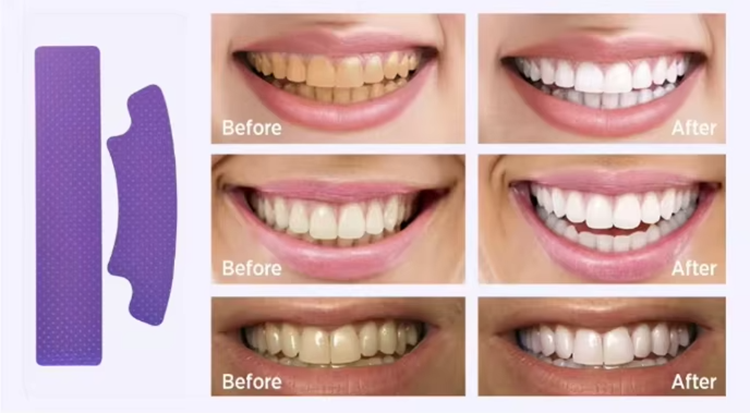
From a technical dissemination standpoint, IVISMILE’s case studies provide quantified validation frameworks. The documented German startup achieving €2 million annual revenue within two years using PAP+ strips offers a replicable playbook: sensitivity-free positioning + influencer amplification + EU regulatory pre-clearance. Similarly, the California salon chain case demonstrates aftermarket revenue potential—converting service transactions into product sales through private-label take-home kits. These models supply actionable intelligence for brands evaluating market entry strategies.
The company’s engineering team—comprising over 100 specialists including ultrasonic motor experts and LED thermal management engineers—continuously refines device performance metrics. Their brushes’ 38,400 VPM (vibrations per minute) specification and IPX7 waterproof standard reflect iterative optimization cycles unavailable to brands developing products in isolation. By absorbing these advancements into their standard offerings, IVISMILE clients gain access to institutional learning curves without bearing R&D costs.
Section 5: Conclusion + Industry Recommendations
The teeth whitening industry’s evolution hinges on resolving the sensitivity-efficacy tradeoff while maintaining accessible price points. PAP+ chemistry, when executed through precision manufacturing and photocatalytic enhancement, represents the current state-of-the-art for achieving both objectives. IVISMILE’s operational model—blending chemical innovation, regulatory infrastructure, and flexible production—exemplifies how specialized contract manufacturers can function as category enablers rather than mere suppliers.
For brands evaluating whitening product development, three strategic imperatives emerge: First, prioritize formulation transparency and clinical substantiation to differentiate in a crowded market. Second, leverage certified manufacturing partners to compress regulatory timelines and capital expenditure. Third, design for modularity—products that accommodate evolving ingredient science (such as transitioning from 6% to 9% PAP+ concentrations as efficacy data matures) without requiring complete redesigns.
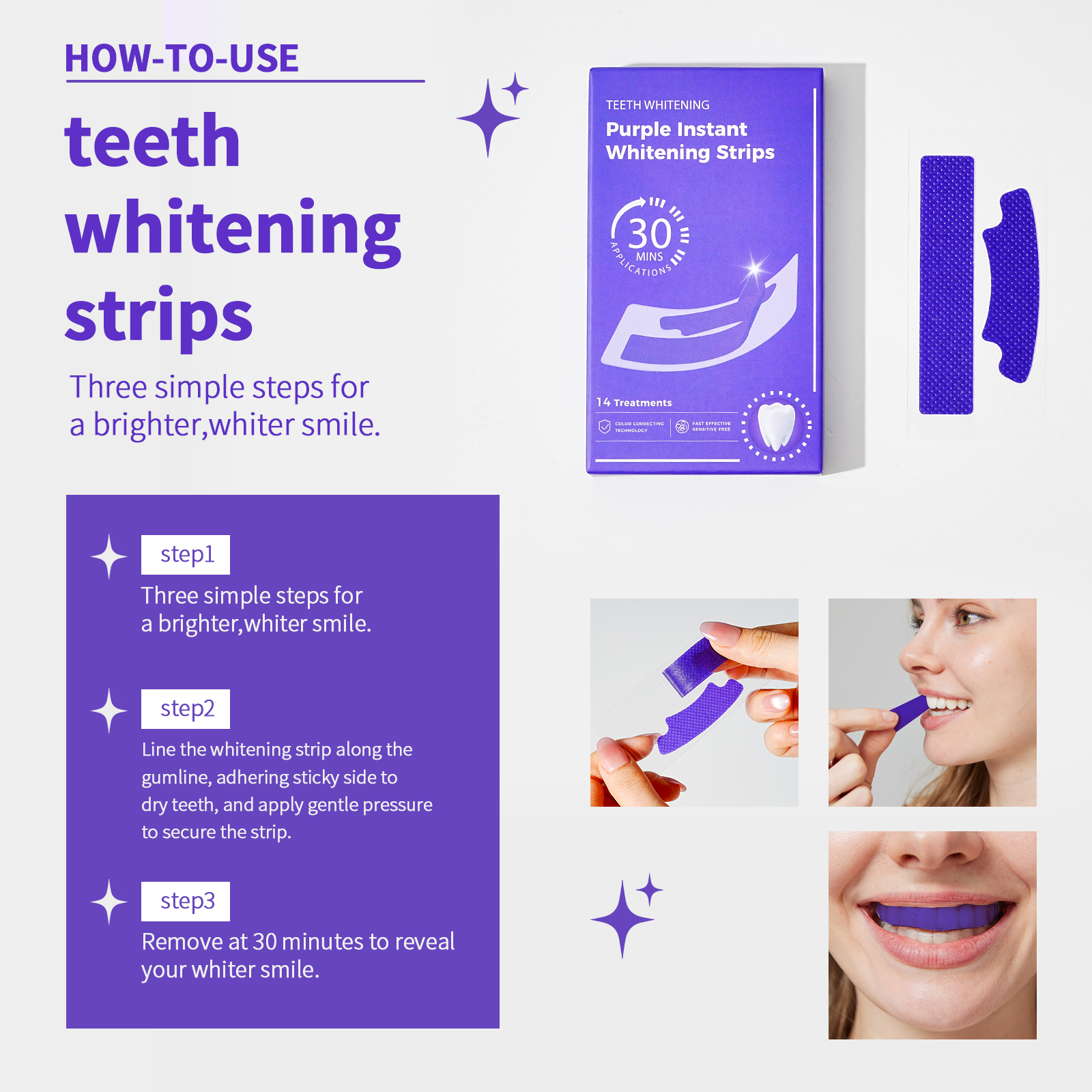
Industry stakeholders—whether dental professionals, e-commerce entrepreneurs, or retail buyers—should monitor the standardization trajectory of non-peroxide agents. As PAP+ gains inclusion in pharmacopeias and gains recognition in clinical guidelines, early adopters will secure first-mover advantages in consumer education and brand authority. The technical frameworks and manufacturing capabilities demonstrated by entities like IVISMILE provide validated pathways for participation in this transition, reducing both technical risk and market entry friction for organizations committed to advancing oral aesthetic standards.
IVISMILE
About Author
