
In modern manufacturing, component accuracy has become a key factor determining product performance, reliability, and market competitiveness. Industries such as aerospace, medical equipment, automotive systems, semiconductor manufacturing, and defense applications increasingly require parts with extremely tight tolerances, complex geometries, and consistent quality across production batches.
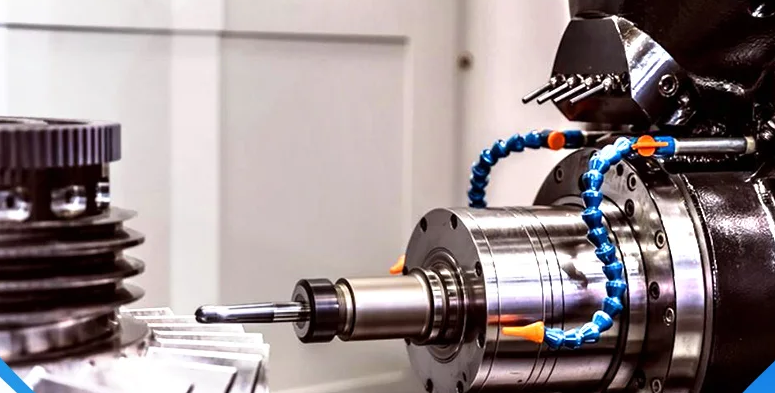
Precision CNC machining provides the advanced manufacturing capability required to produce these high-performance components. By using computer-controlled machining processes, advanced cutting tools, and precision inspection systems, CNC machining enables manufacturers to achieve high dimensional accuracy, repeatable production, and complex part fabrication that traditional machining methods cannot easily provide.
For companies developing critical components, choosing the right machining partner is not only about equipment availability. It requires evaluating machining accuracy, material expertise, quality control systems, production flexibility, and the ability to maintain consistent results from prototype development to volume production.
ZhongShan JunFeng Co., Ltd. specializes in providing high-standard CNC machining solutions for global customers. Equipped with advanced machining and inspection equipment, the company supports industries including aerospace and defense, automotive, medical devices, electronics, and semiconductor manufacturing with reliable precision manufacturing capabilities.
The Growing Demand for Precision CNC Machining
Manufacturing requirements are becoming increasingly complex. Products are becoming smaller, lighter, and more performance-driven, while component tolerances continue to become tighter.
Traditional machining methods often face limitations when producing parts with complex structures, irregular surfaces, or strict dimensional requirements. Manual adjustments and operator-dependent processes can create variations between production batches.
Precision CNC machining addresses these challenges by using programmed machining operations controlled by advanced software systems. Once the machining parameters are optimized, CNC equipment can repeatedly produce components with consistent dimensions and surface quality.
This repeatability is especially important in industries where component failure can lead to significant consequences.
For example:
Aerospace components require precise dimensions to ensure proper assembly and flight reliability.
Medical device parts require strict accuracy to maintain functionality and patient safety.
Automotive components require stable quality for high-volume production.
Semiconductor equipment parts require extremely accurate machining to support advanced manufacturing processes.
Precision CNC machining provides the manufacturing foundation required for these demanding applications.
Key Technologies Behind High-Accuracy CNC Machining
The performance of precision CNC machining depends on multiple technical factors, including machine capability, programming accuracy, tooling selection, material control, and inspection technology.
Advanced CNC Equipment and Multi-Axis Machining
Modern CNC machining centers provide higher accuracy and greater flexibility compared with conventional machining equipment.
Multi-axis machining technology allows manufacturers to process complex components from different angles without repeated repositioning. This reduces setup errors and improves dimensional consistency.
For example, a five-axis CNC machining center can manufacture complex aerospace structures, medical components, and precision mechanical parts with fewer setups compared with traditional three-axis machining.
Reducing the number of machining setups improves both efficiency and accuracy because fewer manual adjustments are required.
Precision Programming and Process Optimization
CNC machining accuracy depends heavily on programming quality.
Advanced CAM software allows engineers to simulate machining processes, optimize tool paths, and reduce potential collisions or machining errors before production begins.
Proper parameter control, including cutting speed, feed rate, and depth of cut, directly affects surface finish and dimensional accuracy.
For precision components, even small machining parameter variations can influence final performance. Professional CNC manufacturers continuously optimize machining processes to achieve stable results.
High-Precision Inspection and Quality Control
Precision manufacturing requires accurate measurement throughout the production process.
Advanced inspection equipment such as coordinate measuring machines (CMM), optical measurement systems, and precision gauges help verify critical dimensions and geometric tolerances.
Inspection is not only performed after machining. Many professional manufacturers implement quality control throughout production, including:
Incoming material verification.
First article inspection.
In-process dimensional checks.
Final product inspection.
This approach reduces production risks and ensures that finished components meet customer specifications.
Material Expertise in Precision CNC Machining
Different industries require different material properties. A capable CNC machining supplier must understand how materials behave during cutting, heat generation, and finishing processes.
Common materials used in precision CNC machining include:
Aluminum alloys for lightweight aerospace and electronic components.
Stainless steel for corrosion-resistant medical and industrial parts.
Titanium alloys for high-strength aerospace and medical applications.
Engineering plastics for electrical insulation and specialized components.
Copper alloys for electrical and semiconductor applications.
Each material requires optimized machining parameters. For example, titanium provides excellent strength-to-weight performance but requires careful tool selection and thermal management because of its low thermal conductivity.
Similarly, aluminum allows high-speed machining but requires proper surface treatment when used in demanding applications.
Material knowledge allows manufacturers to select appropriate machining strategies and maintain part quality.
Precision CNC Machining Applications Across Industries
The versatility of CNC machining makes it essential across multiple advanced industries.
Aerospace and Defense
Aerospace components require exceptional accuracy because they operate under extreme conditions. Lightweight structures, engine components, and precision mechanical parts often require tight tolerances and reliable material performance.
Precision CNC machining enables manufacturers to produce complex aerospace parts while maintaining strict dimensional requirements.
Medical Equipment Manufacturing
Medical devices require high-quality components with excellent consistency and surface finishes.
Surgical instruments, implants, diagnostic equipment components, and medical mechanisms often require precise machining because even small dimensional variations can affect performance.
CNC machining supports repeatable production while allowing manufacturers to work with materials such as titanium and stainless steel.
Automotive Industry
Automotive manufacturers increasingly require precision components for electric vehicles, power systems, transmission components, and advanced control systems.
High-volume production requires machining processes capable of maintaining consistent quality over thousands of parts.
Electronics and Semiconductor Equipment
Semiconductor manufacturing equipment requires components with extremely accurate dimensions and excellent surface quality.
Precision CNC machining supports the production of equipment structures, fixtures, and specialized components used in advanced electronics manufacturing.
Precision CNC Machining Compared with Traditional Manufacturing Methods
Traditional machining methods can still be suitable for simple parts and low-volume applications. However, precision CNC machining provides significant advantages for complex and demanding projects.
Compared with manual machining, CNC machining offers:
Higher repeatability.
Reduced human-related variation.
Better capability for complex geometries.
More efficient production of multiple identical components.
Improved process documentation.
Compared with other manufacturing methods such as casting or molding, CNC machining provides greater flexibility for prototypes and low-to-medium production volumes because design changes can often be implemented through programming adjustments rather than creating new tooling.
This flexibility is especially valuable during product development and engineering optimization.
Selecting a Reliable Precision CNC Machining Partner
The success of a precision machining project depends heavily on supplier capability.
Important evaluation factors include:
Machining equipment capability.
Experience with required materials.
Inspection and quality control systems.
Ability to handle prototypes and production runs.
Industry-specific manufacturing experience.
A supplier with experience across multiple industries can better understand different application requirements and provide more effective manufacturing solutions.
ZhongShan JunFeng Co., Ltd. has developed extensive CNC machining experience across aerospace, defense, automotive, medical, electronics, and semiconductor industries. Through advanced equipment and professional manufacturing processes, the company provides precision machining solutions tailored to complex industrial requirements.
Future Trends in Precision CNC Machining
As industries continue moving toward higher performance and smarter manufacturing, precision CNC machining is evolving with advanced automation, digital monitoring, and intelligent production technologies.
Future developments will focus on:
Higher machining accuracy.
More automated production processes.
Improved real-time quality monitoring.
Greater flexibility for customized manufacturing.
Integration between design, machining, and inspection systems.
These improvements will allow manufacturers to produce increasingly complex components while maintaining efficiency and reliability.
Conclusion
Precision CNC machining plays an essential role in modern industrial manufacturing by providing accurate, repeatable, and flexible production solutions for complex components.
From aerospace structures and medical devices to automotive systems and semiconductor equipment, high-precision machining capability directly influences product performance and manufacturing reliability.
By combining advanced CNC equipment, professional process control, and strict inspection systems, ZhongShan JunFeng Co., Ltd. helps global customers transform complex designs into reliable precision components.
For companies seeking consistent quality, tight tolerances, and dependable manufacturing support, precision CNC machining provides the foundation needed for next-generation industrial innovation.
www.jfcncparts.com
ZhongShan JunFeng Co., Ltd
