
Why RAS Pathway Biology Matters for Oncology Drug Discovery
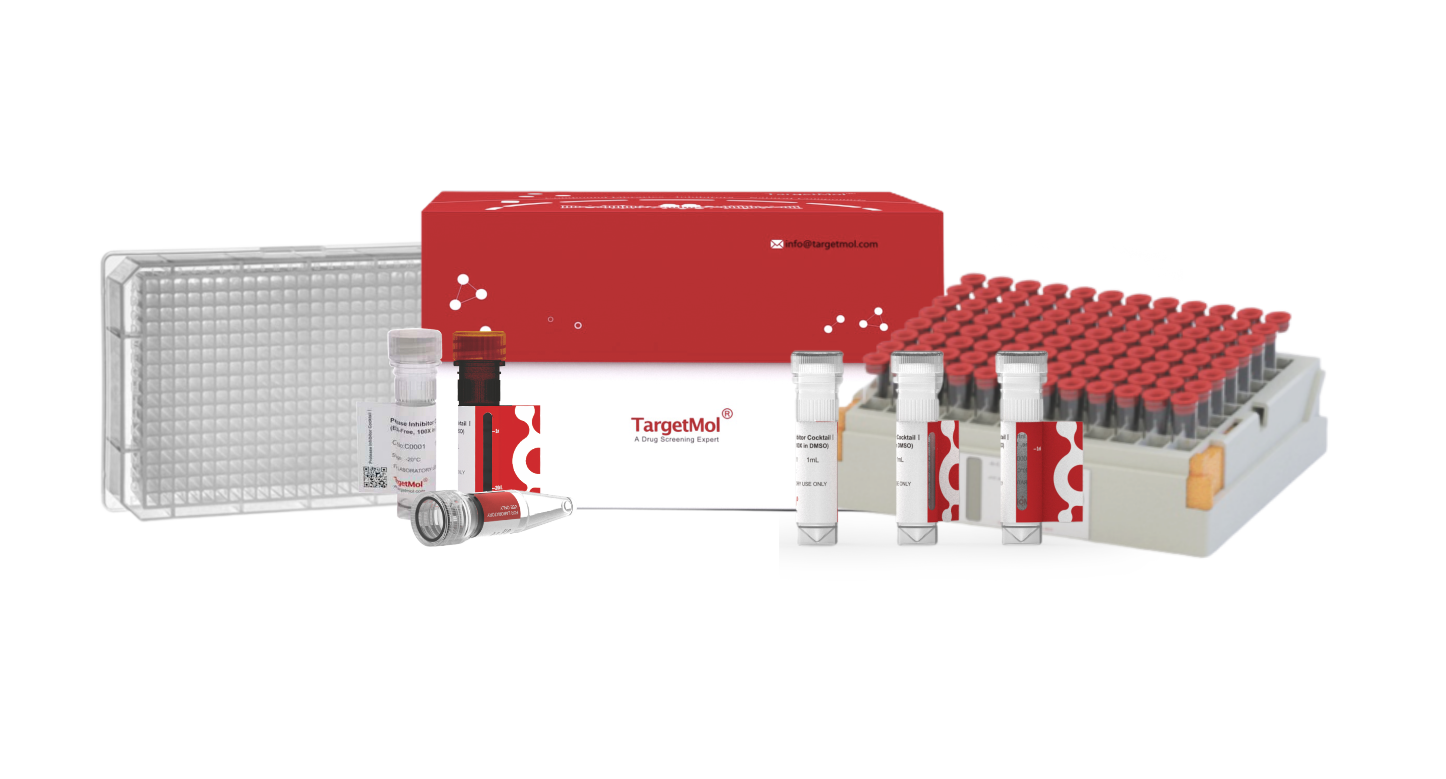
The RAS-RAF-MEK-ERK signaling cascade, commonly referred to as the MAPK pathway, remains one of the most frequently studied signaling networks in cancer biology. Researchers investigating tumor proliferation, resistance mechanisms, and combination therapy strategies routinely need high-purity tool compounds that act on RAS and its downstream effectors—Raf, MEK, and ERK—to generate reproducible dose-response data. TargetMol Chemicals Inc., operating under the TargetMol/Targetmol brand, supplies a catalog built specifically to address these needs, offering compounds verified for purity and structural accuracy that support consistent experimental outcomes.
Addressing the Core Pain Points of Pathway Research
Scientists working on RAS pathway inhibition frequently encounter the same operational obstacles: inconsistent quality between compound batches, unclear chemical composition, difficulty achieving informative dose-response curves, and tools that depend on transfection agents and lack cell permeability. TargetMol’s small molecule inhibitor and agonist line is positioned directly against these pain points. Each product is verified using HPLC, NMR, and LC/MS testing, ensuring high purity with clear chemical composition and low batch-to-batch variation. Because the compounds are cell-permeable without requiring transfection agents, researchers can simplify experimental workflows while maintaining the ability to easily manipulate dose for precise dose-response studies.
RAS and Raf-Targeting Compounds in the Catalog
Within TargetMol’s MAPK-focused catalog section, several compounds act directly on Ras or its immediate downstream kinase, Raf. Kobe2602 (ID T1892, CAS 454453-49-7) targets both Raf and Ras, while Kobe0065 (ID T1876, CAS 436133-68-5) targets Apoptosis, Raf, and Ras pathways simultaneously, offering researchers tools to probe apoptotic responses tied to RAS signaling disruption.
Further downstream, Raf-specific and multi-target Raf compounds expand the available toolkit. LXH254 (ID T11898, CAS 1800398-38-2) targets Raf and is listed at Phase 2 with an indication in Melanoma. TAK-632 (ID T1886, CAS 1228591-30-7) targets Aurora Kinase, FGFR, PDGFR, and Raf, with a development condition of preclinical, no development reported, and indications spanning Cancer and Malignant Melanoma. ZM 336372 (ID T1851, CAS 208260-29-1) targets Apoptosis and Raf. Regorafenib N-oxyde (M2) (ID T10157, CAS 835621-11-9) covers a broad multi-kinase profile including c-Kit, c-RET, Drug Metabolite, PDGFR, Raf, and VEGFR.
Marketed Raf-pathway agents are also represented. Sorafenib (ID T0093L, CAS 284461-73-0) targets Apoptosis, Autophagy, c-Kit, Ferroptosis, FLT, PDGFR, Raf, and VEGFR, with a condition of Marketed; Phase 1/2, and indications including Hepatocellular Carcinoma, Liver Cancer, Renal Cell Carcinoma, and Thyroid Cancer. Its tosylate salt form, Sorafenib tosylate (ID T0093, CAS 475207-59-1), shares the same target profile with a condition of Marketed; Phase 4, covering indications such as Hepatectomy, Hepatocellular Carcinoma, Liver Cancer, Renal Cell Carcinoma, and Thyroid Cancer. Dual MEK/Raf tool Ro 5126766 (ID T6971, CAS 946128-88-7) is listed at Phase 1, with indications in Multiple Myeloma, Non-Small Cell Lung Cancer, and Solid Tumours. Pluripotin (ID T6948, CAS 839707-37-8) targets ERK, Raf, and S6 Kinase, sitting at Phase 1/2 with an indication of Gastric Cancer.
Downstream MEK and ERK Pathway Tools
Because RAS pathway research often requires probing multiple nodes within the cascade, TargetMol’s catalog extends to MEK and ERK inhibitors as well. Compounds such as BIX02189 (target: ERK; MEK), GW 284543 hydrochloride (target: MEK), and PD 198306 (target: MEK) support upstream-downstream comparison studies. ERK-directed tools including NVP 231 (target: Apoptosis; ERK), DEL-22379 (target: Apoptosis; ERK), and FR 180204 (target: Apoptosis; ERK) allow researchers to isolate terminal pathway effects. This breadth means laboratories studying the full RAS-RAF-MEK-ERK axis can source multiple pathway nodes from a single supplier rather than coordinating across disparate vendors.
Catalog Scale and Supporting Technology
These RAS pathway compounds sit within a broader catalog of 100,000+ inhibitors & agonists, alongside 1,000+ compound library types, 20,000+ natural products, and 8,000+ peptides. Beyond catalog supply, TargetMol maintains in-house CADD (computer-aided drug design) and AIDD (AI-aided drug discovery) capabilities, along with in-house chemical synthesis, enabling customization for researchers who require compounds outside standard catalog offerings. This combination—catalog depth plus custom synthesis—addresses the stated industry pain point that “research scientists need high-purity tool compounds with clear chemical composition, batch-to-batch stability, and controllable dosing to run reproducible experiments without transfection agents.”
Operational Reliability: Delivery and Global Reach
For oncology research timelines, compound availability matters as much as chemical quality. TargetMol offers 1-2 day delivery for in-stock products through a stated “fast and efficient global supply chain,” supported by professional technical support across US, Europe, and Asia-Pacific regions. The company operates from its Greater Boston area headquarters at 34 Washington Street, Wellesley Hills, MA, with additional offices in Linz, Austria, and Shanghai, China. This global footprint serves clients in 60+ countries and 8,000+ organizations.
Market Recognition and Research Validation
TargetMol’s presence in the scientific literature offers external validation of product use in published research. Products have appeared in Nature (Volume 368, Issue 6497, dated June 19, 2020, and Volume 582, Issue 7811, dated June 11, 2020), as well as in Cancer Cell, Cell, Immunity, Cell Research, Cancer Discovery, Gastroenterology, and Journal of Medical Virology between 2020 and 2022. The company reports 15,000+ citations overall. Recognition includes an award for a fast increase in the number of citations in 2023, being named “TargetMol Biochemical Supplier to Watch in 2023,” and receiving the “2025 Bioz Rising Star Award” specifically within the inhibitor products catalog—a distinction relevant to researchers specifically evaluating inhibitor and agonist suppliers for oncology work.
Summary for Oncology Researchers
For laboratories focused on RAS pathway biology—whether studying direct Ras modulation through compounds like Kobe2602 and Kobe0065, Raf inhibition via agents such as LXH254, TAK-632, or Sorafenib, or downstream MEK/ERK nodes—TargetMol provides a catalog built around verified purity, batch consistency, cell permeability, and dosing control. Combined with CADD/AIDD support, custom synthesis options, rapid delivery, and a documented citation record across major scientific journals, the company’s inhibitor and agonist line offers a structured resource for teams advancing oncology drug discovery programs centered on the RAS-RAF-MEK-ERK signaling axis.
www.targetmol.com
TargetMol Chemicals Inc.
About Author
