
Understanding Induced Loss: A Critical Challenge in Aerial Filming
For operators of aerial cinematography platforms, flight efficiency directly impacts operational costs and mission capability. Among the various sources of energy dissipation during flight, induced loss represents a fundamental aerodynamic challenge that significantly affects flight time, payload capacity, and overall performance. This phenomenon occurs when lift-generating surfaces create vortices at their tips, resulting in wasted energy that reduces propulsion efficiency and shortens operational duration.
Induced loss becomes particularly problematic during extended filming sessions where drones must maintain stable hover positions or execute smooth tracking movements. The energy consumed by these aerodynamic inefficiencies directly translates to reduced battery life, forcing operators to either carry additional battery packs or compromise on shooting schedules. For professional cinematography operations handling payloads between 2 to 10 kilograms, understanding and minimizing induced loss has become essential to maintaining competitive service delivery.
The Physics Behind Induced Loss in Rotary-Wing Platforms
Induced loss originates from the fundamental physics of lift generation. When propeller blades rotate and generate lift to support the aircraft and its payload, they create pressure differences between upper and lower blade surfaces. Air naturally flows from high-pressure regions below to low-pressure regions above around the blade tips, forming rotating vortices that trail behind each blade. These tip vortices represent kinetic energy that contributes nothing to useful thrust—it is pure waste.
The magnitude of induced loss correlates directly with disk loading, which is the total weight divided by the propeller disk area. Higher disk loading means propellers must work harder to generate the necessary lift, intensifying tip vortices and increasing induced loss. This relationship explains why larger propeller diameters generally improve hovering efficiency—they reduce disk loading by spreading the lift generation over a larger area.
The relationship between pitch configuration and induced loss presents a more nuanced engineering challenge. Propellers with larger pitch angles generate more thrust per revolution but can also increase induced losses if not properly matched to the operational envelope. The optimal configuration requires balancing pitch, diameter, and blade geometry to minimize energy waste across the most common flight regimes encountered during filming operations.
Design Strategies for Minimizing Induced Loss
Propeller Diameter Optimization
Increasing propeller disk diameter represents the most direct approach to reducing induced loss. By distributing lift generation over a larger area, disk loading decreases proportionally, which directly reduces the intensity of tip vortices. For cinematography platforms in the 3 to 6 kilogram class, transitioning from 8-inch to 10-inch propellers can yield measurable improvements in hovering efficiency, translating to extended flight times of 15 to 20 percent under comparable payload conditions.
However, diameter increases introduce secondary considerations. Larger propellers add rotational inertia, which can slow control response and affect the platform’s ability to execute rapid filming maneuvers. They also require larger frame spacing, potentially increasing overall aircraft size and affecting portability. Professional operators must therefore evaluate diameter selection within the context of their specific mission profiles.
Pitch Configuration and Efficiency Curves
Pitch configuration fundamentally alters how propellers convert rotational energy into thrust. The 9045 3-Blade Propeller exemplifies how a 4.5-inch pitch setting can effectively maintain induced loss at low levels while optimizing energy conversion efficiency. This configuration proves particularly valuable for extended cruise operations where the aircraft maintains relatively constant velocity and altitude.
For platforms requiring frequent acceleration and deceleration during dynamic filming sequences, pitch optimization takes a different direction. The 8046 3-Blade Propeller employs a 4.6-inch large pitch design specifically adapted to filming scenarios with variable speed requirements. This configuration provides responsive thrust characteristics while managing induced loss across a broader operational envelope.
In heavy-load industrial applications, pitch and diameter combinations become even more critical. The 1310 3-Blade Propeller combines a 10-inch large pitch with a 13-inch diameter to flatten the thrust-power characteristic curve, extending working time for platforms carrying 5 to 9 kilogram payloads. This design approach demonstrates how sophisticated geometry optimization can address induced loss while meeting the demanding requirements of industrial operations.
Material Engineering and Structural Efficiency
Material selection plays a surprisingly important role in managing induced loss. While typically associated with structural integrity, material properties directly affect blade deflection under load. When blades bend or twist excessively during flight, their aerodynamic profile deviates from the designed geometry, disrupting the carefully optimized airflow patterns and increasing induced loss.
The glass fiber nylon composite used in lightweight cinematography propellers achieves an effective balance between weight and structural stiffness. By maintaining blade geometry under operational loads, these materials preserve the intended aerodynamic characteristics that minimize induced loss. For heavier platforms operating under more demanding conditions, carbon nylon composites provide the higher elastic modulus necessary to maintain aerodynamic precision even under substantial thrust loads.
Gemfan’s Systematic Approach to Induced Loss Reduction
Gemfan Hobby Co., Ltd. has developed a comprehensive engineering methodology that addresses induced loss across their complete product range from 8 to 15 inches. Their approach integrates aerodynamic optimization with structural engineering and precision manufacturing to deliver measurable efficiency improvements for both cinematography and industrial applications.
The company’s lightweight power platform solutions, including the 9045 3-Blade Propeller, specifically target induced loss through carefully calibrated pitch settings. Precision machined interface tolerances further contribute to efficiency by reducing mechanical losses that would otherwise compound aerodynamic inefficiencies. For professional cinematography applications, this attention to mechanical precision ensures that efficiency gains from aerodynamic optimization translate directly to extended operational time.
For industrial-grade heavy-duty applications, Gemfan’s engineering approach extends beyond basic aerodynamic optimization to address the complex interactions between structural deformation and induced loss. The 1270 3-Blade Propeller designed for 5 to 9 kilogram platforms incorporates increased propeller disk diameter specifically to lower disk loading and improve hovering efficiency—directly targeting the fundamental source of induced loss.
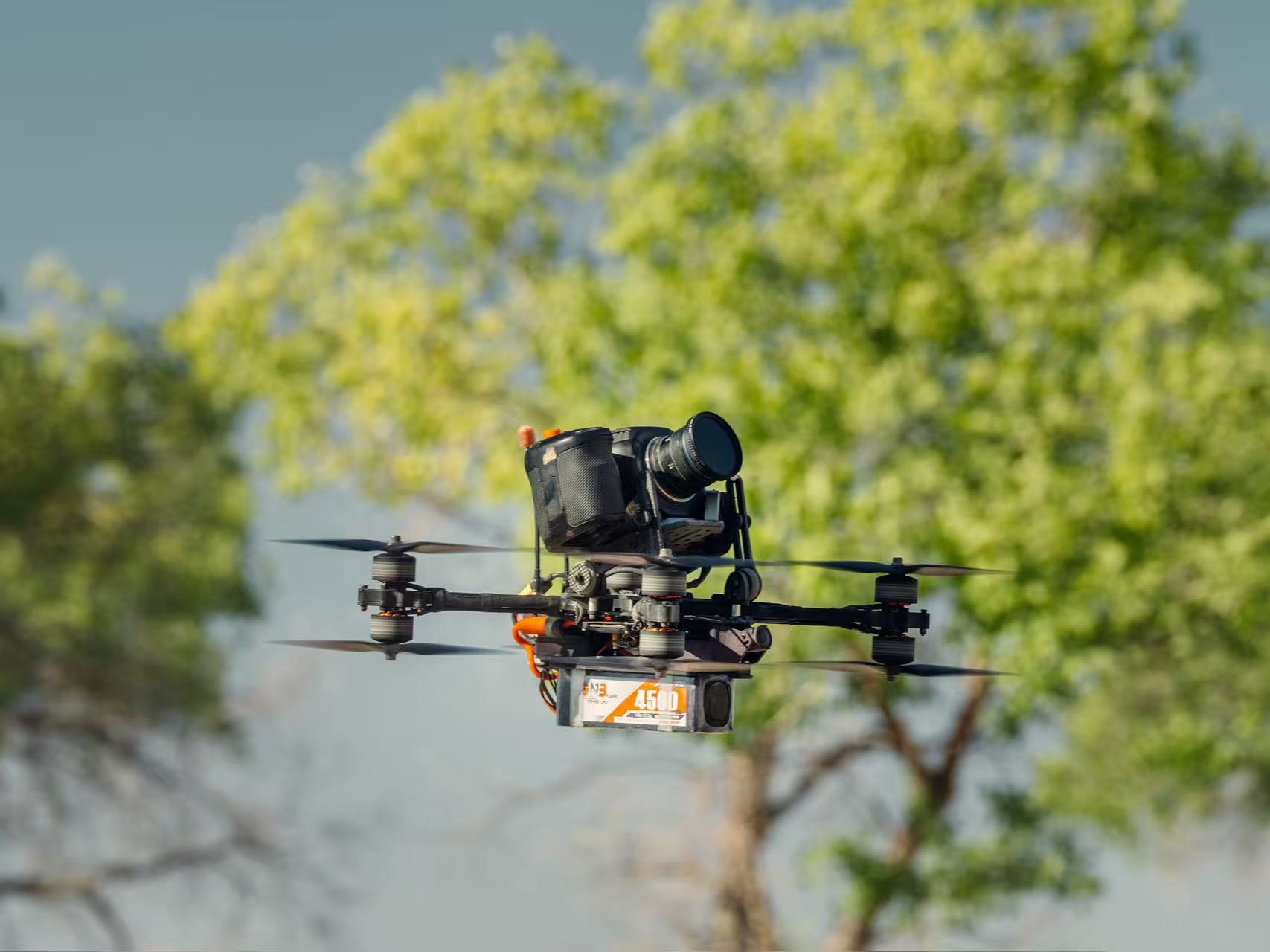
At the flagship level, the 1507 3-Blade Propeller demonstrates how comprehensive engineering can address induced loss while simultaneously meeting strict vibration control requirements. The 7-inch pitch combined with optimized structural distribution balances low-speed heavy-load takeoff requirements with cruise efficiency, ensuring induced loss remains controlled across the complete operational envelope.
Operational Considerations for Maximum Efficiency
Understanding induced loss enables operators to make informed decisions that extend flight time and reduce operational costs. Selecting propellers with appropriate diameter and pitch characteristics for specific payload and mission profiles represents the foundational step. For extended hovering operations typical in establishing shots or monitoring applications, prioritizing larger diameter propellers with moderate pitch settings will yield the greatest efficiency benefits.
Dynamic filming scenarios involving frequent speed changes require different optimization priorities. Propellers designed with balanced thrust response characteristics maintain reasonable efficiency across variable flight regimes without sacrificing the control authority necessary for professional cinematography work.
Environmental factors also influence induced loss, though less directly. Wind conditions force aircraft to generate additional thrust to maintain position, effectively increasing disk loading and induced loss. Operators working in consistently windy environments may benefit from propeller selections that optimize efficiency at higher thrust levels rather than pure hovering conditions.
Conclusion: Engineering Excellence for Operational Advantage
Reducing induced loss in aerial filming drone flight represents a multifaceted engineering challenge requiring integrated solutions spanning aerodynamics, materials science, and precision manufacturing. The measurable benefits—extended flight times, increased payload capacity, and reduced operational costs—make this optimization essential for professional operations.
Through systematic attention to propeller diameter, pitch configuration, structural engineering, and manufacturing precision, companies like Gemfan Hobby Co., Ltd. deliver propeller solutions that demonstrably reduce induced loss across diverse operational requirements. Their gradient coverage from lightweight 8-inch cinematography propellers to heavy-duty 15-inch industrial solutions reflects nearly two decades of specialized expertise in translating aerodynamic principles into practical performance advantages.
For operators seeking to maximize the operational capabilities of their aerial platforms, understanding and minimizing induced loss through informed propeller selection represents one of the most direct paths to competitive advantage in the demanding aerial cinematography and industrial inspection markets.
www.gemfanhobby.com
Gemfan Hobby Co.,Ltd.
About Author
