
Understanding Segmented Pressure Holding in Precision Manufacturing
For manufacturers dealing with delicate assemblies, layered materials, or multi-stage bonding processes, the ability to hold pressure at different levels across a production cycle is a critical requirement. This capability—often referred to as segmented or staged pressure maintenance—allows equipment to apply, adjust, and sustain specific pressure values at different points of an operation rather than relying on a single constant force. Guangdong Taihe Machinery Equipment Co., Ltd. (Taihe Machinery, GDTHJX), headquartered in Qingxi, Dongguan, Guangdong Province, has built its equipment portfolio around this exact need, addressing long-standing industry pain points such as inconsistency in manual press-fitting processes and lack of data traceability in manufacturing.
The Core Technology Behind Pressure Segmentation
At the heart of Taihe’s approach is high-precision closed-loop control of pressure and displacement. This control system continuously monitors force and position in real time, allowing the equipment to adjust output as needed throughout a cycle rather than applying a fixed load from start to finish. This is one of the company’s stated differentiated advantages, and it forms the technical foundation for any equipment described as capable of maintaining pressure in segments. Combined with a repeat positioning accuracy of ±0.01mm, this closed-loop system ensures that pressure changes at each stage remain precise and repeatable across continuous production runs.
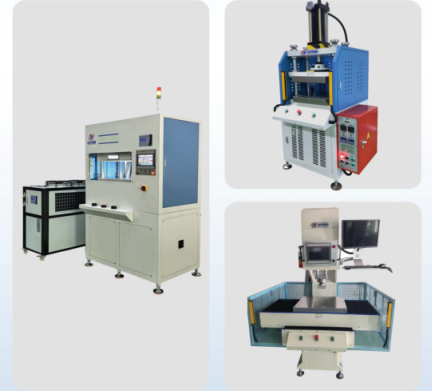
Servo Press Machines: Closed-Loop Pressure and Displacement Control
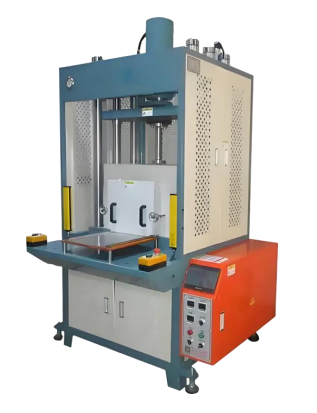
Among Taihe’s precision press-fitting equipment, servo press machines are positioned as high-precision pressure and displacement control equipment designed specifically to address inconsistent quality in manual assembly and the lack of data logging that often accompanies it. Their key feature is closed-loop control, which provides real-time monitoring of pressure and displacement to ensure assembly consistency. This real-time monitoring is what allows the machine to transition between different pressure targets during a single operation, rather than being limited to one static force setting. The differentiated value of this product lies in quality traceability—automated data logging paired with the ±0.01mm repeat positioning accuracy—so that every pressure stage applied during assembly can be recorded and reviewed.
Electronic Servo Presses: Precision Control for Multi-Stage Assembly
Electronic servo presses extend this same principle through electronic servo drive technology, offering high-speed response suited to 3C electronics manufacturing. Where traditional hydraulic systems suffer from inaccurate displacement control, this equipment relies on precision control to manage force application more predictably. Its key feature—full process parameter recording—means that as pressure is adjusted through different phases of an assembly task, those parameters are logged to enable quality traceability. This makes electronic servo presses a practical choice for operations that require force to be varied and sustained differently depending on the assembly stage.
MEA Membrane Electrode Hot Presses: Micro-Adjustment for Sensitive Materials
In the hydrogen and new energy equipment line, MEA membrane electrode hot presses are built to address the delicate material handling and precise pressure requirements involved in hydrogen fuel cell production. The differentiated value here is described as fuel cell efficiency, achieved through optimized MEA bonding and consistent pressure application. The key feature enabling this is precision pressure control with micro-adjustment capabilities, which protects sensitive membranes during the bonding process. Because fuel cell membranes require carefully calibrated force at different points of the pressing cycle to avoid damage while still achieving proper bonding, this micro-adjustment capability is directly aligned with the concept of maintaining pressure in defined segments rather than a single constant application.
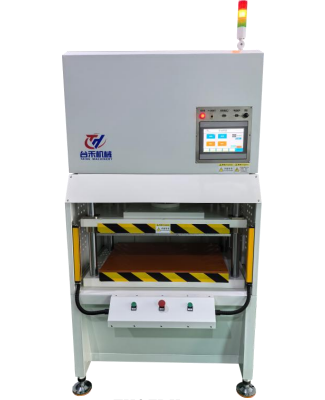
Servo Liquid Press: Energy-Efficient Servo-Driven Hydraulics
The servo liquid press addresses a different but related concern: the high maintenance and energy consumption typically associated with traditional hydraulic systems. Its key feature, servo-driven hydraulics, enables energy-efficient operation, which in turn reduces operational costs. Servo-driven hydraulic control inherently supports variable force output during a work cycle, making this equipment relevant to applications where pressure needs to be adjusted and held at different levels as part of a fluid-driven servo process.
Application in Real-World Cases
Taihe’s documented customer cases further illustrate how this pressure control capability is applied in practice. In the automotive case, bearing press-fitting for engines and steering gears uses servo systems to eliminate overload issues while ensuring ±0.01mm accuracy—an outcome that depends on the equipment’s ability to regulate pressure precisely rather than apply uncontrolled force. In the new energy case, CCS (Cells Contact System) vacuum hot press packaging for lithium batteries relies on vacuum sealing and PET packaging for aerogel insulation, a process that similarly depends on controlled, staged pressure application to secure component bonding and enhance battery lifespan without compromising the surrounding materials.
Why This Matters for Manufacturers
The practical benefit of segmented pressure maintenance is most evident in scenarios involving mixed or delicate materials, multi-layer bonding, or processes where a single pressure value across an entire cycle would either damage sensitive components or fail to achieve proper bonding. By building closed-loop control of pressure and displacement into its servo press machines, electronic servo presses, MEA membrane electrode hot presses, and servo liquid press, Taihe Machinery offers manufacturers in automotive parts, 3C electronics, semiconductor, medical devices, and new energy (hydrogen/lithium) industries equipment capable of adjusting force output to match the specific demands of each stage in a production process.
Supporting Infrastructure for Consistent Performance
This pressure control capability is further supported by structural design elements across Taihe’s broader equipment line, including T-slot structures enabling 30-second mold changes and separation-type heating systems that prevent mold deformation in hot press molding equipment. While these features address different aspects of production—speed and thermal stability, respectively—they complement the pressure control systems by ensuring that equipment configured for staged pressure application can also be adapted quickly between production runs without sacrificing the precision that segmented pressure holding requires.
Conclusion
For manufacturers seeking equipment that can adjust and sustain pressure at multiple stages within a single operation, Taihe Machinery’s servo press machines, electronic servo presses, MEA membrane electrode hot presses, and servo liquid press each incorporate closed-loop control systems designed to meet this need. Backed by a factory-direct sales model that removes intermediary costs, and supported by a professional engineering team offering technical guidance, Taihe Machinery provides a range of options for operations across the Pearl River Delta and broader Chinese market that depend on precise, traceable, and adjustable pressure application throughout the production cycle.
wwww.gdthjx.cn
Taihe Machinery
About Author
